
10 Fun Toddler Movement Activities to Try in 2026
Welcome to our comprehensive guide to toddler movement activities, designed to help your little one thrive! Watching a toddler discover the world is a joy, from their first wobbly steps to confident runs and jumps. Every leap, wiggle, and twirl is a crucial part of their physical and cognitive development. These formative years are when the brain's pathways for coordination, balance, and spatial awareness are rapidly developing, and movement is the key that unlocks this incredible growth.
For families in communities like Bluffdale, Herriman, and Draper, finding engaging and beneficial activities can feel like a big task. That’s why we’ve curated a definitive list of the best toddler movement activities that are not only fun but are packed with developmental benefits. This guide is built to provide you with actionable inspiration, whether you're looking for rainy-day ideas to try at home in Sandy or considering a structured class near Riverton. We will break down each activity with clear how-to steps, required materials, safety tips, and the specific developmental milestones they support.
This article moves beyond simple suggestions, offering practical variations for both home and classroom settings. You'll find ideas for creating weekly movement plans and tips to help you foster a love for physical activity. We will cover a range of options, from structured Parent and Me classes to free-form creative dance, ensuring you have a wealth of choices to suit your child's unique personality. Let's explore how to channel that boundless toddler energy into foundational skills that will last a lifetime.
1. Parent and Me Movement Classes
Structured, shared movement sessions are a fantastic way to introduce toddlers to the joy of physical activity in a safe and supportive environment. Parent and Me classes are specifically designed for toddlers (typically 12-36 months) and their caregivers to participate together. These sessions blend fundamental locomotor skills like hopping and galloping with music, rhythm, and interactive play, creating a powerful bonding experience.
The core concept is guided discovery. An instructor leads the group through a series of age-appropriate toddler movement activities, but the parent acts as the primary facilitator for their child. This dynamic builds a toddler's confidence and strengthens the parent-child connection, making movement a source of shared delight rather than a performance.
Benefits and Implementation
This approach is ideal for introducing social skills in a low-pressure setting and providing sensory input through props like scarves, shakers, and soft balls. For parents in areas like Herriman or Riverton, joining a local class in Bluffdale offers a great way to connect with other families while learning new ways to support their child's development.
Pro-Tip: The best Parent and Me classes prioritize participation over perfection. Instructors should celebrate every attempt, creating a judgment-free zone where both toddlers and parents feel comfortable exploring new movements.
To get started, look for programs that keep sessions short (around 30-45 minutes) to match a toddler's attention span. Many studios, including Encore Academy, offer specialized programs for this age group. You can explore Encore’s Tall and Small program here to see how a structured curriculum fosters early development. When choosing a class, ask if they provide take-home activity ideas to continue the fun and learning throughout the week.
2. Creative Dance and Free Movement Exploration
Creative dance is a powerful, unstructured approach that encourages toddlers to explore how their bodies move through space in an imaginative way. Instead of focusing on specific steps or choreography, this form of movement is about self-expression, storytelling, and responding instinctively to music and thematic prompts. It's a foundational practice that helps children develop a natural, joyful relationship with physical activity.
The core concept behind these toddler movement activities is guided improvisation. A facilitator might use a story about animals or a prompt like "move like the wind" to inspire children, but there are no right or wrong answers. This freedom allows toddlers to build body awareness, improve coordination, and express emotions physically, turning movement into a form of creative play.
Benefits and Implementation
This approach is excellent for developing a toddler's creativity, problem-solving skills, and spatial awareness without the pressure of performance. For parents in communities like Draper or Lehi, finding a local program that embraces this philosophy provides a wonderful outlet for a child's boundless energy while nurturing their artistic instincts. It also introduces them to diverse musical styles, from classical to world music, broadening their auditory horizons.
Pro-Tip: Focus on the process, not the outcome. Ask open-ended questions like, "How does a tiny seed grow into a tall tree?" to spark imagination. Praise their unique interpretations to build confidence and show that their ideas are valued.
To start, create a safe, open space at home or find a class that emphasizes exploration. Use props like ribbons or scarves to extend movement possibilities. Many progressive studios, including Encore Academy, incorporate elements of creative dance into their youngest programs. You can learn about Encore’s approach to early childhood dance here to see how imaginative play is blended with foundational skills. When seeking a class, prioritize those that let shy children observe and join in when they feel ready.
3. Music and Movement Integration Classes
Integrating music directly with physical motion offers a powerful, multi-sensory approach to early childhood development. Music and Movement Integration Classes are structured sessions where toddlers learn to connect rhythm, melody, and sound with corresponding physical actions. This goes beyond simple dancing; it teaches them to interpret musical cues and translate them into coordinated movements, building foundational musicality and gross motor skills simultaneously.
The core concept is embodied cognition, where physical actions reinforce abstract ideas like tempo, pitch, and rhythm. An instructor might use a slow, deep drum beat to cue stomping like an elephant or a quick, high-pitched xylophone tune for tiptoeing like a mouse. Through singing, playing simple instruments, and guided movement, toddlers begin to internalize the relationship between what they hear and how their body can respond.
Benefits and Implementation
This approach is highly effective for developing auditory processing skills, rhythm, and body awareness. For families in Bluffdale or nearby Lehi, these classes provide a stimulating environment that enhances both cognitive and physical growth. The simultaneous engagement of auditory and kinesthetic pathways accelerates learning and makes physical activity feel like expressive play.
Pro-Tip: Consistency is key in these classes. Pair specific sounds or musical phrases with the same movements repeatedly. This helps toddlers build strong neural connections, allowing them to anticipate and execute movements with increasing confidence and precision.
To get started, look for programs like Kindermusik or Music Together, which specialize in this integrated model. When exploring options, choose a class that allows toddlers to freely explore instruments before structured activities begin, as this satisfies their curiosity and prepares them for focused learning. You can explore more ideas for combining these elements by reading about music and movement activities for preschoolers. This dual-focus approach ensures that toddler movement activities are not just physical but also deeply enriching and educational.
4. Dance Exploration Through Props and Scarves
Using lightweight props like scarves, ribbons, and soft balls transforms simple movement into a rich sensory experience. This method encourages creative expression by making movement tangible for toddlers. Props act as visual extensions of a child’s body, helping them understand concepts like flow, speed, and direction in a playful, interactive way.
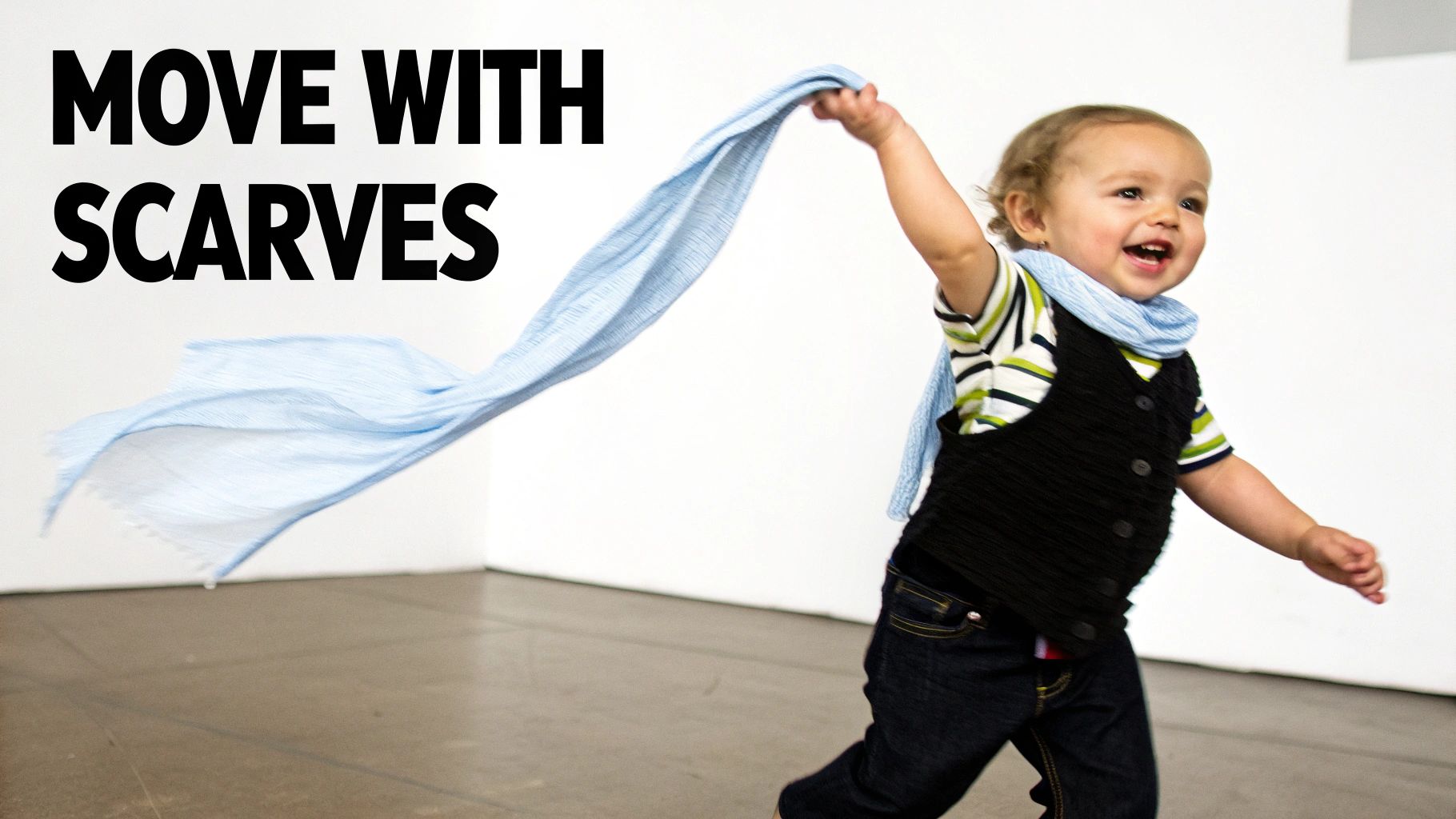
The core idea is to let the prop guide the motion. A floating scarf can inspire graceful, slow movements, while a bouncy ball encourages hopping and quick directional changes. This approach, often seen in early childhood programs inspired by Reggio Emilia, empowers toddlers to lead their own discovery, turning simple toddler movement activities into imaginative dance explorations.
Benefits and Implementation
This technique is excellent for developing fine motor skills (grasping a ribbon) and gross motor skills (waving a scarf with big arm motions). It also enhances body awareness and coordination as children learn to manipulate an object while moving. For families in areas like Bluffdale or Lehi, incorporating prop play at home is an easy way to keep movement fresh and exciting, especially on days you can't get outside.
Pro-Tip: Connect prop colors to different types of music or movement. For example, a blue scarf could be for slow, flowing "water" music, while a red one is for fast, energetic "fire" dancing. This adds a layer of cognitive learning to the physical activity.
To get started, choose props that are soft, lightweight, and safe for little hands. Introduce one type of prop at a time to avoid overstimulation and allow for deep exploration. You can find dance scarves and ribbons at most craft stores or online. Rotate the props every few weeks to maintain novelty and encourage new ways of moving. In a class setting, this method helps even shy children engage, as their focus shifts from themselves to the object they are holding.
5. Tumbling and Basic Acrobatic Foundations
Introducing toddlers to tumbling and basic acrobatic foundations provides a structured yet playful way to enhance their body awareness, balance, and spatial orientation. These age-appropriate toddler movement activities focus on the safe exploration of foundational skills like forward rolls, crawling variations, and climbing on soft equipment. The emphasis is on building core strength and confidence, not on achieving advanced gymnastics skills.
The core concept is to create a safe, padded environment where toddlers can challenge their bodies and learn their physical limits. Guided by instructors trained in early childhood development, children navigate obstacle courses, practice weight-shifting movements, and discover how to roll, jump, and land safely. This hands-on exploration builds a crucial mind-body connection.
Benefits and Implementation
This approach is highly effective for developing proprioceptive and vestibular senses, which are fundamental to coordination and balance. It also teaches valuable life skills like listening to instructions, taking turns, and safely navigating physical challenges. For families in communities like Bluffdale and Draper, a local tumbling program offers an excellent outlet for a toddler's boundless energy.
Pro-Tip: Safety is paramount. Ensure any program uses ample padding and well-maintained, age-appropriate equipment. The best instructors celebrate courage and effort, never forcing a child to attempt an activity they are fearful of.
To get started, look for classes that maintain a low student-to-teacher ratio and begin with ground-level activities before introducing any height. As children gain confidence, these foundational skills can support other physical disciplines, a concept you can explore further by learning about the benefits of tumbling for dancers. The goal is to make physical risk-taking a positive and confidence-boosting experience from the very beginning.
6. Gross Motor Skill Development Through Game-Based Movement
Transforming fundamental skills into exciting games is a powerful way to enhance a toddler's physical development without it feeling like a chore. Game-based movement focuses on building core gross motor skills such as running, jumping, and throwing by embedding them in structured, playful challenges. This approach keeps toddlers highly engaged and motivated, turning essential exercise into pure, unadulterated fun.
The core concept is to create a clear objective that requires physical action. Whether it's an "animal walk" game where they hop like a bunny or waddle like a penguin, or a simple obstacle course made of pillows, the game provides a purpose for the movement. This method channels a toddler’s natural energy into activities that systematically build strength, coordination, and body awareness.
Benefits and Implementation
This approach is perfect for developing skills like balance and coordination in a dynamic, fun-filled setting. Games naturally encourage problem-solving and following simple directions, which are crucial cognitive milestones. For families in Bluffdale and surrounding communities like Draper, setting up a living room obstacle course is an excellent way to practice these toddler movement activities at home, especially on days when outdoor play isn't an option.
Pro-Tip: The key to successful game-based movement is simplicity and adaptability. Always be ready to change the rules on the fly to match your toddler's energy and skill level, ensuring the focus remains on participation and enjoyment, not on winning or losing.
To get started, choose games with simple, repetitive actions and incorporate music to add rhythm. Demonstrate each movement clearly and enthusiastically. As they grow, you can introduce more complex sequences, like those found in beginner dance classes, to continue challenging them. You can explore some fun dance moves for kids to get new ideas for your at-home games and see how structured play evolves. Remember to build in frequent breaks for rest and water to keep them energized and happy.
7. Rhythm and Drumming Circle Activities
Rhythm and drumming circles are dynamic, sensory-rich toddler movement activities that tap into a child's innate connection to beat and sound. These sessions bring toddlers together to explore percussion, body movement, and vocalization in a shared, synchronized experience. Using instruments like small hand drums, shakers, and rhythm sticks, children learn about cause and effect while developing crucial auditory processing and motor skills.
The core concept is interactive musical play. A facilitator guides the group through simple, repetitive rhythms, often using a call-and-response format. Toddlers might stomp their feet to a beat, shake an egg shaker fast or slow, or tap a drum loudly and then softly. This structured yet creative environment encourages self-expression, active listening, and a foundational understanding of musical patterns.
Benefits and Implementation
This approach is excellent for enhancing listening skills, improving coordination, and fostering a sense of community. The circle format ensures every child feels included and can see their peers, encouraging social interaction and imitation. For parents in communities like Draper or Bluffdale, finding a local music class that incorporates drumming can be a powerful way to support both cognitive and physical development.
Pro-Tip: Start with body percussion before introducing instruments. Clap hands, stomp feet, and tap knees to establish a rhythm. This helps toddlers connect the beat to their own bodies, making the transition to an instrument more intuitive and successful.
To get started, look for programs that use age-appropriate, durable instruments designed for small hands. Keep activities short and engaging, varying the tempo and volume to maintain interest. Simple, repetitive patterns are most effective for this age group. The key is to celebrate sound and movement, allowing toddlers to explore rhythm in a joyful and pressure-free setting.
8. Ballet Basics and Introduction to Classical Movement
Introducing toddlers to the world of ballet is less about rigorous technique and more about inspiring a love for classical movement through play and imagination. Age-appropriate ballet basics focus on posture, balance, and coordination, using stories and imagery to explore fundamental positions and motions. These classes are designed to be joyful and pressure-free, building a positive foundation for dance.
The core concept is to translate ballet vocabulary into terms a toddler can understand and enjoy. Instead of demanding a perfect plié, an instructor might ask children to pretend they are a growing flower or a melting ice cream cone. This approach helps develop strength, flexibility, and body awareness while making ballet one of the most enchanting toddler movement activities available.
Benefits and Implementation
This method is exceptional for developing listening skills, musicality, and a sense of discipline within a playful framework. It also enhances proprioception, as children learn to understand where their bodies are in space. For families in Bluffdale or nearby Herriman, pre-ballet classes can introduce structure and social interaction in a creative setting.
Pro-Tip: Focus on the narrative behind the movement. Use creative storytelling to guide toddlers through positions, such as asking them to make "pizza feet" (first position) or hold their arms like they are hugging a giant teddy bear. Celebration of effort over precision is key.
To get started, look for programs that prioritize creative expression. Classes should be short and use props like wands or scarves to maintain engagement. It is important to find an environment where children feel comfortable, whether they start barefoot or in soft ballet slippers. If you are curious about the ideal time to introduce more formal training, you can learn more about the best age to start ballet and how early classes foster development. Choosing a studio that understands toddler development ensures the experience is both fun and beneficial.
9. Freeze Dance and Musical Movement Games
Interactive games that combine music with sudden stops are a classic and highly effective way to engage toddlers in physical activity. Freeze dance and similar musical movement games teach toddlers to listen carefully, respond to auditory cues, and practice controlling their bodies by switching between high-energy movement and stillness. The simple, repetitive structure is perfect for capturing a young child's attention and enthusiasm.
The core concept is built on a clear "on/off" switch. When the music plays, children are encouraged to dance, jump, wiggle, or march freely. When the music stops, they freeze in place like a statue. This alternation is not just fun; it’s a powerful tool for developing self-regulation, body awareness, and impulse control in a playful, low-stakes context.
Benefits and Implementation
This activity is excellent for improving listening skills and reaction time. It also requires no special equipment, making it a go-to choice for parents in areas like Draper or Lehi looking for a quick and easy way to burn off toddler energy indoors. By using different genres and tempos of music, you can introduce new rhythms and keep the game fresh and exciting.
Pro-Tip: For toddlers, the goal is participation, not elimination. Instead of having children sit out if they move during a "freeze," simply celebrate everyone's effort and start the music again. This keeps the game positive and inclusive for all skill levels.
To get started, simply choose a playlist with a variety of fun songs. Give a clear, consistent signal for when the music will stop, such as saying "Freeze!" or clapping your hands. Model the behavior by dancing with enthusiasm and freezing dramatically yourself. Start with longer periods of music and short freezes, gradually increasing the challenge as your toddler’s listening skills and self-control improve.
10. Sensory Motor Activities and Body Awareness Exploration
Sensory motor activities are intentional movements designed to enhance a toddler's awareness of their body, how it moves through space, and how it processes sensory information. These classes combine proprioceptive input (body position sense) and vestibular input (balance and spatial orientation) through actions like rolling, rocking, balancing, and crawling. This approach supports foundational neurological development and helps form a toddler’s “body map,” often leading to a calmer and more organized nervous system.
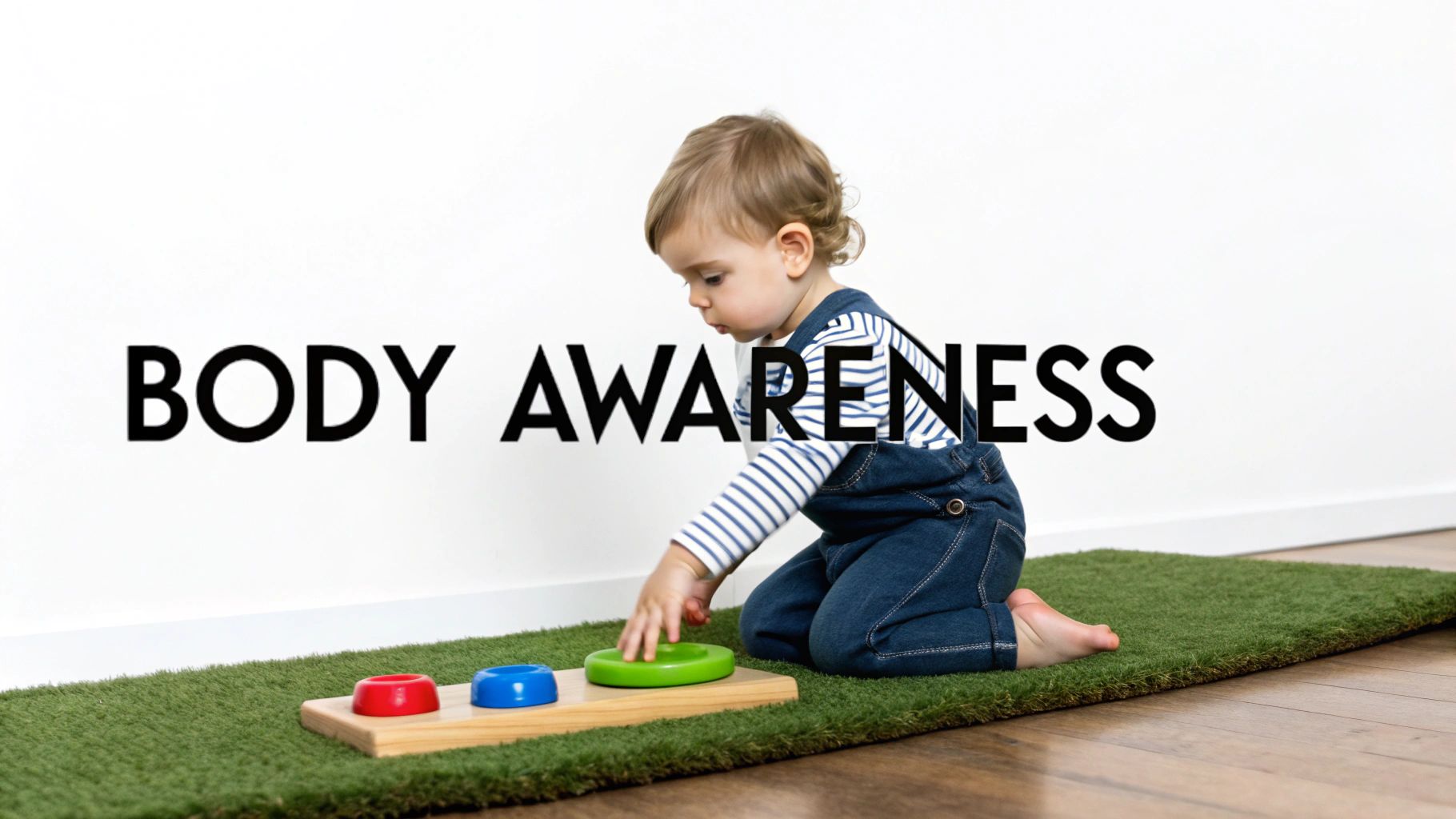
The core concept, popularized by occupational therapists like Jean Ayres, is sensory integration. Toddlers learn to register, interpret, and respond to sensory information from their bodies and environment. By engaging in these specific toddler movement activities, they build critical neural pathways that affect everything from coordination and emotional regulation to attention and motor planning.
Benefits and Implementation
This approach is highly beneficial for all toddlers, especially those who may seem overly sensitive, under-responsive, or constantly seeking intense physical input. For families in Bluffdale or nearby Lehi, finding a class that incorporates these principles can provide tools to support their child’s unique sensory needs. These activities are powerful because they address the root of motor development by strengthening the brain-body connection.
Pro-Tip: Focus on "heavy work" activities, which involve pushing, pulling, or carrying objects. Simple tasks like pushing a small toy box across the floor or carrying a stuffed animal provide excellent proprioceptive input that helps toddlers feel grounded and centered in their bodies.
To get started, create a calm and predictable environment. Use consistent routines and include a mix of both activating movements (like jumping) and calming ones (like slow rocking). Observe how your toddler responds to different sensory inputs and adjust accordingly. Allow for quiet time to explore textures and movements without pressure, letting their nervous system integrate the experience.
10 Toddler Movement Activities Comparison
| Parent and Me Movement Classes | Medium 🔄🔄 | Low–Medium ⚡⚡ | Bonding, early motor skills, confidence | New parents; 12–36 mo; bonding-focused sessions | ⭐⭐⭐⭐ — strengthens parent-child connection and home carryover |
|---|---|---|---|---|---|
| Creative Dance & Free Movement Exploration | Medium–High 🔄🔄🔄 | Low–Medium ⚡⚡ | Creativity, spatial awareness, expressive movement | Arts-focused preschools; exploratory studios | ⭐⭐⭐⭐ — nurtures imagination and individual expression |
| Music and Movement Integration Classes | High 🔄🔄🔄 | Medium–High ⚡⚡⚡ | Rhythm, language support, motor-music integration | Early music programs; pre‑music preparation | ⭐⭐⭐⭐⭐ — strong dual-domain (music + motor) development |
| Dance Exploration Through Props & Scarves | Low–Medium 🔄🔄 | Low ⚡⚡ | Engagement, sensory feedback, fine/gross motor skills | Short sessions, mixed-age groups, shy children | ⭐⭐⭐⭐ — high engagement; tangible movement cues |
| Tumbling & Basic Acrobatic Foundations | High 🔄🔄🔄 | High ⚡⚡⚡ | Core strength, balance, coordination, spatial awareness | Gymnastics intro; strength/building confidence in safe studios | ⭐⭐⭐⭐ — solid physical foundation; equipment-dependent |
| Gross Motor Skill Development (Game-Based) | Medium 🔄🔄 | Medium ⚡⚡ | Locomotor skills, social play, confidence | Preschools, PE-style classes, group play sessions | ⭐⭐⭐⭐ — fun, highly engaging way to build fundamentals |
| Rhythm & Drumming Circle Activities | Medium 🔄🔄 | Low–Medium ⚡⚡ | Pulse/rhythm, listening, group cohesion | Music circles, community classes, group rhythm work | ⭐⭐⭐⭐ — accessible materials; strong auditory-motor links |
| Ballet Basics & Intro to Classical Movement | Medium–High 🔄🔄🔄 | Medium ⚡⚡ | Posture, alignment, balance, classical vocabulary | Pre-ballet programs, arts academies, technique introduction | ⭐⭐⭐ — introduces classical technique; can feel prescriptive |
| Freeze Dance & Musical Movement Games | Low 🔄 | Low ⚡ | Listening, self-regulation, body control | Warm-ups, parties, short group activities | ⭐⭐⭐ — easy setup; quick gains in listening and control |
| Sensory Motor Activities & Body Awareness Exploration | High 🔄🔄🔄 | Medium–High ⚡⚡⚡ | Proprioception, vestibular development, regulation | Therapy-informed classes, children with sensory needs | ⭐⭐⭐⭐⭐ — strong neurodevelopmental and regulatory benefits |
Bringing Joyful Movement into Your Toddler's Life
Encouraging movement in the toddler years is one of the greatest gifts you can give your child, laying a strong foundation for a healthy, active, and confident life. This is not just about burning off that boundless toddler energy. It’s about building a robust framework for physical literacy, cognitive growth, and emotional well-being that will serve them for decades to come.
From simple games of freeze dance in your Lehi living room to structured Parent and Me classes, each activity we’ve explored contributes to this crucial development. Whether you are using scarves to explore creative dance or setting up a sensory motor station, you are actively wiring your child’s brain for better coordination, problem-solving, and self-expression. The true magic lies in the consistency and joy infused into these moments.
Key Takeaways for Fostering a Love of Movement
Let's distill the core principles from the activities we've covered. The goal isn't perfection; it’s participation.
- Variety is Essential: Don't stick to just one type of activity. Mix gross motor challenges like tumbling with rhythm-based games and sensory explorations. This holistic approach ensures you are developing a wide range of skills, from balance to body awareness. A week might include a drumming circle one day and an introduction to ballet basics the next.
- Process Over Product: For toddlers, the value is in the doing, not the final result. Celebrate the wobbly hops, the off-beat claps, and the imaginative leaps. This focus on effort builds resilience and a positive association with physical activity, preventing feelings of pressure or failure.
- Follow Their Lead: Observe what captivates your child. Do they light up when the music starts? Do they gravitate toward climbing and jumping? Tailoring your toddler movement activities to their natural interests is the single most effective way to guarantee engagement and fun.
By embracing these ideas, you transform simple playtime into powerful developmental opportunities. You are not just a parent; you are your child's first and most important movement guide.
Your Next Steps to an Active Toddlerhood
Moving forward, the challenge is to integrate these concepts into your daily routine. It doesn't require a huge time commitment or expensive equipment. Start small and build momentum.
Create a "Movement Corner": Designate a small, safe space in your home with a few key props like scarves, soft balls, and a small speaker. Having these items accessible makes it easy to initiate a quick dance party or movement game.
Schedule Movement "Snacks": Instead of one long session, aim for several 5-10 minute bursts of activity throughout the day. A quick game of "Animal Walks" before lunch or a stretching session after naptime can make a significant difference.
Explore Community Resources: For families in Bluffdale and neighboring communities like Riverton and Herriman, seeking out a structured class can provide invaluable guidance. It offers a dedicated space for exploration and a supportive community of peers for both you and your toddler.
The ultimate goal is to make joyful movement a natural and celebrated part of your family’s culture. The habits you build now create a powerful ripple effect, influencing your child's health, confidence, and happiness far into the future. Each step, jump, and twirl is a building block for a vibrant life.
Ready to take the next step and see how a structured, nurturing environment can amplify your toddler's love for movement? Discover the Parent and Me and beginner programs at Encore Academy for the Performing Arts, specifically designed to introduce young children to the joy of dance. Join us for a trial class and watch your little one blossom in our Bluffdale studio! Encore Academy for the Performing Arts