
The Art of Dance A Complete Guide to Styles and History
The art of dance is one of the most powerful ways we have to express ourselves. It’s a language spoken not with words, but with rhythmic movement, used to share emotions, tell stories, and celebrate culture. It’s more than just a physical activity; it’s a universal language that transforms the human body into an instrument for living, breathing art.
Unlocking the Language of Movement
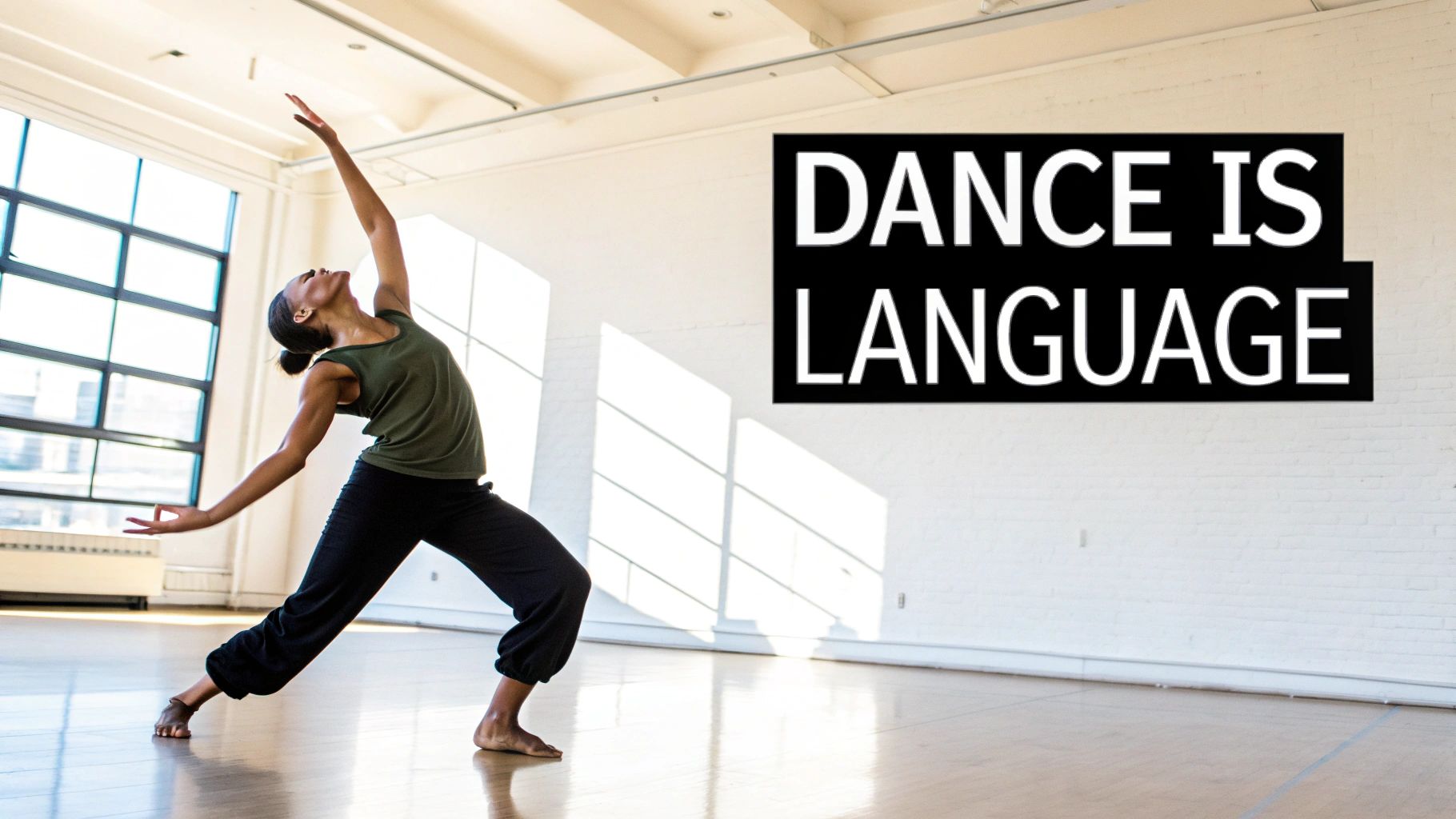
At its core, the art of dance is about using the body to paint a picture in space and time. Imagine a painter with a blank canvas, using brushes and color to create a masterpiece. A dancer does something similar, but their tools are posture, gesture, rhythm, and energy. Every step, leap, and turn is like a brushstroke, conveying a feeling or an idea without speaking a single word.
This unique form of communication has been woven into the fabric of human culture for centuries, playing a central role in everything from ancient rituals to modern entertainment. It's a discipline that demands both the power of an athlete and the vulnerability of an artist. For families from Herriman to Lehi, watching a child discover this art form is like seeing them learn a whole new way to show the world who they are.
More Than Just Steps
While mastering the technique is essential, true artistry in dance appears when a movement becomes more than just a series of steps. It’s the difference between reciting a poem and truly feeling its meaning. A real artist infuses every motion with intention, creating a powerful connection with the music and the audience.
Dance is the hidden language of the soul. This idea gets to the heart of how movement can express what words simply can't, offering a direct line to our deepest feelings and experiences.
This emotional connection is what makes a performance unforgettable. It’s what allows a dancer to embody joy, sorrow, anger, or love, and invite the audience to share in that feeling. A dancer’s journey is a path of constant discovery, learning not only how to move, but why they move.
The Building Blocks of Dance Artistry
No matter the style, every dance is constructed from a few core elements. Getting to know these fundamentals helps pull back the curtain on how dancers create such compelling performances:
- Body: This is the dancer’s primary instrument. Training is all about developing awareness, control, and flexibility, using different parts of the body to create shapes and lines in space.
- Space: Dancers are always interacting with the space around them. They carve pathways, move between high and low levels, and change direction to define the world of their performance.
- Time: This is all about the rhythm. It includes the speed and duration of movements, which are often timed perfectly with music to create a palpable pulse and flow.
- Energy: Think of this as the "how" of the movement. Is it sharp and sudden, or soft and flowing? The energy dictates the entire mood and intensity of the dance.
By working with these elements, dancers from communities like Draper or Riverton can start building their own unique artistic voices. You can learn more about the various dance programs available to start exploring this expressive world for yourself.
The Rich History and Evolution of Dance
If you want to understand the art of dance today, you have to look back at its incredible story. Long before the first stages were built or the first pointe shoes were crafted, dance was woven into the very fabric of human life. For the earliest people, it wasn't just a performance; it was a core part of how they connected, communicated, and made sense of the world.
Ancient tribes and civilizations danced for everything. They danced to celebrate a successful hunt, to ask for a good harvest, to prepare for war, and to mark the biggest moments in a person's life—birth, marriage, and death. These weren't just random steps. They were a living, breathing history book, passing down a community's beliefs and stories from one generation to the next.
From Royal Courts to Rebellious Stages
As societies grew more complex, so did their dances. The grand royal courts of 15th-century Italy and France are where classical ballet truly began to take shape. It started as entertainment for the nobility but quickly evolved into a highly technical art form with a specific language of movement. Ballet was all about grace, control, and aristocratic elegance, and its structured beauty became the foundation for many of the techniques we still teach today.
But art is never meant to stand still. The start of the 20th century was a time of immense change, and artists felt a powerful urge to break free from old constraints. Visionaries like Isadora Duncan and Martha Graham looked at ballet’s strict rules and found them too rigid to express what it felt like to be a modern human. So, they cast off the corsets and shoes, creating a raw, new form of movement: modern dance.
“Dance is the hidden language of the soul.” - Martha Graham
Martha Graham’s famous words perfectly capture the spirit of this movement. It was all about expressing genuine, unfiltered emotion through grounded, powerful movements that mirrored the messiness and beauty of real life. This was a huge turning point, proving that dance could be deeply personal and even revolutionary. For a closer look, you can explore our complete guide explaining what the modern dance style is and why it's still so influential.
The Ever-Changing Tapestry of Dance
And the evolution just kept going. Every new era brought its own sound and energy, and dance transformed right along with it.
- The Jazz Age: In the early 1900s, the syncopated, off-beat rhythms of jazz music sparked a fire, leading to improvisational and high-energy styles like the Charleston and the Lindy Hop.
- The Rise of Hip Hop: Fast forward to the 1970s, where street culture in urban neighborhoods gave birth to a whole new vocabulary of movement—breaking, locking, and popping became the voice of a new generation.
- Contemporary Fusion: Today, the lines between styles are more blurred than ever. Contemporary dance is a beautiful melting pot, borrowing elements from ballet, modern, jazz, and even dance forms from around the world to create something fluid, expressive, and constantly new.
This amazing history isn't just something you read about; it's alive in dance studios everywhere, from our home in Bluffdale to the nearby communities of Sandy and Lehi. Every time a dancer learns a plié or nails a hip hop freeze, they’re tapping into a legacy of human expression that spans thousands of years. It's this incredible journey through time that has made dance the rich, dynamic, and powerful art form we love today.
A Look at the Most Popular Dance Styles
The world of dance is a huge, vibrant universe filled with distinct styles, each with its own personality, history, and unique language of movement. Think of it like exploring different genres of music; just as you can feel the difference between classical and hip-hop, you can see and feel the contrast between the elegant discipline of ballet and the grounded emotion of contemporary. Choosing a style is the first exciting step in discovering the art of dance.
This journey isn't just about picking an activity—it's about finding the right fit for a student's energy, personality, and artistic goals. A child in Draper might thrive in the structured, graceful world of ballet, while another in Riverton might connect instantly with the high-energy, percussive rhythms of tap. Each style offers a completely different pathway to self-expression.
Ballet: The Foundation of Grace
Ballet is often called the backbone of many other dance forms, and for good reason. It’s a highly disciplined art that builds incredible strength, control, and precision. Imagine an architect designing a beautiful, towering skyscraper; ballet provides the strong, unshakeable foundation that allows a dancer to build their skills to new heights.
The focus here is on very specific techniques—like turnout (the outward rotation of the legs from the hips), pointed feet, and creating graceful lines with the arms and body. This rigorous training doesn't just create beautiful movement. It develops a deep understanding of body mechanics, balance, and poise that’s invaluable for any aspiring dancer. You can learn more about the specific techniques and benefits in our guide to starting ballet training .
Hip-Hop: The Pulse of the Street
Born from the dynamic street culture of the 1970s, hip-hop is all about rhythm, personal style, and raw energy. It’s less about rigid technique and more about feeling the music and expressing your own individuality. Hip-hop actually covers a wide range of styles, from the sharp, robotic movements of popping and locking to the acrobatic power of breaking.
If ballet is the classical orchestra, hip-hop is the DJ, mixing beats and creating a dynamic, modern sound. This style is perfect for students who love current music and want a high-energy outlet that really encourages creativity and confidence. It’s a powerful form of storytelling that reflects social and cultural trends.
Tap: The Art of Percussion
Tap dance is truly unique because it turns the dancer into a musician. With special shoes fitted with metal plates on the heel and toe, tap dancers create intricate rhythms and sounds with their feet. It’s like playing the drums, but your entire body is the instrument.
This style is fantastic for developing a keen sense of musicality, rhythm, and timing. Students learn to listen closely to the music, finding pockets in the beat to add their own percussive flair. It’s a wonderfully lively and engaging art form that’s as much fun to hear as it is to watch.
Contemporary and Lyrical: Emotional Storytelling
Contemporary and lyrical are expressive, fluid styles that blend the technical foundations of ballet with the freedom of modern dance and the soulfulness of jazz. These genres are all about telling a story or conveying a deep emotion through movement. The choreography often mirrors the lyrics of a song, creating a powerful and moving performance.
Lyrical and contemporary dance are where technique meets emotion. It’s the art of making the audience not just see a dance, but feel it in their hearts.
These styles encourage dancers to explore their vulnerability and connect with the music on a profound level. They are perfect for students who want to use dance as a powerful tool for personal expression and artistic storytelling.
The global dance market is seeing incredible growth, a testament to the art form's universal appeal. Valued at USD 3.22 billion in 2025, it is projected to soar to USD 12.23 billion by 2033. This explosion is largely fueled by the rising popularity of dance-based fitness and entertainment, which drives over 50% of new growth. North America, with its strong network of studios like those serving Bluffdale and Sandy, commands about 35% of the market share, making dance more accessible than ever. Discover more insights about the booming dance market on Proficient Market Insights .
Choosing Your Dance Style: A Quick Guide
Feeling a little overwhelmed by the options? That's completely normal! To help families in Bluffdale and its surrounding communities like Lehi find the perfect fit, we've put together this quick-glance table. It breaks down the core elements of each popular style to help you see what might spark your child's interest.
| Ballet | Grace, precision, and technical foundation | Strength, flexibility, discipline, posture | ...are detail-oriented and enjoy structured learning. |
|---|---|---|---|
| Hip-Hop | Rhythm, personal style, and dynamic energy | Coordination, musicality, confidence | ...love upbeat music and want creative freedom. |
| Tap | Percussive rhythm and musicality | Timing, coordination, intricate footwork | ...have a great sense of rhythm and enjoy making music. |
| Contemporary | Emotional expression and fluid movement | Storytelling, body awareness, creativity | ...are expressive and want to connect movement to emotion. |
| Acro | Strength, flexibility, and tumbling skills | Agility, balance, control, confidence | ...are energetic, fearless, and love gymnastics. |
Ultimately, the best way to know is to try a class. But this guide should give you a great starting point for that conversation and help you narrow down the styles that sound most exciting for your family.
The Life-Changing Benefits of Dance
Sure, the applause and stage lights are a huge part of the thrill, but the real magic of dance happens long before anyone takes a bow. It’s in the everyday work at the studio, where movement quietly builds not just strong bodies, but sharp minds and unshakable confidence. Dance is one of those rare activities that works on your physical, mental, and emotional health all at the same time.
The physical perks are usually the first thing people notice. With consistent training, you'll see improvements in cardiovascular health, lean muscle tone, and a real sharpening of your coordination and balance. Every single leap, turn, and controlled movement is a full-body workout that builds a dancer's strength and stamina from the ground up.
But it’s not just your body getting a workout. Your brain is working just as hard. Memorizing intricate choreography is like taking your brain to the gym—it strengthens cognitive functions and boosts memory. In fact, studies show that learning and performing dance sequences can actually create new neural pathways, keeping the mind nimble and quick to respond.
More Than Just Movement: A Way to Express Yourself
Beyond all the physical and mental gains, you find what might be the most powerful benefit of dance: it’s an incredible outlet for emotional expression. Life throws a lot at us—joy, stress, frustration, you name it. Dance gives you a safe, constructive space to channel all of it without having to say a single word.
Think of it as a kind of therapy in motion. Had a rough day? You can pour all that frustration into a powerful routine, turning that negative energy into strength. For a quiet child from Bluffdale, the dance floor can become the one place they feel free enough to show those big emotions they can’t quite put into words. They find their voice through movement.
Dance is a powerful tool for healing, offering a way to process emotions, release tension, and reconnect with oneself on a deeper level. It allows us to flush feelings through our bodies and out into the universe.
That kind of release is liberating. It builds emotional intelligence and gives dancers a healthy coping mechanism they can use for the rest of their lives, helping them handle challenges with grace both on and off the dance floor.
This concept map shows how a single art form like dance can branch out into so many distinct styles, each offering its own unique way to move and express yourself.
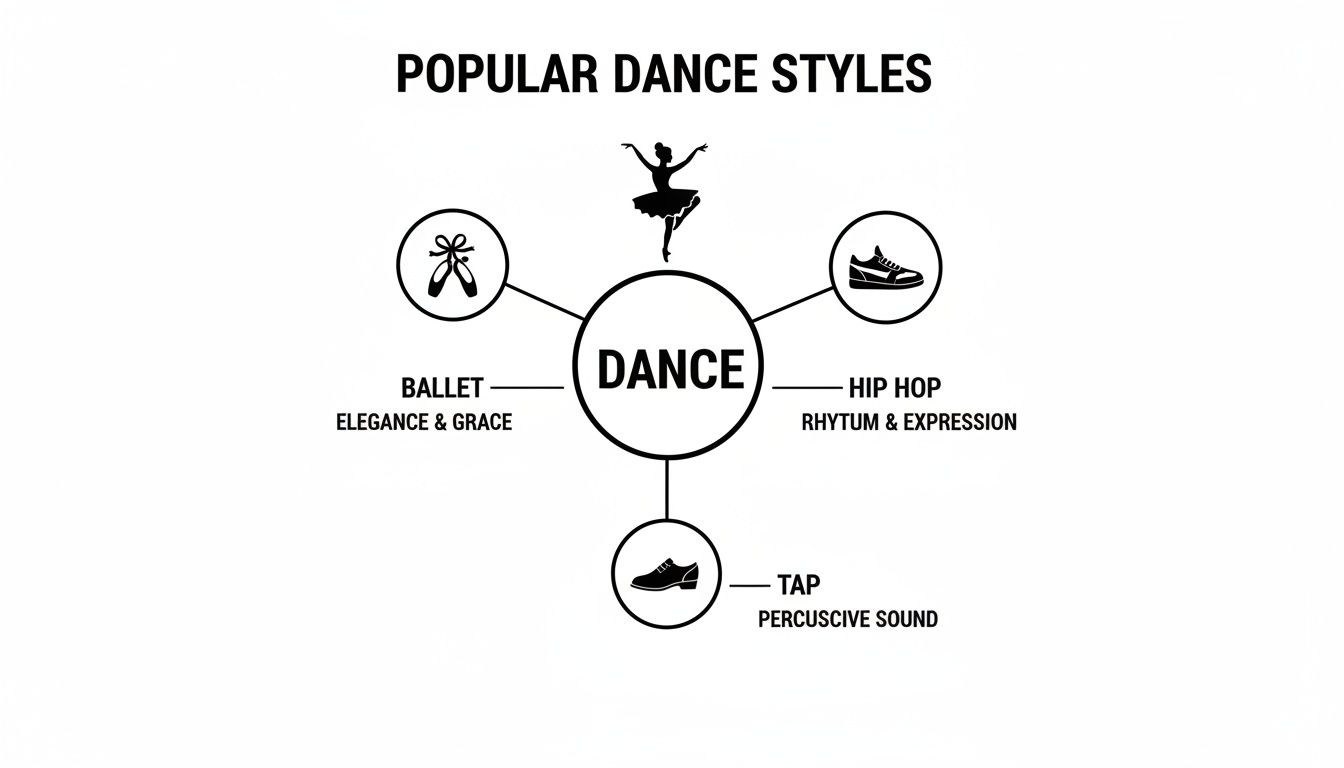
You can see how foundational dance principles get a completely different spin in genres like the precision of Ballet, the rhythm of Tap, or the vibe of Hip Hop.
Building Confidence and Community
Dance is almost never a solo journey. From the very first class, students are learning to work together, building a real sense of community and teamwork. It’s an environment that naturally grows the kind of social skills that are essential in every part of life.
Here’s how dance shapes character and builds connections:
- Discipline and Perseverance: Nailing a tough step doesn't happen overnight. Dancers learn firsthand the value of sticking with something, building a work ethic that pays off in school and their future careers.
- Constructive Feedback: In the studio, you learn how to give feedback and, just as importantly, how to take it. It teaches you to see criticism not as a failure, but as a roadmap for getting better.
- Teamwork and Trust: Whether you're learning choreography as a group or hitting the stage with a competition team, you have to trust and rely on each other. Dancers learn to move as one, lift each other up, and celebrate shared victories.
- Confidence on Stage: It takes guts to step into the spotlight. With every performance, students build poise and self-assurance, learning how to own the stage and connect with an audience.
These skills are invaluable, especially for students coming in from nearby cities like Riverton or Sandy who find a second home and a supportive family at the studio. As they grow, the physical achievements—like getting more flexible—go hand-in-hand with this new confidence. For anyone looking to take their physical training further, our guide on flexibility training for dancers is packed with great techniques.
Ultimately, dance teaches lessons that stick with you long after you leave the studio, shaping you into a more focused, creative, and collaborative person.
How to Choose the Right Dance Studio
Choosing a dance studio is one of the most significant decisions you’ll make for a young dancer. It’s about so much more than learning steps; it’s about finding a second home—a place that nurtures creativity, discipline, and genuine passion. The right environment can spark a lifelong love for the art of dance, while the wrong one can unfortunately dim that light before it has a chance to shine.
Think of a studio as a partner in your child's growth. It shapes not just their technique but their confidence, their resilience, and their work ethic. For families making the trip from nearby communities like Draper or Riverton to our Bluffdale studio, we know that finding that perfect fit—a place that feels both professional and like family—is everything.
The Instructors and Their Philosophy
The true heart of any studio is its teachers. You’re looking for instructors who are not only gifted dancers themselves but are also patient, passionate educators. Their role extends far beyond teaching choreography; it’s to inspire, to motivate, and to safely guide each student’s journey. A great teacher knows how to correct a student's form with encouragement, not just criticism.
When you visit or take a trial class, pay close attention to the classroom dynamic.
- Do the instructors offer individual corrections and personalized feedback?
- Is the atmosphere positive, focused, and genuinely supportive?
- Do they explain the "why" behind a movement, not just the "how"?
A studio’s teaching philosophy should always put the long-term health and well-being of its dancers ahead of short-term competitive wins. That focus on safe, steady progression is absolutely essential for building a strong, injury-free foundation.
Curriculum and Facility Safety
A well-structured curriculum is a telltale sign of a professional studio. It should lay out a clear, logical path for students to build their skills, moving step-by-step from their first class to advanced levels. It’s always a good idea to ask if the studio follows a specific syllabus for core styles like ballet, as this ensures a consistent and high-quality education.
The physical space is just as crucial. A safe dance environment is non-negotiable, and that starts with professionally installed sprung floors. These floors are designed to absorb shock and reduce the risk of injury to a dancer's joints. The studio itself should be clean, well-lit, and spacious enough for everyone to move freely. As participation in quality dance training grows, the global dance market has swelled to USD 19.8 billion as of 2024. This growth is driving demand for professional-grade facilities, with the market for specialized equipment like sprung floors projected to reach USD 5,936.4 million by 2035. You can learn more about these dance studio market trends on Dataintelo .
The ideal studio is a place where a dancer feels physically safe to take risks and emotionally supported to be vulnerable. This unique combination allows true artistry to flourish.
Questions to Ask Before You Enroll
To help families from Lehi, Sandy, and our other surrounding communities make the best choice, we’ve put together a simple checklist of questions to ask when you’re exploring a potential studio:
What are the qualifications of your instructors? Look for a healthy mix of professional performance experience and solid teaching credentials.
Can we observe or take a trial class? This is, without a doubt, the best way to get a real feel for the studio's culture and teaching style.
What are the performance opportunities? Ask about recitals, community events, or competition teams to see if their offerings align with your dancer’s goals.
What is the studio's communication policy? A well-run studio keeps parents in the loop with clear and consistent updates on schedules, events, and student progress.
What is the overall studio culture like? You’re looking for a community that celebrates every student's growth and fosters a supportive, team-oriented atmosphere.
Ultimately, finding the right studio is about matching your family's values with the studio's philosophy. Taking the time to do your research upfront ensures your dancer will have a wonderful, enriching experience as they begin their journey in the beautiful art of dance.
The Connection Between Dance and Music
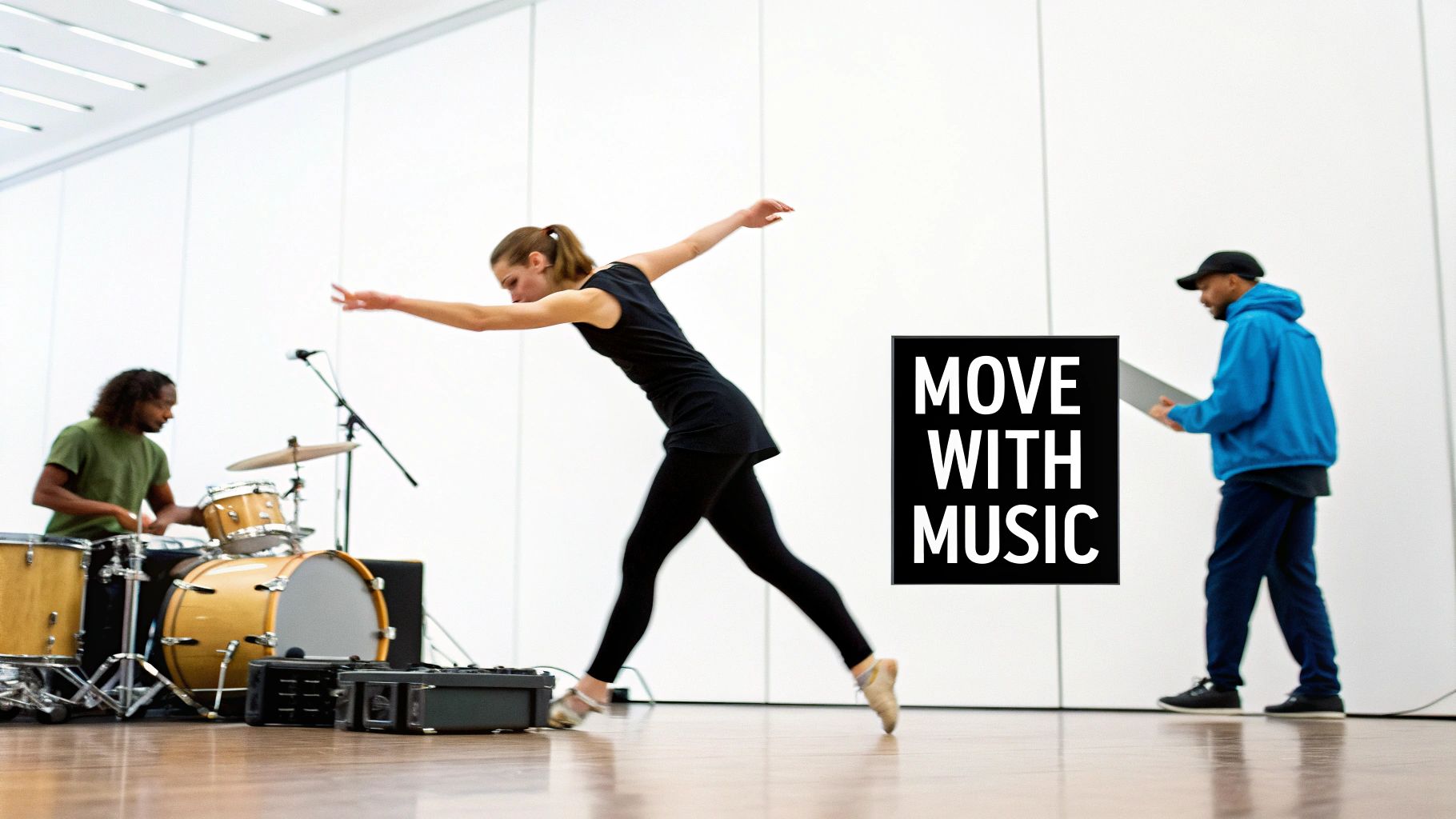
In the art of dance, music is more than just a soundtrack—it’s the other half of the conversation. The two are completely intertwined, working together to create a single, powerful story. Think of a dancer and a piece of music as two voices in a dialogue; one speaks with sound, and the other answers with movement.
The rhythm, melody, and tempo are what a choreographer uses to build the emotional world of a piece. The swelling violins in an orchestra might inspire the long, graceful lines of a ballet dancer, conveying a sense of elegance or heartbreak. On the other hand, the driving, syncopated beat of a hip-hop track demands sharp, explosive movements that mirror the music’s raw energy.
Music as the Emotional Blueprint
What really separates a technically skilled dancer from a truly captivating performer is their ability to connect with the music on a deeper level. It's not just about counting out the 8-counts. It’s about feeling the music’s pulse, its texture, and letting that feeling guide every step. When a dancer really internalizes the sound, their movements look less rehearsed and more authentic.
This is why we believe a basic understanding of musical concepts is so valuable for dancers of all ages, including our students from Herriman. Learning to identify rhythm and phrasing helps them anticipate shifts in the music and add their own creative flair, making the performance their own. Our approach to music education at Encore is built to develop this exact skill, helping our students grow into more complete, versatile artists.
Music gives a soul to the universe, wings to the mind, flight to the imagination and life to everything. This idea perfectly captures how music elevates dance, providing the emotional fuel that truly brings a performance to life.
The Evolving Soundtrack of Dance
Just as dance styles are always changing, so is the music that fuels them. Choreographers and dancers today pull inspiration from a massive variety of genres, blending traditional sounds with modern electronic beats. This fusion is impossible to miss in the world of electronic dance music, a global phenomenon that has become its own branch of dance art.
In fact, the electronic music industry reached a massive USD 12.9 billion globally in 2025, a clear sign of how much dance continues to evolve alongside new sounds and technology. This growth is powered by streaming, with 818 million subscriptions in 2024, showing a worldwide hunger for rhythm that directly influences the music our competition teams perform to. You can learn more about the growth of the electronic music industry from Beatportal .
Got Questions About Dance? We've Got Answers.
Stepping into the world of dance for the first time—whether for yourself or your child—naturally comes with a lot of questions. It's a whole new world! To help you feel more comfortable and ready to dive in, we’ve put together some straightforward answers to the questions we hear most often.
Is It Too Late for Me (or My Child) to Start Dancing?
Absolutely not. This is probably the biggest myth we have to bust in the dance world. Dance is for everyone, at every age. It doesn't matter if you're three or seventy-three; there's a place for you on the dance floor.
Most good studios, including ours, build their schedules to welcome dancers at different life stages. You'll find "Parent and Me" classes for toddlers just discovering rhythm, all the way up to adult beginner ballet workshops for those who've always dreamed of trying. The trick isn't your age, but finding a class that matches your current experience level. That's how you learn safely and, most importantly, have a great time doing it.
What Should I Wear to the First Class?
This is a great question, because what you wear really does matter. It’s about both safety and technique—the right clothes let an instructor see your alignment and posture to give you helpful corrections. For a trial class, you can't go wrong with comfortable, form-fitting athletic wear.
That said, it’s always smart to check the studio’s official dress code first. A studio in Lehi or a neighboring city will have specific requirements for different styles. For example, ballet almost always calls for a leotard, tights, and proper ballet slippers, while a hip hop class is much more relaxed, usually just needing loose clothing and clean sneakers.
"To this day, I feel anxious, every day and almost every moment until I sleep... I find the only way I can honor my defragmented body, mind and soul is to re-fragment myself by bringing my disparate pieces back together through dance."
This quote really gets to the heart of it. Dance is an outlet, a way to process emotions and reconnect with yourself. Showing up in the right gear is simply the first step in that powerful journey.
How Can I Tell If My Child Is Ready for a Competition Team?
This is about so much more than just fancy footwork. Being ready for a competitive team is a mix of skill, mindset, and genuine passion. Our instructors keep an eye out for students who show a really strong work ethic, who light up when they perform, and who have the focus to learn and remember complex choreography.
Most studios use an audition or invitation process for their teams. The best thing you can do is just have a conversation with your child's teacher. They can give you honest feedback on their progress, let you know if they think your child is ready, and talk you through what the next steps would look like if it aligns with your child's goals.
What’s the Difference Between Contemporary and Modern Dance?
It's easy to see why people mix these two up! To the untrained eye, they can look very similar. The main difference is their history. Modern dance came first, back in the early 20th century, as a rebellion against the strict, rigid rules of classical ballet. It’s all about grounded movement, raw emotional expression, and a real connection to the floor.
Contemporary dance came along later and is much more of a blended style. It borrows techniques from all over the place—modern, ballet, jazz, and even lyrical—to create something incredibly fluid and versatile. You can think of modern as the revolutionary foundation, and contemporary as its expressive, always-evolving descendant. It's common for families in Herriman and Draper to find studios that offer both, giving dancers a chance to explore these two unique artistic voices.
At Encore Academy for the Performing Arts, our whole mission is to help every student find their own joy and power in dance. Whether you're taking that very first step or getting ready for the big stage, we have a class waiting for you. Book a trial class today and start your journey with us.