
What Is Modern Dance Style A Complete Guide for Beginners
At its heart, modern dance is all about emotion, freedom, and personal expression. Think of it as a rebellion against the super-strict rules of classical ballet. It threw out the rigid structure in favor of organic, grounded movement that tells a story using the entire body.
What Is Modern Dance Really About?
If classical ballet is like a poem with a perfect rhyme scheme and meter, modern dance is free verse. It follows the natural, sometimes messy, rhythms of human feeling and breath. It uses the dancer’s whole self as an instrument, exploring raw concepts like gravity, momentum, and what’s happening on the inside.
This was a complete and deliberate break from tradition. Instead of trying to look weightless and create perfect, airy lines, modern dancers embrace their connection to the floor. They use their own weight to generate powerful, dynamic movements that feel real and deeply personal. For families in Bluffdale or Riverton trying to decide on a dance style, understanding this core difference is the first step to finding the perfect class.
The Foundation of Expression
Modern dance isn't just about learning a series of steps; it's a whole philosophy of movement. It pushes dancers to find their own unique voice and interpret music or a theme in a way that feels authentic to them. The goal here isn't flawless technical execution—it’s honest communication.
Modern dance teaches us to work with gravity, not against it. The floor becomes a partner, a source of power and stability from which every movement begins and ends.
This philosophy makes it an incredibly versatile and personal art form. While there are established techniques, the spirit of modern dance is all about innovation and individuality. It’s why you see such a huge variety of styles under the "modern" umbrella—each one is a reflection of a different choreographer's unique vision.
To see how this style differs from its descendants, you can learn more about its evolution by reading our guide on what contemporary dance is .
Let's break down the key ingredients that make modern dance what it is.
Core Characteristics of Modern Dance
This table quickly summarizes the fundamental elements of modern dance, especially when you compare it to more traditional styles like ballet.
| Emotional Connection | Movement is directly driven by internal feelings—joy, grief, anger, you name it. |
|---|---|
| Use of Gravity | The dancer's body weight is a tool used to add power, depth, and dimension to every movement. |
| Breath as an Initiator | Breathing often starts and guides the movement, creating a natural, fluid, and rhythmic quality. |
| Grounded Movement | Focuses on the connection to the floor, with falls, rolls, and low-center-of-gravity work. |
| Freedom of Expression | Encourages individual interpretation and improvisation over strict, uniform technique. |
| Barefoot Dancing | Dancers are typically barefoot to feel a direct connection to the dance surface. |
These characteristics are what give modern dance its signature look and feel—powerful, authentic, and deeply human.
The Rebels Who Redefined Dance History
Modern dance didn't just happen by accident. It was a conscious, fiery rebellion against the rigid world of classical ballet that took root in the late 19th and early 20th centuries. A handful of visionaries looked at the strict, formal nature of ballet and decided dance needed to be more human, more raw, and more emotionally honest.
This new way of thinking sparked to life simultaneously in both Europe and the United States. It was led by true pioneers who were fed up with ballet's restrictive vocabulary. Dancers like Isadora Duncan, Martha Graham, and Doris Humphrey were determined to forge a new language of movement, one built on the principles of freedom, natural gestures, and the simple power of breath. You can dive deeper into this artistic rebellion and its key figures .
From Ballet to Bold Expression
These innovators literally stripped dance down to its core. They tossed aside the pointe shoes and tutus, choosing to dance barefoot to feel a direct, powerful connection to the ground. Their choreography wasn't about fairy tales; it was a mirror reflecting the social and artistic shifts happening all around them.
They wanted to explore real, messy human experiences—from deep grief to unbridled joy—through movement that felt immediate and visceral.
Martha Graham, arguably one of the most influential figures in modern dance, developed a technique based on the core principles of ‘contraction and release.’ This entire system is built around the sharp, emotional act of breathing and became a cornerstone of modern dance training worldwide.
Graham’s technique gave dancers a tangible way to channel complex inner emotions into sharp, grounded, and intensely expressive movements. For our students, whether they are from Bluffdale, Lehi, or Herriman, understanding this history is crucial. It shows them that modern dance isn't just a collection of steps; it’s a living story of artistic courage that continues to shape dancers today.
This timeline traces the journey from the strict confines of classical ballet to the expressive freedom that modern dance champions.
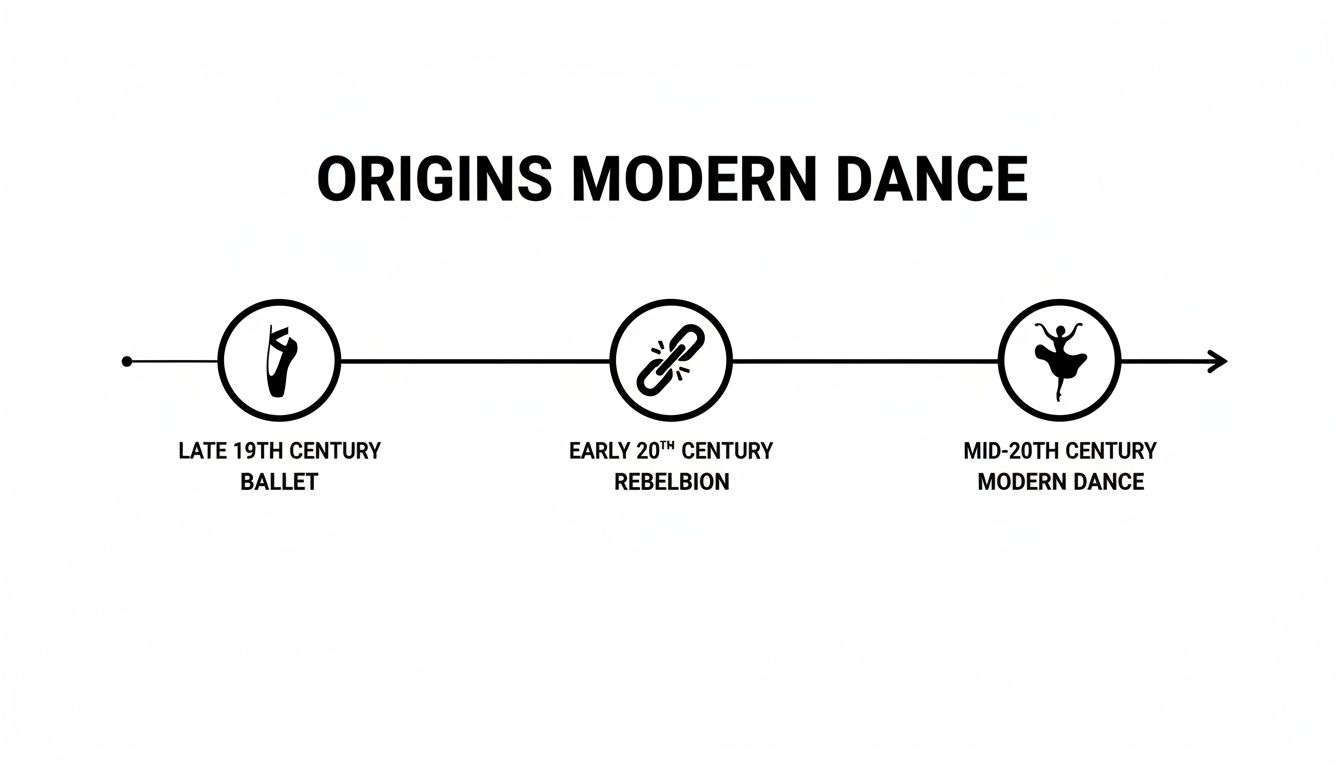
As you can see, modern dance wasn't just a subtle evolution. It was a purposeful and radical departure, born from a deep-seated need for authentic, personal expression.
Core Techniques and Defining Movements
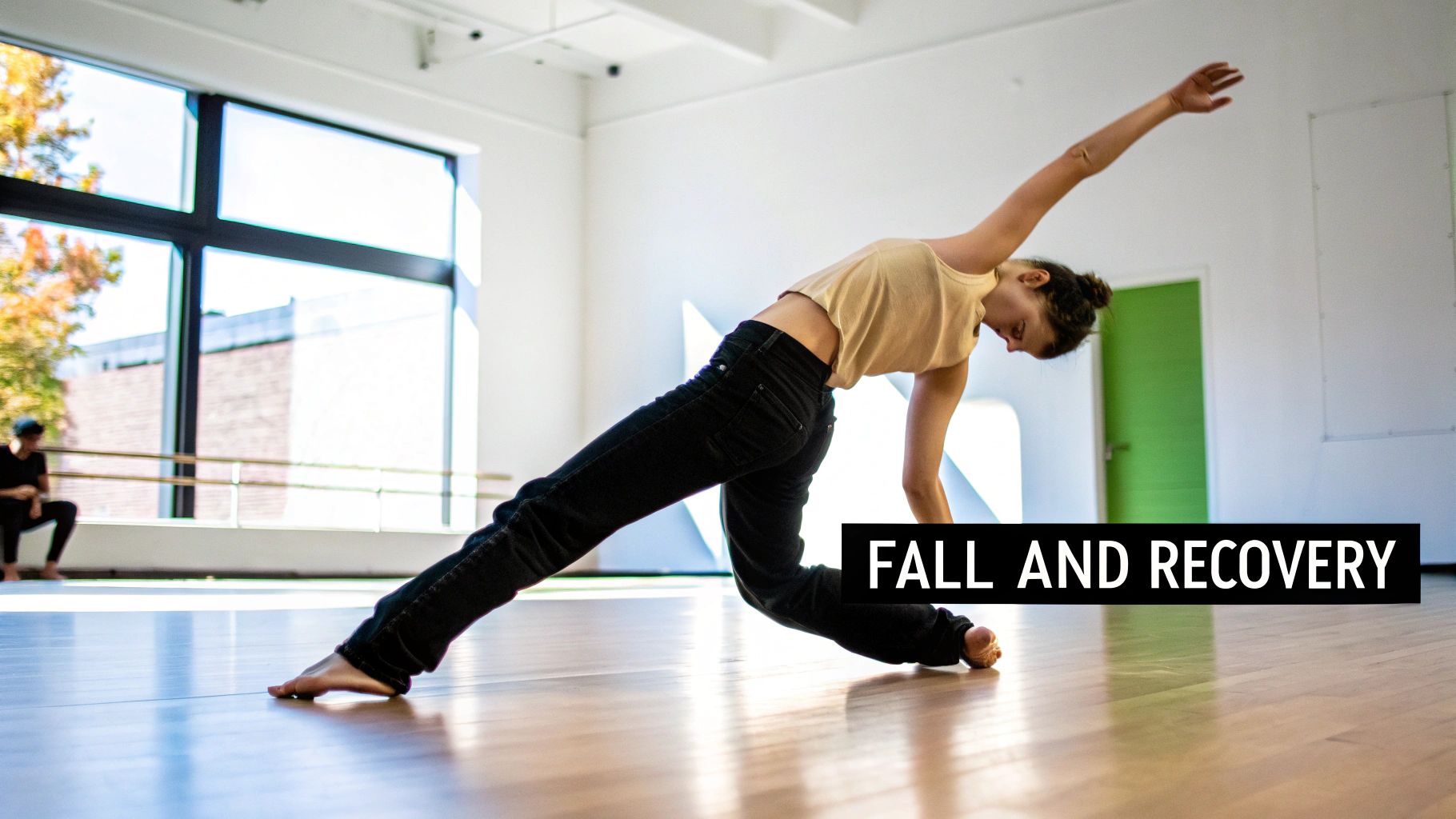
So, what does modern dance actually look like in the studio? It’s far more than just abstract ideas; it’s a physical language built on some really foundational concepts. Where ballet often chases a feeling of weightlessness, modern dance fully embraces the pull of gravity.
Dancers learn to work with their body weight instead of fighting against it. This means using the floor as a partner—a source of power for pushes, falls, and fluid transitions from the ground back up to standing. It’s a completely different way of finding strength, one that’s rooted in the earth itself.
Embodying the Movement
Several key techniques are at the heart of the what is modern dance style question, giving the form its distinct character. These aren't just steps you memorize. They're guiding principles for how a dancer moves through space and the physical vocabulary for expressing emotion.
You'll see dancers exploring these core principles:
- Fall and Recovery: This concept, pioneered by Doris Humphrey, plays with the thrilling space between balance and imbalance. A dancer intentionally gives in to gravity (the fall), only to rebound with a surge of resilient energy (the recovery).
- Contraction and Release: Martha Graham’s signature technique treats the torso as the emotional center. A sharp, percussive exhale creates a deep, hollow curve in the spine (the contraction), which is then answered by an inhale that returns the body to a neutral or lifted state (the release).
- Suspension and Release: This is that breathtaking moment when a dancer seems to hang in the air, defying gravity just before the fall. Picture a pendulum at the very peak of its swing—that split-second pause before gravity inevitably takes over again.
The torso is the emotional engine of modern dance. Rather than keeping it rigid, dancers learn to use its full range of motion—twisting, curving, and spiraling to initiate powerful movements.
This focus on core-driven movement is everything. A dancer quickly learns how their breath can power a turn or how to articulate their spine with incredible control. These are skills that build exceptional body awareness. To learn more about the specific skills involved, explore our guide on developing strong leaps and turns .
The Visionaries Who Shaped Modern Dance
The first wave of rebels, thinkers like Isadora Duncan and Martha Graham, were the ones who first dared to break from ballet's rigid rules. But it was the next generation of choreographers who took that initial spark and fanned it into a global flame. They didn't just reject old ideas; they built something entirely new.
These artists created distinct movement languages, blending cultural perspectives and innovative storytelling into the fabric of dance. They proved that modern dance wasn't a single, fixed style but an ever-changing conversation, constantly evolving with each new voice. Their work is the reason modern dance today is such a rich tapestry of techniques and ideas.
Pioneers of Cultural Fusion
Katherine Dunham was a true force of nature. An anthropologist and a dancer, she masterfully wove together Caribbean folk dances, African rhythms, and balletic grace into her own powerful technique. Her company was a phenomenon, touring for over two decades across 57 different countries and showing the world the profound beauty of Black dance traditions. You can learn more about the rich history of modern dance innovators and their impact.
These choreographers didn't just create dances; they built legacies. They established schools, codified their techniques, and mentored future generations, ensuring their artistic philosophies would endure.
Alvin Ailey built on this foundation, creating work that spoke directly to the heart of the African-American experience. His choreography made modern dance feel immediate and deeply relatable, and his company became a cultural ambassador to the world, opening doors for dancers from every background.
For our students, whether they travel from Draper or live right here in Bluffdale, understanding these histories is crucial. These visionaries teach us that dance is more than just movement—it’s a powerful tool for telling our stories, a lesson we carry into our own dance composition classes .
The Benefits of Modern Dance for All Ages
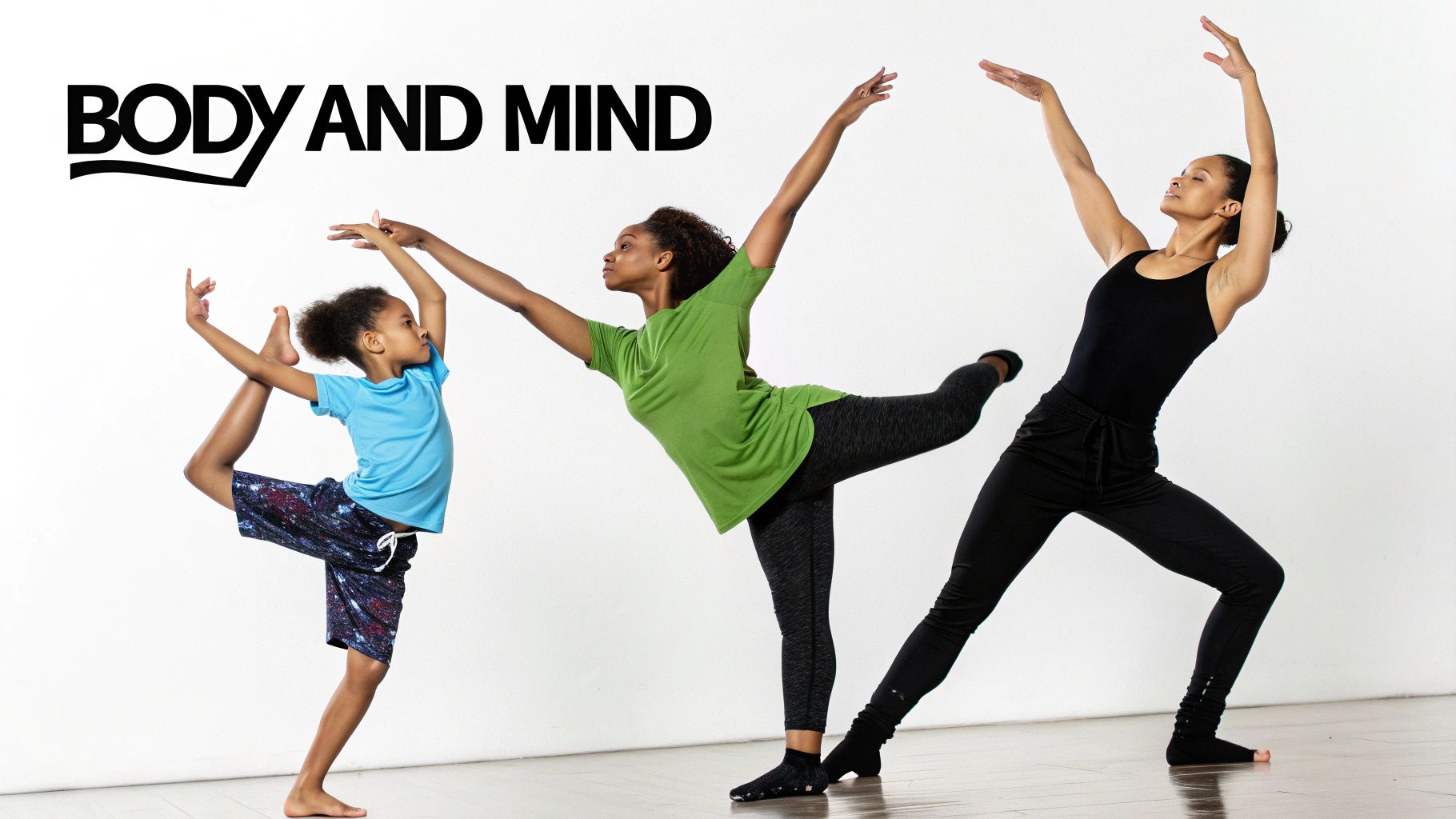
Modern dance is so much more than a series of steps. At its heart, it’s a powerful tool for personal growth, offering benefits that ripple through every part of a person's life, no matter their age.
The physical gains are immediately obvious. Students develop incredible core strength from the grounded floor work and controlled, deliberate movements. They learn to move from a place of authentic impulse rather than just hitting rigid positions, building a deep sense of coordination and body awareness that’s hard to find elsewhere.
Physical and Creative Growth
In modern dance, the physical and the creative are woven together. One doesn't exist without the other. This unique connection challenges the body while completely freeing the mind.
- Strength and Coordination: The constant, dynamic shifts between the floor and standing positions build a kind of functional strength and balance that supports dancers in everything they do.
- Creative Problem-Solving: Through improvisation and choreography, students learn to think on their feet. They're tasked with creating original movement sequences and finding ways to express abstract ideas with their bodies.
- Enhanced Flexibility: This style puts a huge emphasis on a supple spine and a fluid, expressive torso. We dive deeper into this in our article on the importance of flexibility training .
Modern dance gives students a healthy outlet for self-expression, helping them build a unique artistic voice and the confidence to share it with the world.
Emotional Resilience and Confidence
Perhaps the most profound benefits are emotional. Modern dance class is a safe space where dancers can explore and communicate complex feelings without ever saying a word. This process builds a quiet but powerful self-awareness and confidence that lasts a lifetime.
For a child from Sandy or Draper, it can be a truly meaningful experience that fosters resilience and self-reliance. Learning to fall and recover gracefully isn't just a dance move; it's a life lesson. It shows them how to navigate challenges, trust their unique perspective, and stand tall—both on stage and off.
What to Expect in Your First Modern Dance Class
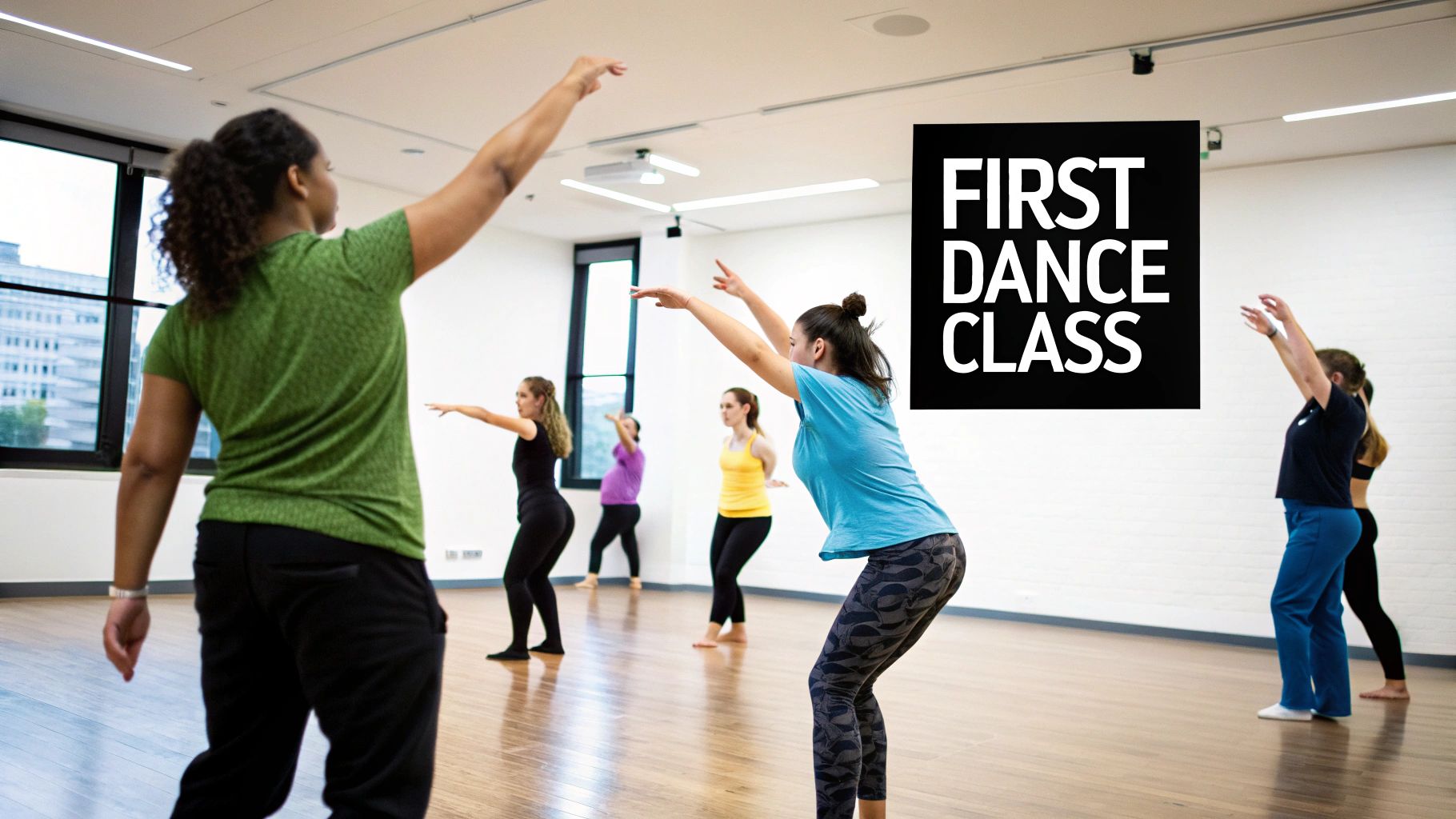
Walking into your first modern dance class can feel like stepping into a whole new world of movement. It's an exciting feeling! Whether you’re driving over from Herriman or just around the corner in Bluffdale, our goal is to create a space where you feel comfortable and ready to explore from the moment you arrive.
The class doesn't start with complicated choreography. Instead, it begins with something fundamental: your breath. We'll guide you through warm-ups designed to connect your breathing with your movements, focusing on articulating the spine and engaging your core. This isn't just about stretching; it's about finding your center and preparing your body for a more intuitive way of moving.
Building from the Ground Up
You might be surprised to find that a good portion of a modern dance class takes place on the floor. This is where we build a strong foundation. You'll learn floor work sequences that are designed to develop core strength, increase flexibility, and teach you how to shift your weight and move seamlessly from low to high levels.
A modern dance class is less about hitting perfect, cookie-cutter positions and more about discovering your body's unique way of expressing an idea or emotion through movement. We're here to help you find your own voice.
From there, we move into the center of the studio to practice some of the signature techniques you’ve read about. This is where you’ll get to feel concepts like contraction and release or fall and recovery in your own body through guided exercises. It’s one thing to read about the what is modern dance style question, but it’s another to experience it firsthand.
The class usually finishes with traveling across the floor. This is where all the elements—the breath, the floor work, the core techniques—come together in dynamic, flowing combinations. It's your chance to really move and feel a sense of freedom in the space.
You can learn more about our specific approach in our guide to modern classes at Encore . Every class is a new opportunity for discovery.
Answering Your Top Modern Dance Questions
Stepping into a new dance style always brings up a few questions. We get it! Here are some of the most common things parents and students ask us, answered simply to help you get started on the right foot.
What's the Difference Between Modern and Contemporary Dance?
This is a great question, and one we hear all the time. Think of modern dance as the original rule-breaker, the one that started it all. It has specific, established techniques from pioneers like Martha Graham.
Contemporary dance, on the other hand, is like the modern-day evolution. It’s a more fluid, blended style that borrows from everything—modern, ballet, jazz, and even street styles—to create something new and current. Modern is the root; contemporary is the branch.
What Should My Child Wear to a Modern Dance Class?
The key here is freedom of movement. We want dancers to be comfortable, so form-fitting clothing like leotards, leggings, or dance shorts is perfect. This also lets the instructor see the dancer's alignment and posture clearly.
One unique thing about modern dance is that it's almost always done in bare feet. This helps build a strong, direct connection to the floor. We’ll provide a clear dress code at our Bluffdale studio so everyone feels prepared.
Is My Child Too Young or Old to Start Modern Dance?
Not at all! Modern dance is wonderfully adaptable for any age. Its focus on natural, intuitive movement makes it a brilliant way for young children to explore their own creativity.
For teens and adults joining us from nearby Draper or Lehi, it's an incredible way to build core strength, improve flexibility, and express yourself, even if you’ve never taken a dance class before. There’s really no “right” age to start.
Ready to feel the power and freedom of modern dance for yourself? At Encore Academy for the Performing Arts, we help dancers find their own unique voice through movement.
Come see why families from all over the Salt Lake Valley—from Riverton to Sandy and beyond—love our supportive, inspiring studio.