
Tumbling for Dancers: A Guide to Power, Artistry, and Grace
Ever see a dancer do something that just takes your breath away? A flawless aerial or a silent, graceful back handspring that seems to appear out of nowhere? That's the magic of tumbling.
Think of it like adding a whole new set of colors to a painter's palette. For a dancer, tumbling—or what we often call acro dance—is all about blending acrobatic movements so seamlessly into choreography that they become part of the story.
What Exactly Is Tumbling for Dancers?
It's crucial to understand that tumbling for dancers isn't the same thing as competitive gymnastics. Gymnastics is all about sticking the landing on a beam or executing a perfect routine on the bars. Acro dance, on the other hand, is about integrating those powerful, athletic skills right into the flow of a performance.
The goal isn't just to perform a "trick." It's to use that trick to make the dance more powerful and expressive. This art form builds an incredible foundation of strength, flexibility, and body awareness, giving dancers the confidence to pull off stunning moves with grace. For dancers here in Bluffdale or Riverton, grasping this difference is the first step toward unlocking a whole new level of artistry.
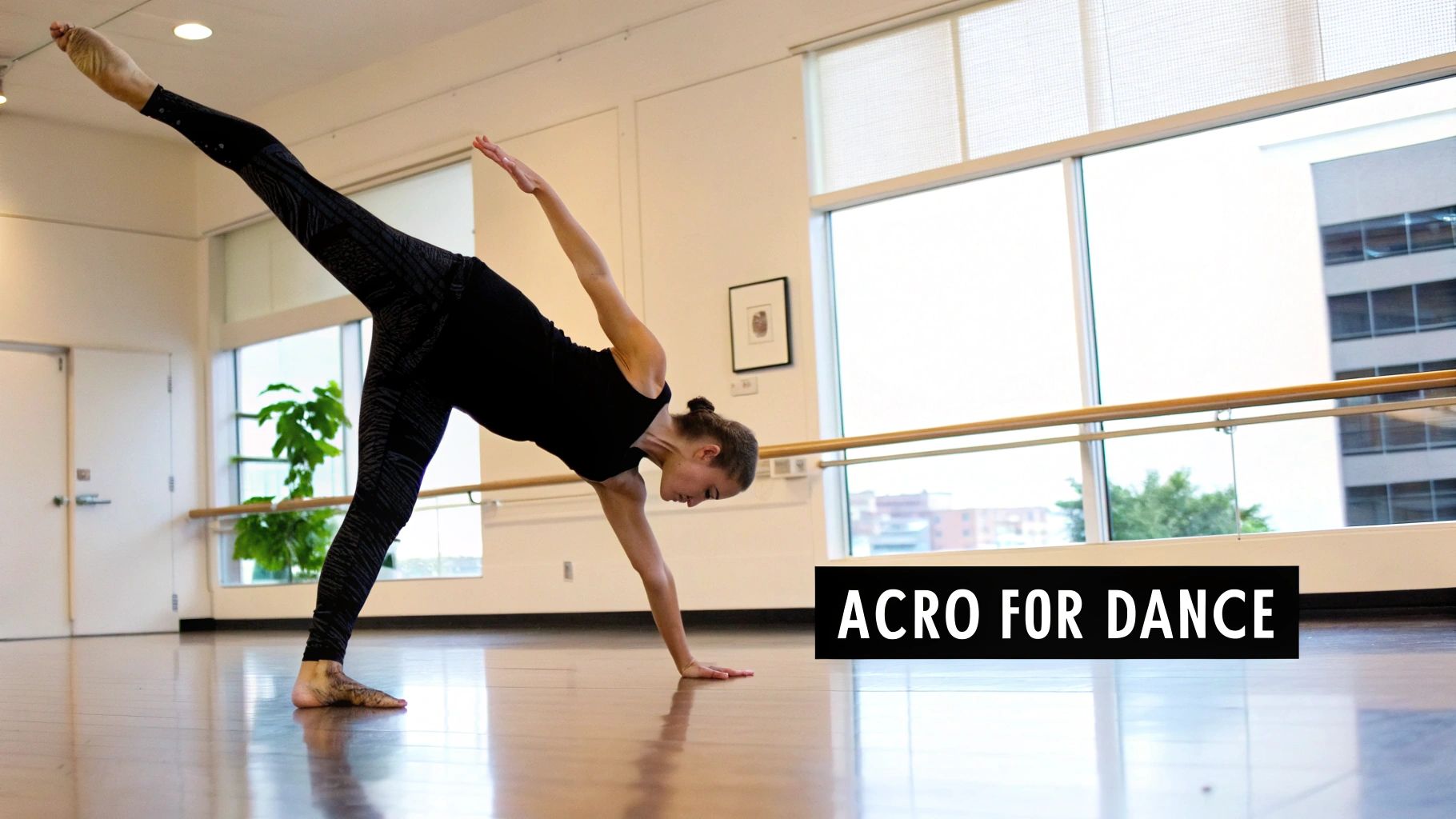
More Than Just Flips: The Art of Acro Dance
What really sets acro dance apart is its deep connection to musicality and emotion. The training is different because it prioritizes fluid transitions and artistic interpretation just as much as pure acrobatic skill.
Acro dance doesn't interrupt the choreography; it becomes a part of it. A walkover might represent a moment of surrender in a lyrical piece, while a powerful tuck could punctuate the beat in a high-energy jazz routine.
This unique approach ensures that the acrobatic elements actually elevate the performance instead of distracting from it. Dancers don't just learn how to do a skill, but when and why it fits into the story they're telling on stage.
This specialized training gives dancers a serious edge. It builds a versatile skill set that makes them more dynamic and adaptable—truly ready for the demands of modern choreography. For any young dancer in the Herriman area looking to stand out, adding tumbling to their toolkit provides a clear advantage in auditions and performances, delivering that visual "wow" factor that leaves audiences speechless.
How Tumbling Benefits Every Style of Dance
Tumbling isn't just about flashy tricks; it's a powerful tool that can amplify nearly every style of dance. Think of it as adding a new layer of dynamic skill and physical confidence to a dancer's vocabulary. It’s not about stringing together a few isolated moves, but about weaving athleticism directly into the art form.
Imagine a contemporary piece where a dancer melts into a seamless aerial, creating a breathtaking moment of suspension. Or picture a high-energy hip-hop routine where an explosive back handspring punctuates the beat perfectly. That's what tumbling for dancers is all about—integrating these skills so they feel like a natural part of the choreography, making the entire performance unforgettable.
Building a Stronger, More Versatile Artist
The benefits go much deeper than just the visual "wow" factor. The intense conditioning required for tumbling builds the kind of deep core stability that translates into flawless turns in jazz or higher, more controlled leaps in lyrical. Even the precise world of ballet sees gains from the enhanced body awareness and control that acro training delivers.
This discipline creates a physically literate and confident performer, making it an essential part of any dancer's toolkit. Here at our Bluffdale studio, we see dancers from all over, including Herriman and Draper, completely transform their abilities. By adding tumbling, they become more versatile, resilient, and less prone to injury.
Tumbling isn't just an add-on; it's a foundational discipline that enhances a dancer’s strength, control, and expressive range. It gives choreographers a broader canvas to work with and empowers dancers to execute more ambitious and creative movements safely.
The table below breaks down exactly how tumbling skills can elevate different dance styles, turning a good performance into a great one.
How Tumbling Skills Enhance Different Dance Styles
| Jazz | Adds explosive, high-energy moments and dynamic transitions that match the music's punch. | Side Aerials, Front Walkovers, Headsprings |
|---|---|---|
| Lyrical | Creates fluid, emotive movements that express vulnerability and strength. | Back Handsprings, Valdez, Front Aerials |
| Contemporary | Enables abstract, gravity-defying movements that push choreographic boundaries. | Cartwheels (no-handed), Gainer Aerials, Illusions |
| Hip-Hop | Provides powerful, sharp tricks that add a "battle" or "show-off" element to routines. | Back Tucks, Flares, Kip-Ups |
| Ballet | Enhances core strength, balance, and body control for more precise classical technique. | (Training benefits more than skill integration) |
As you can see, tumbling offers specific, tangible benefits that help dancers stand out and push their creative limits, no matter their preferred style.
A Skillset Rooted in History
Mixing acrobatic elements into dance isn’t some new fad. The practice actually has deep roots, going all the way back to ancient civilizations where traveling troupes of dancers performed incredible acrobatic feats. For dancers today, acro classes build on that history, boosting styles like ballet, jazz, and contemporary with skills that are now staples for competitive teams.
Proper, progressive training is everything. A study involving 339 dancers revealed that a staggering 75% suffered at least one injury that impacted their performance. This really drives home why safe, structured tumbling training is so crucial—it builds the strength to execute these moves safely while maximizing artistic expression. You can dig into the full study on dancer injury rates and training on PMC .
Mastering tumbling skills doesn't just add flair; it builds a more resilient athlete. The conditioning involved complements other forms of dance training by focusing on functional strength and control. To see how this fits into a complete training regimen, you might want to read our guide on flexibility training for dancers . This combined approach is what creates a truly well-rounded performer, ready for any challenge a choreographer throws their way.
Mapping Your Tumbling Skill Progression
A great tumbling journey is built on a smart, progressive roadmap—it's never a sprint to the finish line. Think of it like learning musical scales before you can compose a symphony. Dancers have to master the foundational movements before they can safely and beautifully execute the more complex skills. This methodical approach is the secret sauce to building a rock-solid foundation, ensuring dancers truly own each step before moving on. That's how you build long-term success and prevent injuries.
It all starts with the fundamentals of body shapes and awareness. Young dancers learn to feel the difference between a tight hollow body and an arched bridge, creating the muscle memory that will support them for years. This patient, step-by-step process isn't just about safety; it's about building unshakeable confidence.
Foundational Skills for Young Dancers (Ages 5-7)
For our youngest dancers, including many who join us from nearby Lehi and Sandy, the focus is all about mastering the basics in a fun and encouraging environment. The goal isn't to rush into complex tricks, but to perfect the simple, essential movements that everything else is built on.
- Forward and Backward Rolls: These teach a dancer how to move their spine and understand where they are in space.
- Bridges: A crucial skill for developing back flexibility and building strength in the shoulders.
- Cartwheels: Learning a proper cartwheel sets the stage for all sideways acrobatic movements, like aerials.
These skills might look simple, but they are the non-negotiable building blocks for every tumbling skill that follows.
Intermediate Skills for Growing Artists (Ages 8-12)
As dancers get stronger and more coordinated, we start connecting those foundational skills into more dynamic, flowing movements. This is where the artistry of acro dance really begins to emerge, as they learn to execute skills with more grace, power, and control.
At this stage, dancers move on to skills like front and back walkovers, which demand a higher level of flexibility and strength. They also begin the critical prep work for handsprings, running drills that build explosive power and perfect body alignment. You can see exactly how we structure this progression by checking out the different class levels we offer .
Advanced Techniques for Teens (13+)
For our dedicated teen dancers, the curriculum shifts to high-level techniques that add a serious "wow" factor to their performances. The focus turns to generating power, gaining height, and stringing multiple skills together into seamless tumbling passes.
This advanced training often includes:
- Aerials (no-handed cartwheels)
- Back and Front Tucks
- Handspring Variations and Connections
Tumbling has been part of competitive dance for a long time—formalized events existed as early as 1886. But modern training has to put safety first. Injury data from a survey of 339 dancers showed that nearly 75% reported injuries that got in the way of their performance. This is precisely why a structured, progressive curriculum is so important for dancers here in Utah. It builds resilience safely, allowing them to perform at their absolute peak.
The timeline below shows just how long acro dance has been around, from its ancient roots to its modern form.
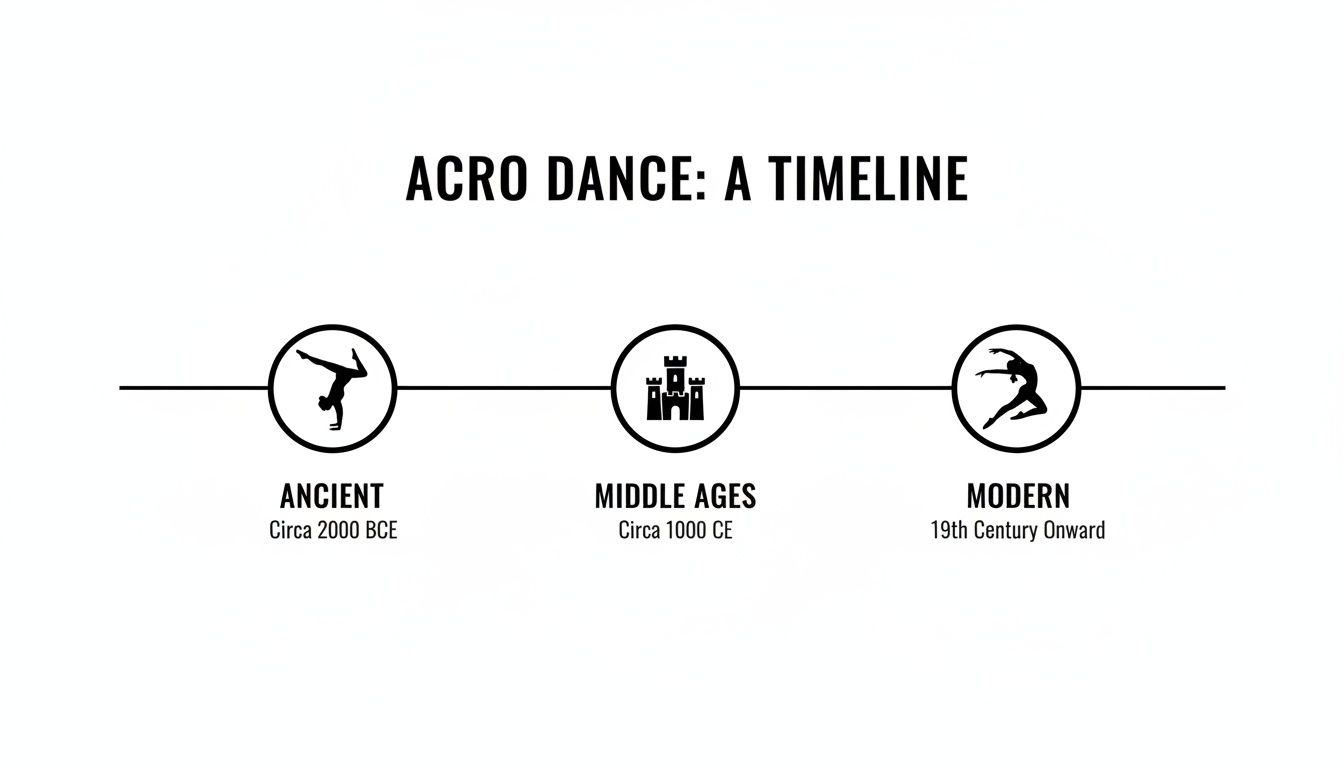
This visual journey highlights how acrobatics has been woven into performance art for centuries, evolving into the sophisticated and athletic acro dance we love today.
The Unbreakable Rules of Safe Tumbling
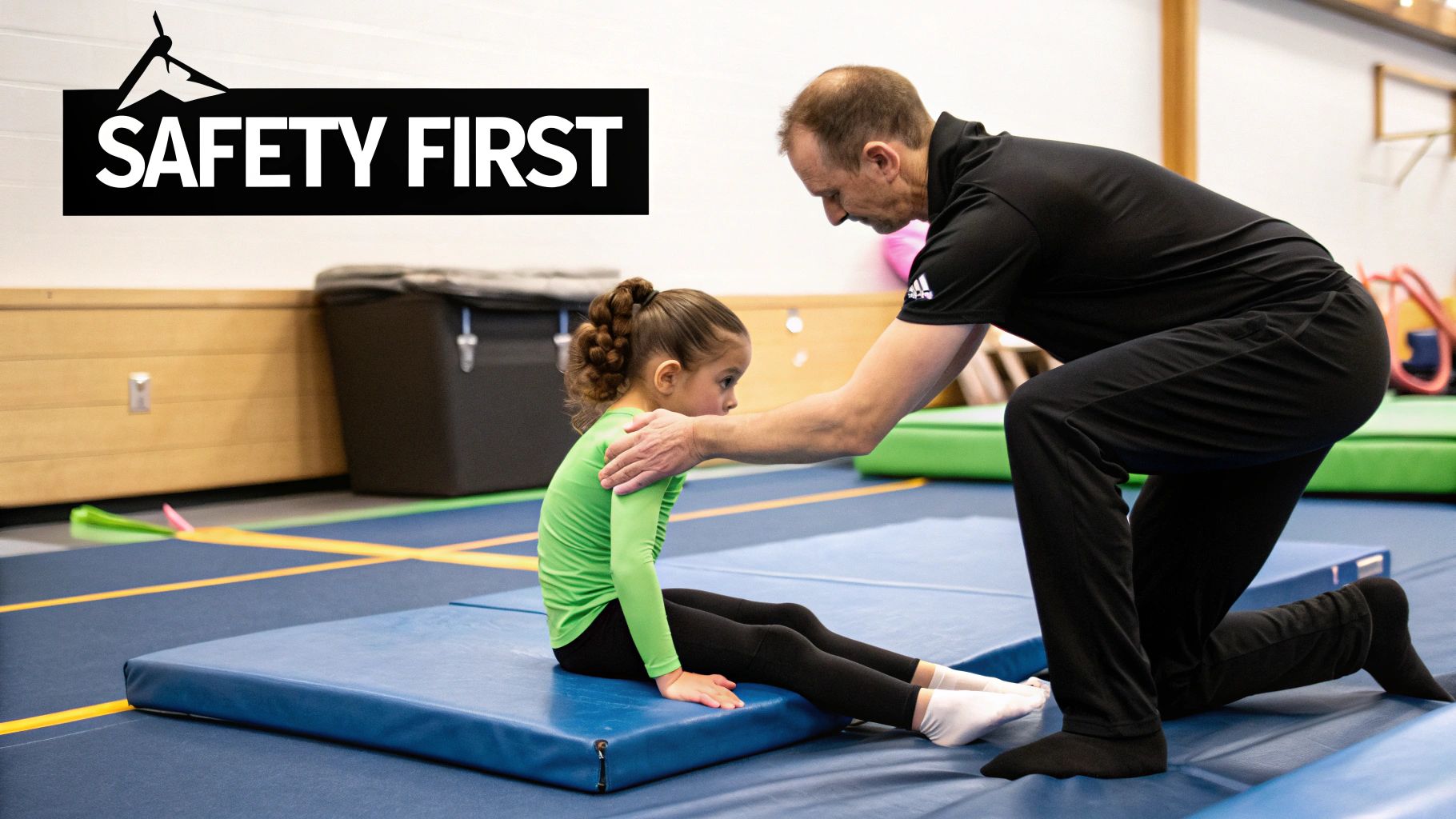
As a parent, your child’s safety is always top of mind. That’s our priority, too. In the world of tumbling and acro, those jaw-dropping flips and tricks are incredibly exciting, but they’re only possible because of a serious, behind-the-scenes commitment to safety. This dedication starts long before a dancer ever attempts their first cartwheel.
A safe tumbling class is built on a solid foundation of proper conditioning. It’s like building a house—you’d never put up the walls before pouring the concrete. In tumbling, that foundation is a strong, well-conditioned body that’s ready for the demands of acrobatics. It’s this focus that allows our dancers from communities like Draper and Herriman to train with confidence and push their skills safely.
Every single class kicks off with a dynamic warm-up to get the blood flowing, followed by specific exercises for strength and flexibility.
Building Resilience from the Ground Up
Conditioning is about more than just building muscle; it's about creating a resilient body that can resist injury. We drill specific, actionable exercises that form a strong athletic framework. These drills might not look as glamorous as a back handspring, but they’re the secret ingredients that make those bigger skills possible—and safe.
Here are a few of the non-negotiable conditioning drills you'll always see in our classes:
- Hollow Body Holds: This is the absolute cornerstone of core strength. It teaches dancers how to keep their body tight and controlled, which is essential for nearly every skill, from a handstand to a full tuck.
- Wrist Rocks: Tumbling places a lot of stress on the wrists. Gentle, controlled rocking and stretching prepares these small but vital joints for impact, significantly lowering the risk of sprains and strains.
- Bridge Push-ups: This exercise is a powerhouse. It develops the back and shoulder strength and flexibility needed for skills like back walkovers and handsprings.
Safety isn’t just a one-time thing; it's the outcome of a smart, consistent training process. By prioritizing conditioning and mastering the basics first, dancers build the physical strength to tackle advanced skills without putting themselves at risk.
This practical, no-shortcuts approach to safety shows our commitment to every student's long-term health. It’s also why finding a studio with qualified instructors who truly understand the unique needs of a dancer's body is the most important decision a family can make.
Dressing for Success and Safety
Beyond physical prep, what a dancer wears to class plays a huge role in safety. Baggy t-shirts or loose pants can easily snag on equipment or get in a spotter's way, creating a preventable hazard.
Form-fitting athletic wear is key because it allows instructors to see a dancer’s alignment clearly. This makes it much easier to give corrections that ensure proper technique and keep everyone safe. You can check out our complete Encore Academy dress code for specifics on what to wear. It’s a simple but crucial step in maintaining the highest safety standards for every dancer in our studio.
A Look Inside Our Tumbling Classes
Walking into a tumbling class for the first time can be a mix of excitement and nerves. We get it. That’s why we’ve carefully designed our classes at Encore Academy to be a place where dancers feel supported and can see real, tangible progress. Let me pull back the curtain and show you exactly what goes on inside, so families from Bluffdale and beyond know the level of care we put into every single session.
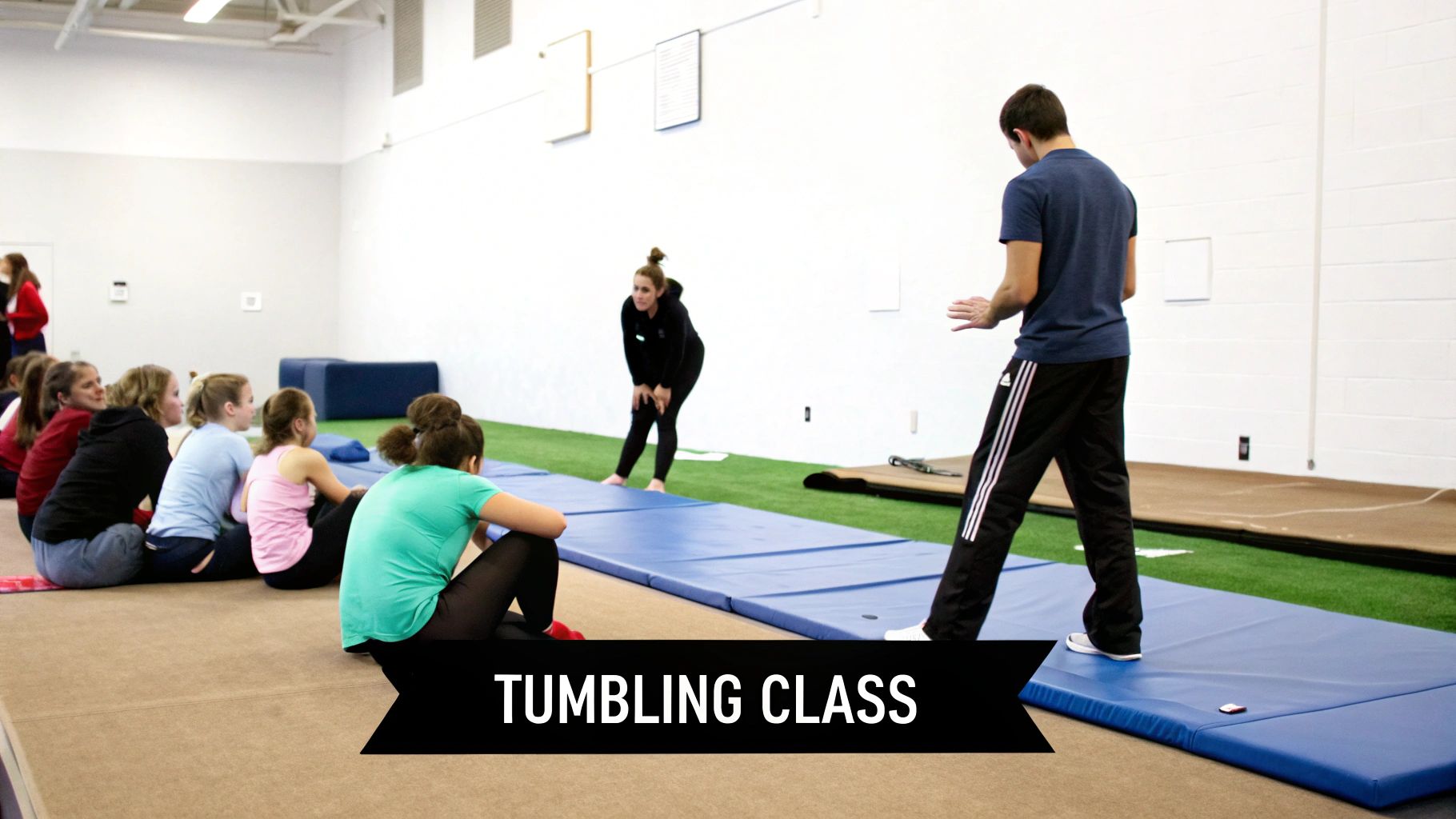
We always kick things off with a high-energy, dynamic warm-up. This is way more than just jogging in a circle; it’s a targeted routine that gets the blood pumping, wakes up the specific muscles needed for acro, and gets the whole body ready to work. Think of it as priming the engine—it drastically reduces the risk of pulls and strains before we ask the body to do amazing things.
Skill Stations and Individualized Attention
Once everyone is warm, we dive into conditioning blocks that build the kind of functional strength dancers need. From there, we move to the heart of our method: skill-building stations. Instead of having everyone do the same thing at once, we break the class into small, focused groups that rotate through different drills.
This station-based approach is a game-changer. It means our instructors can give truly individualized feedback and deconstruct complex skills into simple, achievable steps. For example, one group might be mastering handstand holds to build shoulder stability, while another works on the explosive jump needed for a back handspring. For our dancers driving in from Lehi or Sandy, this hands-on coaching ensures every minute of their time with us counts.
Our class structure is built for mastery, not just repetition. By zeroing in on specific parts of a skill at each station, dancers develop a much deeper feel for the mechanics, which leads to safer and more confident tumbling.
Building a Foundation for Success
Tumbling has a fascinating history, starting as military training in ancient Greece and evolving into a vital part of modern dance. That long evolution reinforces a principle we live by: a strong foundation is everything. A study on dancer injuries found that those who started intensive training before age 12 had higher injury rates. This is why our classes—whether for tiny beginners or advanced teens—are laser-focused on proper technique and conditioning. It complements their other training in disciplines like pointe and contemporary and actually helps reduce their overall risk of injury. You can dive deeper into the history of gymnastics and its influence on Britannica .
Our entire approach is about making the training process clear and achievable. We want every dancer to see a path to their goals. To see how this all comes together, we encourage you to check out our tumbling and acro classes and discover the right fit for your performer.
Choosing the Right Tumbling Program
Picking the right tumbling program is easily one of the most critical decisions you’ll make for your dancer. It’s not just about learning cool tricks; it's about their safety, their confidence, and their long-term development. The truth is, not all studios approach this the same way, and finding one that prioritizes solid, clean technique over just "getting the skill" is paramount.
A great studio should feel like an extension of your family—a place where the instructors are as committed to your child's well-being as they are to their progress. For our local families in Draper, Riverton, and nearby communities, this means finding a program that builds skills from the ground up, safely and progressively. This is how a dancer truly grows, gaining both impressive abilities and the confidence to perform them.
What to Look for in a Studio
When you're visiting a studio or watching a class, there are a few non-negotiables to keep on your radar. These are the tell-tale signs of a professional, safety-first environment.
- Certified Instructors: Are the teachers certified? Look for credentials from well-respected organizations like USAG (USA Gymnastics) or Acrobatic Arts. This isn't just a piece of paper; it means they've been trained in proper spotting, skill progressions, and the biomechanics of movement.
- Appropriate Class Sizes: Take a look at the student-to-instructor ratio. If the class is packed, it’s nearly impossible for a teacher to give the individual attention and hands-on spotting needed for a student to learn safely. Smaller is almost always better.
- Proper Equipment: A studio serious about tumbling will have invested in the right gear. This means a spring floor (not just mats on a hard surface) to absorb impact and plenty of high-quality landing mats in various sizes and shapes. This equipment is essential for protecting joints as dancers learn and repeat new skills.
Choosing a studio is about more than just convenience; it’s about entrusting your child’s physical development to qualified professionals who put safety first. A great program focuses on building a strong foundation, which is the fastest and safest path to advanced skills.
Key Questions to Ask Any Studio
Don't be shy about asking questions when you're checking out a program. A studio that’s proud of its methods will be happy to answer.
What is your approach to conditioning and injury prevention? A good answer will involve a clear plan for building strength and flexibility, not just practicing tricks.
How do you ensure each skill is mastered safely before a dancer progresses? They should have a structured curriculum with clear benchmarks. Listen for words like "mastery," "clean technique," and "consistency."
Are your instructors certified specifically for acro or tumbling? It’s a direct question that deserves a direct answer. Confirm their specific qualifications to ensure they truly are experts.
Making an informed decision from the start gives you peace of mind and sets your dancer up for success. To get a better feel for what a high-quality program looks like, you can learn more about what goes into a top-tier performance dance center and use that as your benchmark. Taking the time to do this research ensures your dancer from Bluffdale or Herriman will thrive in a positive, supportive, and safe environment.
Got Questions About Tumbling for Dancers? We've Got Answers.
It's completely normal to have a few questions when you're thinking about adding a new discipline like tumbling to your child's dance training. We get it! Below, we’ve answered some of the most common questions we hear from dance families, giving you the clarity you need to take that next step.
Is Tumbling Safe for Dancers?
Yes, absolutely—as long as it’s taught correctly in a structured, professional setting. At Encore Academy, safety isn't just a rule; it's the core of our program. We build a safe environment with certified instructors, a serious focus on proper conditioning, and a curriculum that insists on mastering the fundamentals before ever moving on. The entire system is designed to build strong, resilient athletes while keeping risks to a minimum.
My Child Isn’t Very Flexible. Can They Still Do Tumbling?
Of course! Think of flexibility as something you build, not something you need to start with. It's a result of consistent training, not a prerequisite. Every single class incorporates targeted stretching to help students safely improve their range of motion at a pace that's right for them. We’ve seen dancers from Herriman and all over the area grow more flexible and confident through our supportive approach.
What’s the Real Difference Between Gymnastics and Acro for Dance?
This is a great question. While they look similar and share some skills, their end goals are totally different. Gymnastics is a sport focused on competing with specific equipment—like the uneven bars or the vault—and it’s all about the scorecard.
Acro for dance, on the other hand, is about artistry. The goal is to seamlessly blend acrobatic skills into choreography to elevate a dance performance. It’s about enhancing the story and emotion of the dance itself, not about earning points from a judge.
How Long Does It Take to Learn a Back Handspring?
Honestly, there’s no single timeline. Every dancer's journey is unique and depends on their individual strength, body awareness, flexibility, and how consistently they train.
Rather than rushing to a single skill, we prioritize building a rock-solid foundation first. This means ensuring dancers have truly mastered all the prerequisite skills before even attempting something as advanced as a back handspring. Focusing on proper technique isn’t just the safest way forward—it’s also the fastest path to long-term success.
Ready to see how tumbling can help your performer shine? Encore Academy for the Performing Arts offers a supportive, expert-led environment where artistry and athletics come together. Book a trial class today and watch your dancer discover a whole new level of potential.