
Your Guide to Cello Lessons for Beginners
So, you're thinking about learning the cello. That's a fantastic decision. Taking your first steps into the world of music with an instrument as rich and soulful as the cello is an adventure unlike any other. This guide is here to walk you through what to expect, from how to even hold the instrument to playing your very first notes.
We'll break it all down so you can see that learning this beautiful instrument isn't some impossible task—it's an exciting and deeply rewarding journey that’s completely within your reach.
Your First Steps into the World of Cello
Welcome! There's something truly special about the cello. If you've ever been stopped in your tracks by its deep, warm sound—a sound many say is the closest instrument to the human voice—you already know what I'm talking about.
Deciding to learn an instrument is a huge and exciting step. Whether you're a parent in Herriman looking for the right musical start for your child, or an adult in Draper finally ready to chase a lifelong dream, we want you to feel prepared and genuinely excited for what's ahead.
Why the Cello?
What draws people to this specific instrument? For one, it’s incredibly versatile. You'll hear the cello holding its own in a classical symphony, but you'll just as easily find it adding a soulful bassline to a modern pop song.
Beyond the music, learning the cello is amazing for your brain. It sharpens your focus, builds discipline, and improves coordination in ways few other activities can. But most importantly, it gives you a powerful new voice for expressing yourself.
You're also stepping into a surprisingly large and welcoming community. The cello has seen a huge surge in popularity worldwide. Online hubs like the International Cello Society now have around 23,000 members, a mix of world-class professionals and people just like you, picking up the instrument for the first time.
The journey of a thousand miles begins with a single step. For a cellist, that first step is often just picking up the bow—a simple moment filled with so much potential.
Here at Encore Academy in Bluffdale, we love seeing students from nearby communities like Lehi and Riverton discover that potential. Our whole focus is on creating a supportive space where you feel encouraged to grow. We want this guide to give you a clear, honest look at what your first lessons will involve. Explore our approach to helping you start your cello journey and see how we can help you hit your musical goals.
What to Expect in Your First Cello Lessons
Walking into your very first cello lesson is a special kind of thrill—part excitement, part complete mystery. What actually happens behind that door? It’s a great question. The path from making your first wobbly sound to playing a real melody is a rewarding, step-by-step process, and your teacher is there to guide you through every part of it.
Think of those initial lessons as building a strong foundation. You wouldn’t put up the walls of a house before the foundation is solid, right? It's the same with the cello. This early stage is all about developing a comfortable, healthy relationship with the instrument.
Mastering the Fundamentals
The first few sessions will zero in on the physical side of playing. You'll spend a good amount of time learning how to sit correctly. Your posture is the absolute bedrock of good cello playing; it gives you the stability and freedom of movement you’ll need later on. A great teacher will make sure you feel supported and relaxed right from the get-go.
Next up, you’ll be introduced to the bow. Learning the proper bow hold is a surprisingly delicate art. It’s far more like holding a paintbrush to create a beautiful, smooth stroke than gripping a hammer. The key is a relaxed, flexible hand, which is what allows you to pull a rich, clear tone from the strings.
The most crucial skill in the beginning isn't making the “right” sound, but learning how to be comfortable and relaxed with the cello. Tension is the enemy of beautiful music, so patience with your posture and bow hold will pay off immensely.
Once you’re feeling more at ease holding the instrument and bow, you'll start making your very first sounds on the open strings (that’s when you play a string without putting any fingers down). This is a huge step! It helps you get a real feel for how the bow and strings work together to create different volumes and tones.
This simple timeline shows how these early steps flow together, creating a clear and rewarding path forward.
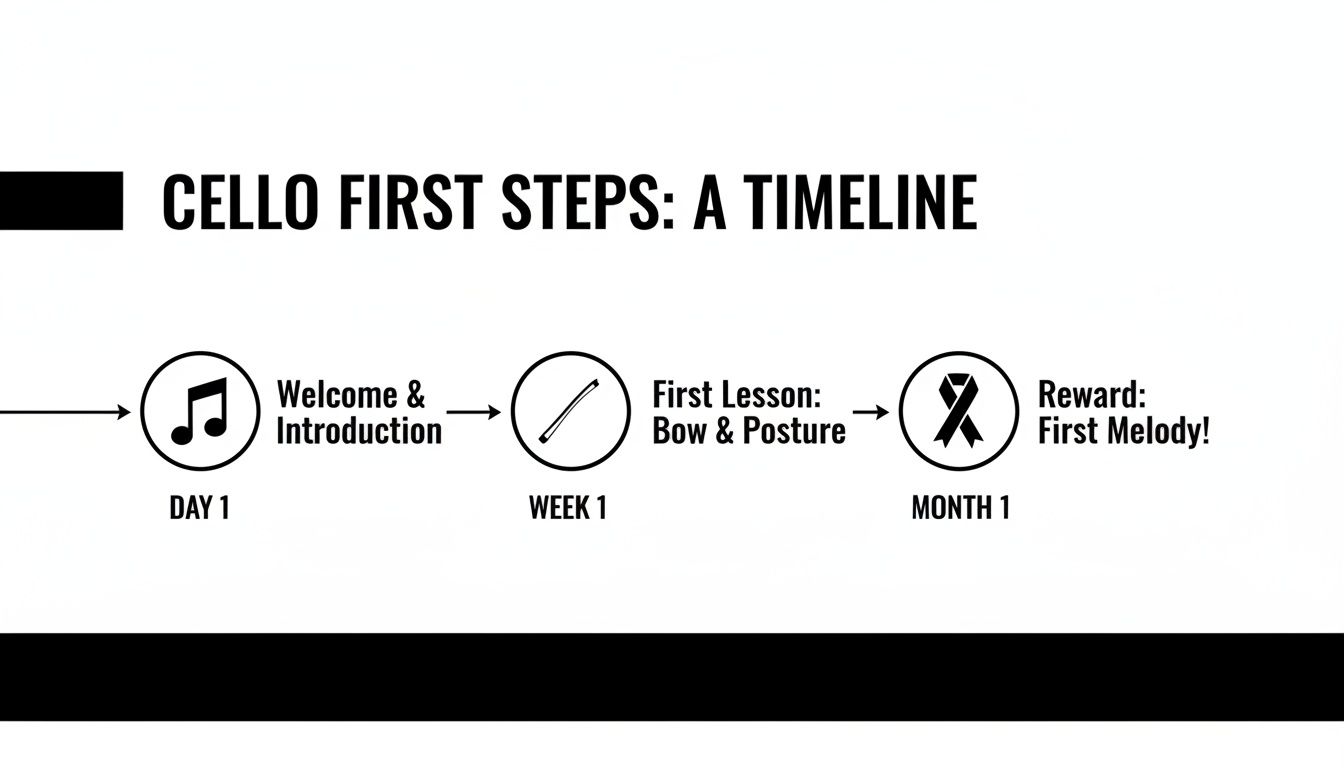
As you can see, the focus is always on establishing a comfortable connection with the instrument before jumping into playing complex notes and melodies.
From Notes to Music
After you've gotten friendly with the open strings, your teacher will introduce basic fingerings. This is where things get really exciting. You'll learn where to place your fingers on the fingerboard to play your first few notes—maybe a D, E, and F# on the D string. This is that "aha!" moment when you start to feel like you're truly playing the cello.
At the same time, you’ll probably start dipping your toes into reading music. This skill is built up slowly, piece by piece, as you connect the notes you see on the page to the sounds you're making. If this is all new to you, don't sweat it; your teacher will guide you. For anyone who wants a little preview, our guide on how to read sheet music for beginners is a great place to start.
These core elements—posture, bow hold, fingerings, and reading music—are the essential building blocks of your cello journey. Each skill supports the others, and over your first few lessons, you’ll watch them come together as you learn to play your very first simple song.
Building a Practice Routine That Actually Works
Think of your weekly cello lesson as getting the map from an expert guide. Your daily practice? That's the actual journey. It's in those quiet moments at home that the real magic happens—where skills take root, muscle memory forms, and the music starts to feel like a part of you.
The secret isn’t about marathon sessions. It’s about building a smart, consistent routine that gets you results without burning you out.
Imagine trying to build a brick wall. You wouldn't work for 12 hours one day a month and expect a sturdy result, right? You'd lay a few bricks each day, letting the mortar set. Cello practice works the exact same way. Short, focused daily sessions are infinitely more powerful than one long, exhausting cram session on the weekend.
This approach is a lifesaver for busy students and families, whether you're making the drive from Sandy or live just around the corner here in Bluffdale. Consistency is truly the engine of progress.
Quality Over Quantity Always
I see this all the time with new students: they mistake mindless repetition for real practice. Playing a scale ten times while your mind is on your grocery list won't do you much good. But playing it just three times with intense focus on your intonation, bow angle, and tone? That’s where the growth is.
This is what we call mindful practice. It’s about engaging your brain with every single note you play.
From what I’ve seen over the years, most adult beginners make incredible progress with just 30 minutes of focused practice on most days of the week. That consistent effort is what turns a complete novice into a confident player.
Mindful practice isn't about chasing perfection. It's about paying attention. When you play a "bad" note, don't just get frustrated—get curious. Why did that happen? Was your finger a millimeter off? Was your bow moving too fast? Every mistake is just a piece of data helping you get better.
A Sample Beginner Practice Plan
To keep from feeling overwhelmed, it helps to give your practice time some structure. A balanced routine makes sure you're hitting all the essential skills, not just noodling around on the fun parts.
Here’s a simple 30-minute framework that works wonders for beginners:
- Warm-up (5 minutes): Start with long, slow bows on the open strings. This is a great way to center yourself, check in with your posture, and get your bowing arm ready to go.
- Technique (10 minutes): Dive into the scales or specific exercises your teacher gave you. This is your gym time for building finger strength, nailing your intonation, and refining your bow control.
- Repertoire (10 minutes): Now, take those skills and apply them to the actual pieces you're learning. Work through the tricky spots slowly and deliberately. As you get more comfortable, you might also want to dig into the "why" behind the notes. Our guide on music theory lessons for beginners can add a whole new dimension to your playing.
- Play for Fun (5 minutes): Always end your session by playing something you genuinely enjoy. It could be a simple folk tune or just improvising. This last step is crucial—it ensures you always walk away from the cello feeling rewarded and inspired.
How to Choose the Right Cello Teacher
Think of finding the right cello teacher as finding the perfect guide for a long journey. This person doesn't just show you where to put your fingers; they shape your entire musical experience, inspire you when things get tough, and help you navigate the inevitable roadblocks. The connection you build with your instructor can honestly make or break your progress.
That’s why it’s so important to look past a simple list of credentials. A truly great teacher is a unique blend of an expert musician, a patient mentor, and a clear communicator. They know how to break down intimidating concepts into small, manageable pieces and will be your biggest cheerleader for every little win.
Qualities of an Exceptional Cello Instructor
When you start looking for beginner cello lessons, a few qualities are absolutely non-negotiable. You want an instructor who is not just a skilled cellist but also a gifted teacher—and believe me, those two things are not always the same.
A great teacher knows how to adapt their methods to your specific learning style. They’re excellent listeners, both to your playing and to your questions, and they make you feel comfortable asking anything.
Here are a few key traits to keep an eye out for:
- Patience and Encouragement: Learning an instrument is hard work. A supportive teacher creates a safe space where mistakes are just part of the process, not something to be afraid of.
- Clear Communication: They should be able to explain things like bow pressure or finger placement using simple language and analogies that just click.
- A Structured Approach: The best teachers have a plan. They know how to build your skills one on top of the other, making sure you have a rock-solid foundation before moving on to the next concept.
You can often get a sense of a teacher's personality and style just by reading their bio. To see what I mean, you can get to know the skilled instructors on our staff and see how their diverse backgrounds create a really rich learning environment.
Private Lessons Versus a Studio Environment
Next, you'll need to think about the setting. Do you learn best with focused one-on-one attention, or would you feel more motivated as part of a larger musical community? Each option has its own distinct vibe and benefits.
For families in nearby Herriman or Lehi, it’s worth thinking about what a short drive to a studio can offer. A place like Encore Academy in Bluffdale provides more than just lessons; it provides a community.
A great studio doesn't just teach music; it builds musicians. It's a place where students are inspired by their peers, gain confidence through performance, and feel like they are part of something bigger than themselves.
Let's break down the two main settings.
| Focus | Highly individualized, one-on-one attention. | A mix of private instruction and group opportunities. |
|---|---|---|
| Community | Limited to the student-teacher relationship. | Built-in network of peers, mentors, and fellow musicians. |
| Opportunities | Performance options may be infrequent or small-scale. | Regular recitals, ensemble playing, and performance events. |
| Convenience | The teacher often travels to you. | Students travel to a central, dedicated learning space. |
At the end of the day, the right choice really comes down to your personal goals and what kind of environment helps you thrive. If your top priority is hyper-focused instruction without leaving the house, private lessons can be a fantastic fit. But if you’re looking for a more well-rounded musical education packed with performance opportunities and a sense of community, a studio is often the ideal choice.
Navigating the Bumps in the Road: Common Beginner Cello Challenges
Every single person who picks up a cello for the first time is going to hit a few speed bumps. It’s not just normal—it’s a rite of passage! Those first few weeks are a whirlwind of new sensations, sounds, and physical movements, so it's only natural to stumble a bit as you find your footing.
The great news? These hurdles aren’t permanent roadblocks. Think of them more like signposts telling you you're pushing yourself and making real progress. With a bit of patience and the right guidance from a teacher, you'll clear them easily.
Troubleshooting a Few Common Hiccups
Let's break down three of the most common issues that new cellists run into. Remember, every accomplished cellist you admire once stood exactly where you are, wrestling with these very same things.
The Dreaded "Squeak"
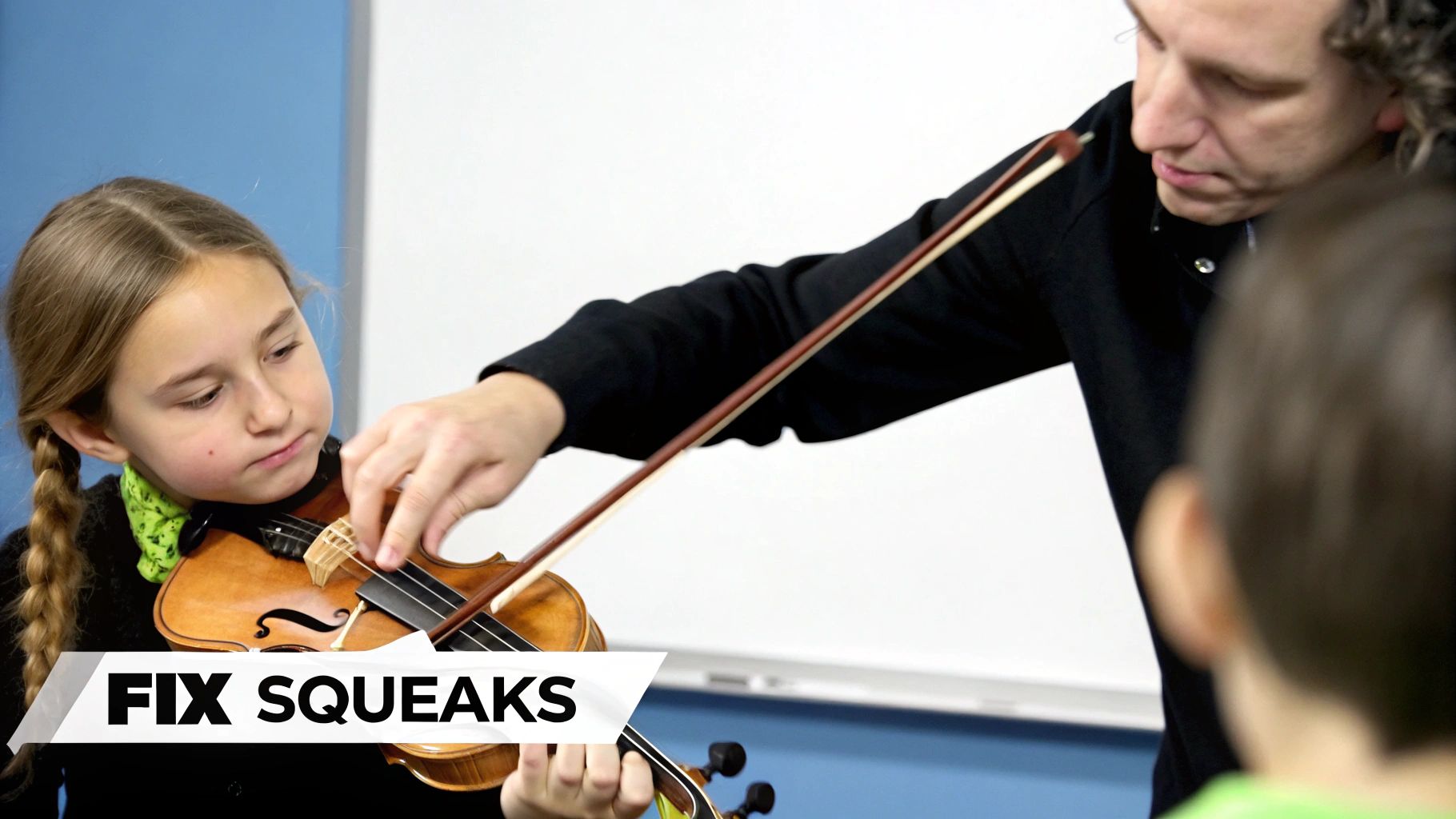
That sudden, high-pitched scratch is the unofficial handshake of the beginner cellist. It’s startling, for sure, but it rarely means your instrument (or you!) is broken. Almost always, it’s a simple fix tied to bow pressure, speed, or where you've placed the bow on the string. Sometimes, it’s as easy as applying a little more rosin so the hair can grip the string properly.
Finding the Right Note (Intonation)
Unlike a guitar, a cello doesn't have frets to show you where the notes are. Finding the exact spot for each pitch is a skill that your ears and fingers have to learn together, as a team. At first, you’ll probably sound a little sharp or flat, and that's okay! Consistent scale practice and feedback from your teacher will train your ear, and soon muscle memory will kick in. This is a challenge shared by all string players, and you can see how violin and viola students tackle this too.
Sore Fingers
Pressing down on steel strings is a brand-new job for your fingertips, and they'll let you know it. Expect some tenderness at the beginning. This discomfort fades pretty quickly as you develop calluses—your fingers' own natural armor. The key is to keep practice sessions short but frequent, giving your hands time to adapt without getting too sore.
Every squeak, every off-key note, and every sore fingertip is a badge of honor. These aren't failures; they are the sounds of a musician being built. Embrace them as part of your story.
These challenges are universal. Knowing they are a completely normal part of learning the cello allows you to face them head-on, confident that you have the support and tools to move past them and grow into the musician you want to be.
Ready to Start Your Cello Journey?
So, you've gotten a peek behind the curtain. You know what to expect from your first lessons, how to build a solid practice routine, and how to work through those inevitable beginner hurdles. The next step? It's the most exciting one of all: actually starting.
That journey—from the first uncertain squeak of the bow to the moment you produce a rich, beautiful tone—is incredibly rewarding. And it all begins with finding the right guide.
At Encore Academy for the Performing Arts, right here in Bluffdale, we’ve built a community for aspiring musicians just like you. We're an easy trip for families and adult learners coming from nearby areas like Riverton and Sandy. We know that learning an instrument is about so much more than just hitting the right notes. It’s about finding your community, getting encouragement when you need it most, and sharing a real love for music.
It’s Your Turn to Take the Stage
Our instructors aren't just fantastic cellists; they're passionate teachers who know how to mentor students. They’re dedicated to giving you the personalized guidance you need to find your own musical voice. Our whole program is designed to give you a rock-solid foundation while making sure you’re having fun along the way.
Music is a story, and every new student brings a fresh narrative to the stage. Our mission is to give you the tools and confidence to tell that story with passion and skill.
If you’re ready to stop just thinking about playing the cello and actually pick one up, we’d love to meet you. Come book a trial class and see what our community is all about. Let’s get you started on your own musical journey.
Got Questions About Cello Lessons? We've Got Answers.
Jumping into cello lessons for the first time always brings up a handful of questions. It's completely normal to wonder about everything from the "right" age to start to what you can realistically expect to play in a few months. We get it.
We've put together some straightforward answers to the questions we hear most often from new students and parents. Think of this as your go-to guide to clear up any uncertainties, so you can walk into that first lesson feeling excited and ready to go.
Common Questions from New Cellists
Getting some solid info upfront helps set you up for success. Here are the most common things people ask when they're thinking about cello lessons, especially folks from around Draper, Riverton, and Lehi.
- How long until I'm actually good at the cello? Everyone's definition of "good" is a little different, but you can expect to be playing simple, recognizable tunes within the first 2 to 3 months. That's with consistent lessons and practice, of course. Getting to an intermediate level, where you can tackle more complex music, usually takes a few years of dedicated playing.
- Is it too late for an adult to learn cello? Not a chance! Kids might pick things up quickly, but adults have their own superpowers: discipline, focus, and a real desire to be there. It is never too late to start your cello journey and discover how rewarding it can be.
- What's the best age for a kid to start? Every child develops differently, but a great time to start is usually around age 5 or 6. In the past, students started much later, but that all changed with teaching philosophies like the Suzuki method, which made the cello way more accessible for little ones. If you're curious, you can discover more about these innovative teaching methods that opened the door for a whole new generation of young cellists.
The Nuts and Bolts of Lessons
The practical side of things is just as important. Here are a few more logistical questions that always come up.
The most important thing is just to begin. Don't get stuck worrying about the perfect time or being perfect from the start. Every single practice session is a step in the right direction.
- Do I have to buy a cello right away? Definitely not. Most local music shops have fantastic rental programs, which is the perfect low-commitment way to get started. Your teacher can even help you find the right size cello and point you toward a reputable shop in the Sandy or Herriman area.
- How often should lessons be? For beginners, one private lesson each week is pretty standard. It strikes the perfect balance—you get regular guidance from your teacher, but you also have enough time during the week to practice and let the new concepts sink in.
Ready to stop wondering and start playing? Encore Academy for the Performing Arts is a welcoming place to kick off your musical story.