
Jazz Dance Lessons: Discover Top Studios for jazz dance lessons
More than just high kicks and flashy turns, jazz dance lessons are where kids learn to tell a story using their whole body, powered by rhythm and pure energy. Imagine it as a high-energy conversation without words, all set to music that makes you want to move.
What Are Jazz Dance Lessons Really Like?
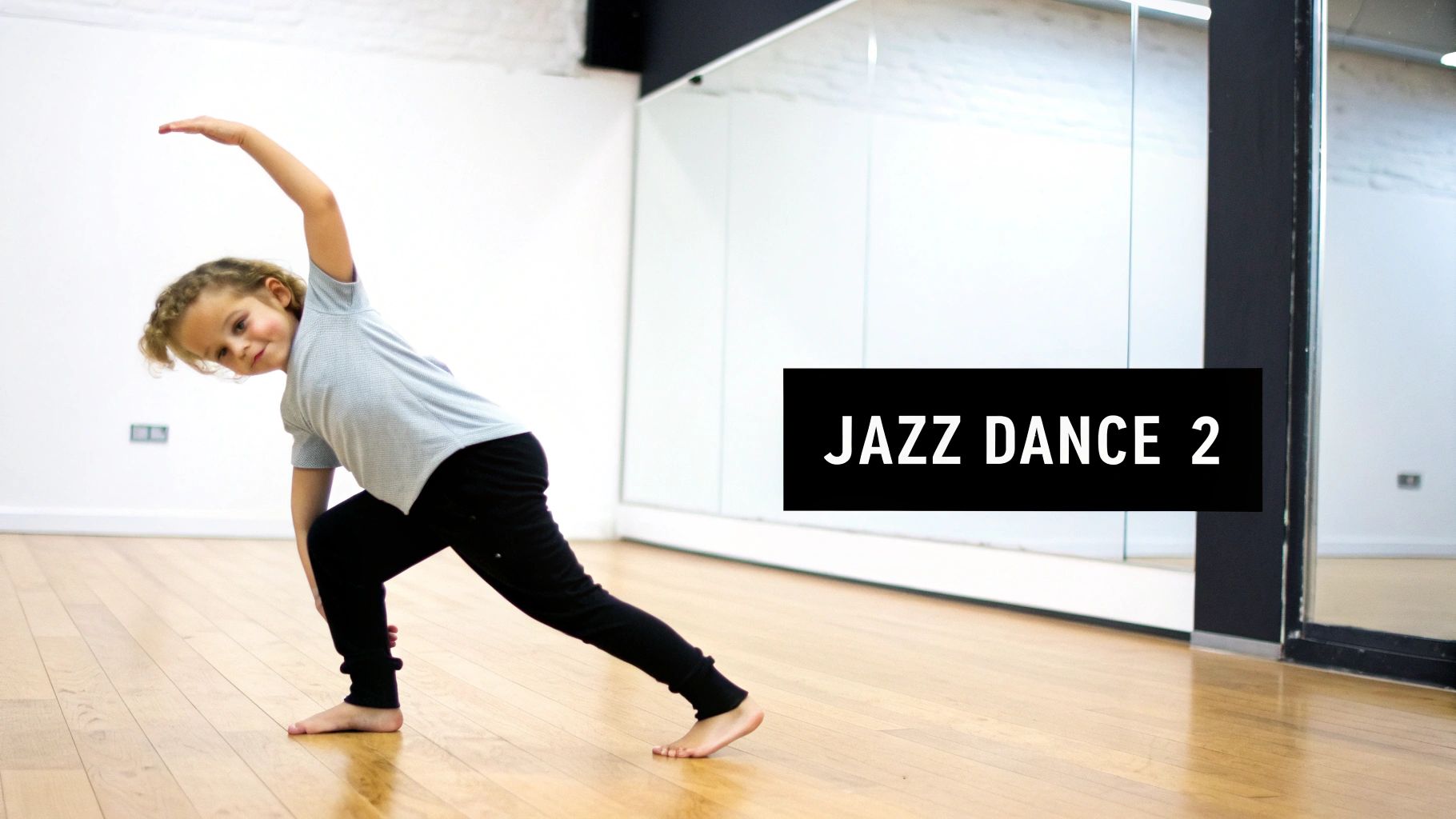
If your child has a big personality and loves to move, jazz dance could be their perfect match. It’s one of the most popular dance styles out there for a reason—it’s full of high energy, powerful poses, and choreography that looks like it belongs on a stage. Where ballet is all about structured grace, jazz is where individual style and flair really get to shine.
This athletic, expressive dance style grew from the rich history of African American social dances and later exploded onto Broadway stages and into Hollywood movies. Today, it’s a favorite for kids and teens from Draper to Sandy who are looking to build some serious confidence and find a new way to express themselves.
The Heartbeat of Jazz Dance
At its core, jazz is all about its deep connection to the music. The movements are sharp and grounded, often playing with syncopation—hitting those unexpected, off-beat rhythms that make the music so exciting. This is what gives jazz its signature high-voltage, unpredictable feel. A great class teaches dancers not just to hear the music, but to really listen and let it drive their performance.
This guide will walk you through exactly what to expect from jazz dance lessons, from the first stretch to the final bow. We'll cover everything you need to know to decide if this creative and athletic journey is the right one for your child.
Key Elements of Jazz Training
In class, students will work on a set of core skills that stack on top of each other. The goal is to build well-rounded dancers who are not only technically strong but also captivating performers. Some of the fundamentals include:
- Isolations: This is the bedrock of jazz—learning to move one part of your body at a time, like just your head, shoulders, or hips. It’s what creates those sharp, clean, and controlled movements.
- Dynamic Leaps and Turns: Students will master powerful moves that travel across the floor, like pirouettes (those classic spins) and grand jetés (big, impressive leaps).
- Choreography and Performance: It’s all about putting the steps together! Dancers learn exciting routines that tell a story and connect with an audience.
A solid technique must be carefully and painstakingly built to support the feeling and emotion of the dance. The goal is for the emotion to cover the technique, allowing the dancer’s unique personality to shine through on stage.
This dual focus on getting the technique right while celebrating personal style is what makes jazz so much fun. If you want a sneak peek at some of the foundational steps, check out our guide to popular beginner jazz dance moves .
The Story of Jazz Dance: From Stage to Studio
To really get what jazz dance lessons are all about, you have to know where they came from. Jazz isn't just a style; it’s a story—a powerful one about culture, innovation, and joy that started in African American communities way back in the early 1900s. Its very heartbeat comes from the social dances that defined a whole new era.
That incredible energy couldn't be contained for long. Jazz soon took the nation by storm, lighting up Broadway stages and sparkling in classic Hollywood movies. This is when jazz dance truly became a household name, evolving from a community expression into a celebrated performance art.
From Broadway Lights to Studio Mirrors
The move from the big stage to the dance studio was a huge turning point. Visionary dancers and choreographers started to formalize the movements, creating structured techniques that could be taught and passed down. Suddenly, this dynamic art form became accessible to everyone, from kids in Herriman to adults in Lehi, allowing them to tap into its rich history.
Modern jazz classes are a direct reflection of this legacy. They beautifully blend the structured discipline of formal training with the improvisational spirit and personality that have always been the soul of jazz. At Encore Academy, we're honored to carry that torch forward. You can learn more about how we celebrate the artists who built this industry by exploring our history .
The Growth of Jazz Dance Today
That fire for jazz dance, lit over a century ago, is still burning bright. Its popularity exploded in the 1930s and 1940s, thanks to all those incredible Hollywood musicals, which set the stage for the vibrant dance world we know now. By the 1950s, jazz dance lessons were a must-have offering in studios everywhere.
Today, the industry includes over 14,622 dance studios that bring in $5.0 billion in revenue as of 2025. This steady growth shows just how much people still connect with this art form.
This history gives every class a deeper meaning. When a student finally nails a tough combination, they're doing more than just learning a sequence of steps. They're connecting to a story that stretches back through generations—a cultural legacy we are so proud to share with families from Riverton, Sandy, and right here in Bluffdale.
Jazz dance teaches us to feel the music from the inside out. The goal isn't just to execute the steps perfectly but to let the rhythm tell a story, allowing each dancer's unique personality to shine through.
That idea is at the core of our teaching philosophy. It’s all about building strong, clean technique while encouraging every single student to find their own voice and dance with confidence.
A Look Inside a Typical Jazz Dance Class
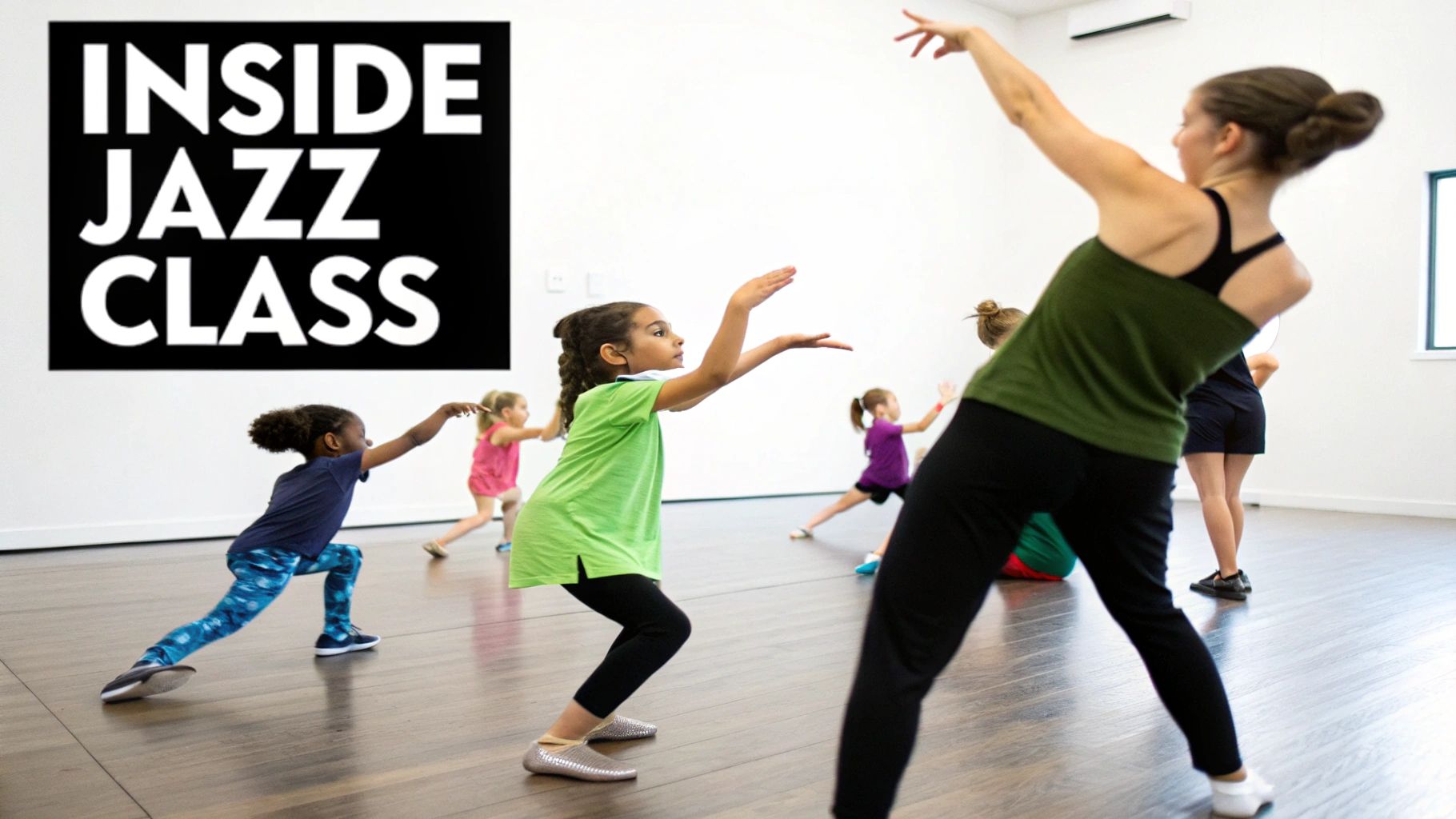
It’s completely normal for both parents and kids to feel a few butterflies before trying something new. So, what really goes on behind the studio doors during our jazz dance lessons? Let's pull back the curtain and give you a peek inside a typical class. This way, your child can walk in feeling prepared, confident, and ready to dance.
Think of each class as a carefully planned adventure. We don’t throw dancers into the deep end with complicated choreography right away. Instead, we build skills piece by piece, laying a solid foundation first. This ensures every student, whether they're joining us from Herriman or right around the corner in Bluffdale, feels successful from day one.
The Warm-Up: The Foundation of Movement
We kick things off with a dynamic warm-up that lasts about 15-20 minutes. This is so much more than just a few simple stretches; it's a vital part of class that gets the body ready for the high-energy demands of jazz. Our goal is to safely increase blood flow to the muscles, which can reduce the risk of injury by as much as 50%.
During the warm-up, we zero in on two core jazz principles:
- Isolations: This is the art of moving one part of your body at a time—think of a sharp shoulder pop or a snappy hip movement. Mastering isolations is what creates those clean, crisp lines that make jazz dance look so sharp.
- Stretching: We focus on active stretching to build flexibility in key areas like the hips, legs, and back. This is what allows for bigger leaps, higher kicks, and an overall greater range of motion.
This first part of class gets the dancer’s body and mind in sync, tuned in, and ready to absorb everything else we have planned.
Across the Floor: Building Power and Grace
Once everyone's warmed up, we move on to "across the floor" work. This is where the real fun begins! Dancers get to travel across the studio, practicing those big, eye-catching moves that make jazz so exciting to watch. We work in small groups, which gives every student the space they need to practice and get one-on-one tips from their instructor.
Some classic across-the-floor combinations you’ll see are:
Chassés: A smooth, gliding step that looks a bit like a gallop and is fantastic for building rhythm.
Leaps: We start with foundational split leaps and work our way up to more advanced jumps, teaching students how to soar through the air.
Turns: Dancers practice everything from pirouettes (spinning on one foot) to chaîné turns (a chain of quick turns across the floor). These are absolute essentials for any performer.
The real magic of jazz happens when a dancer combines strong technique with personal expression. Across-the-floor work builds the technical confidence needed to let their unique personality shine.
Choreography: Putting It All Together
We save the last part of class for learning and rehearsing a choreographed routine. This is where all the skills from the warm-up and across-the-floor exercises finally click into place. Set to upbeat, popular music, the choreography is a fun, high-energy dance that students build on week after week.
Learning a routine is about more than just remembering steps. It teaches musicality, stage presence, and the importance of teamwork. Dancers learn to connect with the rhythm and tell a story with their movements. For many of our students, this is the absolute highlight of class—the moment they see their hard work come to life as a real performance.
Ready to find the perfect class for your dancer? You can explore our current dance class schedule to see what's available.
More Than Movement: The Benefits of Jazz Dance
It’s easy to be captivated by the high kicks, powerful leaps, and sharp turns that define jazz. But the real magic of jazz dance lessons happens beneath the surface. These classes are a fantastic investment in a child’s overall development, building skills and character traits that they’ll carry with them long after they leave the studio.
Of course, the physical perks are huge. Jazz is an incredibly athletic art form that builds full-body strength, sharpens coordination, and dramatically improves flexibility. The combination of dynamic movement and focused stretching routines doesn't just create strong dancers; it fosters healthy habits that can last a lifetime. If you're curious about the specifics, understanding proper flexibility training for dancers is a great place to start.
Building a Confident Mind
Beyond the physical workout, jazz dance is a serious workout for the brain. Learning and memorizing choreography strengthens neural pathways, giving a real boost to memory. Dancers are constantly thinking on their feet, translating musical cues and teacher feedback into precise, physical actions.
This process hones sharp problem-solving skills and an impressive ability to focus. As students conquer a tricky combination, they aren't just learning dance steps—they're learning how to learn. This mental agility is a skill that directly translates to better performance in school and other activities for our students from Draper, Lehi, and the surrounding areas.
Nurturing Emotional Resilience and Social Skills
The dance studio is also a safe, supportive space for emotional growth. Think about the journey of mastering a difficult turn: you might stumble, try again, and then finally nail it. That process builds incredible resilience. Every one of those small victories on the dance floor adds up to a huge boost in self-confidence.
Jazz dance teaches resilience in motion. Every time a dancer gets back up after a missed turn, they are learning that perseverance, not perfection, is the key to growth.
Plus, jazz is often a team sport. Group numbers require dancers to sync their movements, trust their peers, and work toward a common goal. This builds essential social skills like cooperation, communication, and mutual respect, often sparking strong, lasting friendships. There's a special bond that forms when you work together to create a performance.
This growing appreciation for dance's holistic benefits is clear. In the U.S. alone, the dance studio industry is projected to hit $5.0 billion by 2025, with North America driving the global market. This growth, detailed in reports on the dance studio market size on IBISWorld , shows that parents in communities like Sandy and Riverton see what we see: jazz is so much more than a hobby. It’s a powerful tool for raising a well-rounded, confident, and capable child.
How to Choose the Right Dance Studio
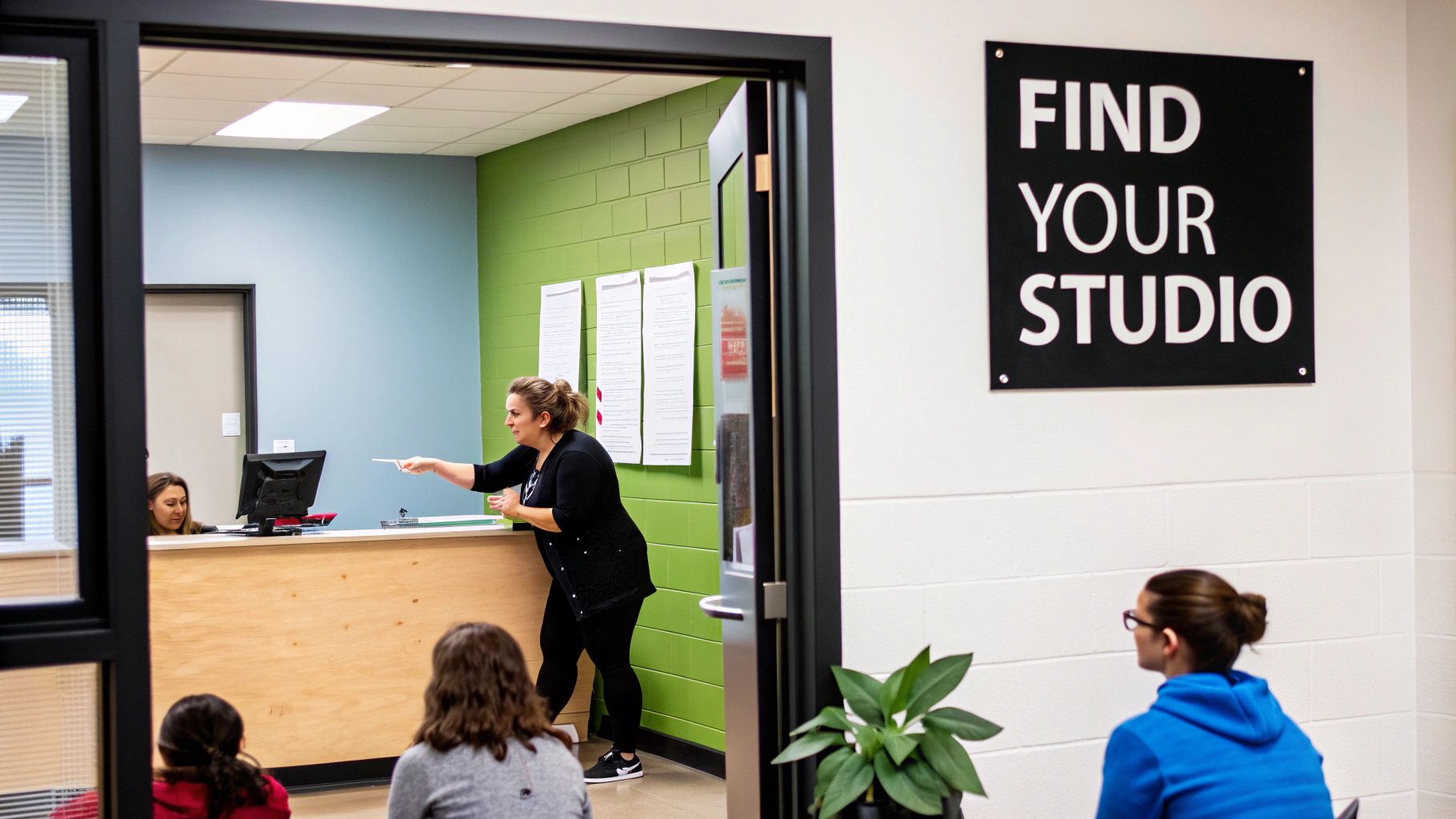
Finding the perfect studio for jazz dance lessons goes way beyond a quick search for "dance classes near me." You’re not just looking for a place to learn steps; you're looking for a community, a second home where your child can flourish. The right studio can spark a lifelong love for dance, while the wrong one can unfortunately dim that light before it has a chance to shine.
For families in cities like Lehi and Sandy, this means digging a little deeper than just convenience. You want a studio whose values and atmosphere resonate with your own. The culture of a studio is everything—it influences how instructors teach, how students interact, and what opportunities are available. Is it a high-pressure, competitive environment, or is it a collaborative space that celebrates every dancer's journey?
What to Look for in an Instructor
The person leading the class is arguably the most critical piece of the puzzle. A great jazz instructor has more than just an impressive resume; they have a real knack for connecting with kids and a passion for teaching. They know how to deconstruct a tricky turn or a complex piece of footwork into simple, bite-sized pieces that make learning feel like an achievement, not a chore.
When you observe a class or take a tour, watch the teachers in action. How do they interact with their students? Are they offering personalized feedback with a kind and encouraging tone? A teacher who builds a positive, supportive classroom is the one who will build your child's confidence from the inside out.
Evaluating Studio Culture and Philosophy
Every dance studio has a distinct personality. Some are laser-focused on the competition circuit, dedicating their energy to winning trophies. Others cultivate a more recreational, community-based vibe where the joy of movement is the main goal. There's no right or wrong answer here, but one of these approaches will definitely be a better fit for your family.
Here are a few questions to ask yourself and the studio director:
- What's the studio's approach to performance? Is the emphasis on technical precision above all else, or do they encourage personal expression and storytelling?
- How big are the classes? Smaller class sizes usually mean more one-on-one attention from the instructor, which can make a huge difference, especially for younger dancers just starting out.
- What does it feel like? Trust your gut. A warm, nurturing atmosphere gives students the safety to try new things, make mistakes, and grow without fear.
The goal is to find a studio that feels like a community—a place where your child is seen, supported, and inspired. It’s in this type of environment that dancers truly thrive, building not just skills but also confidence and lasting friendships.
At Encore Academy, creating that kind of positive, empowering atmosphere is at the core of everything we do. Our Bluffdale studio is a welcoming space for dancers from Draper, Herriman, and all the surrounding communities. We believe a studio is more than just a building; understanding the role of a top-tier performance dance center shows what's possible. We'd love for you to see it for yourself—book a trial class and experience our supportive culture firsthand.
So, Ready to Get Started at Encore Academy?
Choosing to jump into the world of jazz dance is about so much more than just learning steps. You’re giving your child a chance to build real confidence, discover a new kind of resilience, and express themselves through incredible physical artistry. It’s an investment that pays off in countless ways, from the lifelong friendships made in the studio to the powerful techniques they'll master on the dance floor.
Here at Encore Academy, we’ve worked hard to create a supportive, welcoming home where every dancer feels like they belong and can truly thrive. Our Bluffdale studio is just a short drive for families in Riverton, Herriman, and the surrounding areas, and honestly, the best way to understand the energy here is to come see it for yourself.
Your First Step Onto the Stage
Ready to see what our dance family is all about? Getting started couldn't be easier.
- Book a Trial Class: This is the perfect, no-pressure way to try one of our jazz dance lessons. Just hop over to our online portal or give us a ring to find a class that fits your schedule.
- Explore Our Programs: Jazz is just the beginning! We offer a full lineup of classes, including tumbling and acro, which are fantastic for building the core strength and flexibility that every great jazz dancer needs.
- Meet Our Team: We'd love to show you around. Come tour the studio, meet our amazing instructors, and get a feel for what makes this place so special.
Your child’s journey into the arts starts with a single step. Let’s get dancing
Common Questions About Jazz Dance Lessons
Deciding to enroll your child in jazz dance lessons naturally brings up a few questions. That's completely normal—you want to have all the details before jumping in. We've compiled some of the most common questions we hear from parents just like you to help you feel confident and clear about your decision.
We hope this makes the process a little easier and answers some of the things you might be wondering about.
What Should My Child Wear to Their First Jazz Class?
For that very first class, we prioritize comfort and safety. The best bet is form-fitting athletic wear, like leggings and a tank top or a classic leotard. This is important because it allows our instructors to see your child's posture and alignment, which is key for making helpful corrections and keeping them safe.
While brand-new dancers can often start barefoot, they'll eventually need proper jazz shoes. These shoes are specifically designed to support their feet and help them execute turns and leaps correctly. Don't worry, we provide a detailed dress code when you register, so every dancer at our Bluffdale studio shows up ready to move.
Is There a Right Age to Start Jazz Dance?
Honestly, there’s no magic number! Jazz is an incredibly versatile style that can be adapted for all sorts of energy levels and developmental stages. We have programs for everyone, from little ones just discovering the fun of wiggling to the beat, to teens looking for a new way to express themselves.
So, whether you have a high-energy preschooler from Lehi or a focused middle schooler from Draper, we can find a class that’s a perfect match for their age and personality.
The best time to start dance is simply when a child shows interest. Our goal is to nurture a love for movement and creativity that can last a lifetime, no matter when that journey begins.
How Is Jazz Different From Ballet or Hip Hop?
It's a great question, as all dance styles help build rhythm and coordination but each has its own unique personality. Think of ballet as the technical backbone of dance—it's all about precision, grace, and incredible control. Hip hop, on the other hand, comes from street dance culture and is all about personal style, improvisation, and attitude.
Jazz carves out its own exciting space right in the middle. It borrows the discipline and technique from ballet but pairs it with the upbeat, show-stopping energy of popular music. It's this blend that makes it such a hit with students from Herriman and Sandy who love to perform with style and flair.
Do You Offer Competitive Jazz Dance Classes?
Yes, we do! For dancers who discover a real passion for jazz and want to take it to the next level, we offer a complete pathway. Students can build a fantastic foundation in our recreational jazz dance lessons and then, if they choose, audition for our acclaimed Competition Teams.
Our competitive program is designed for dedicated dancers from Riverton and the surrounding areas, offering them advanced training and more intricate choreography. It's the perfect environment for students who are ready to challenge themselves and truly grow as performers.
Ready to see the joy of jazz dance for yourself? Encore Academy for the Performing Arts invites you to book a trial class and experience the energy and community firsthand. Visit us online to explore our schedule and find the perfect class for your child .