
Top 10 Movement Activities for Preschoolers to Try in 2026
In a world full of screens, nurturing a preschooler’s natural urge to move is more important than ever. Movement isn't just about burning off that endless toddler energy; it's the fundamental language of early childhood. Purposeful play builds a strong foundation for critical physical, cognitive, and emotional development, from enhancing coordination and balance to fostering creativity and vital social skills. This process is how little minds and bodies connect, learn, and grow.
For families in communities like Bluffdale, Riverton, and Draper, finding structured yet joyful movement activities for preschoolers can set the stage for a lifetime of health and confidence. This guide cuts directly to the chase, offering a curated collection of ten engaging and beneficial activities designed to inspire wiggles, giggles, and growth. Each activity is broken down into simple, actionable steps you can use at home or look for in a supportive studio setting.
We'll explore everything from rhythmic games and storytelling through dance to parent-and-child bonding exercises. You will gain practical ideas to strengthen locomotor skills, boost self-expression, and build confidence, transforming playtime into a powerful tool for your child's holistic development. Let’s get your preschooler moving and thriving.
1. Dance and Movement Storytelling
Dance and Movement Storytelling is a powerful method that merges narrative with physical expression. Instead of just listening to a story, preschoolers embody the characters and plot, translating words and emotions into movement. This activity encourages children to become active participants, using their bodies to explore concepts like growing tall like a beanstalk or scurrying like a mouse.
This approach is one of the most enriching movement activities for preschoolers because it simultaneously develops gross motor skills, creativity, and emotional literacy. As they leap, crawl, and spin to tell a story, children improve their balance, coordination, and spatial awareness while also learning to interpret and express feelings. It transforms a simple physical activity into a comprehensive learning experience.
How to Implement Dance Storytelling
- Start with the Familiar: Begin with well-known nursery rhymes or simple fairy tales like "The Three Little Pigs." Assign movements to key actions, such as huffing and puffing or building a house.
- Use Simple Props: Introduce props like colorful scarves to represent wind or water, and ribbons to create swirling magic spells. This adds a tangible, sensory element to the story.
- Keep it Short: For families in Riverton or Lehi, a quick 2-3 minute movement story is perfect for holding a preschooler's attention before it wanes.
- Encourage Participation: Invite parents to join in. A child's confidence soars when they see their caregiver enthusiastically pretending to be a roaring lion or a gentle butterfly.
At Encore Academy, our Parent and Me classes often incorporate these principles, helping our youngest artists from Bluffdale and Herriman learn to tell their first stories through movement.
2. Rhythmic Movement and Beat Synchronization
Rhythmic Movement and Beat Synchronization teaches preschoolers to align their body movements with musical beats and tempos. Children learn to recognize and respond to rhythmic patterns by clapping, stomping, and swaying to different styles of music. This activity builds crucial auditory-motor connections that are foundational for future dance and music training.
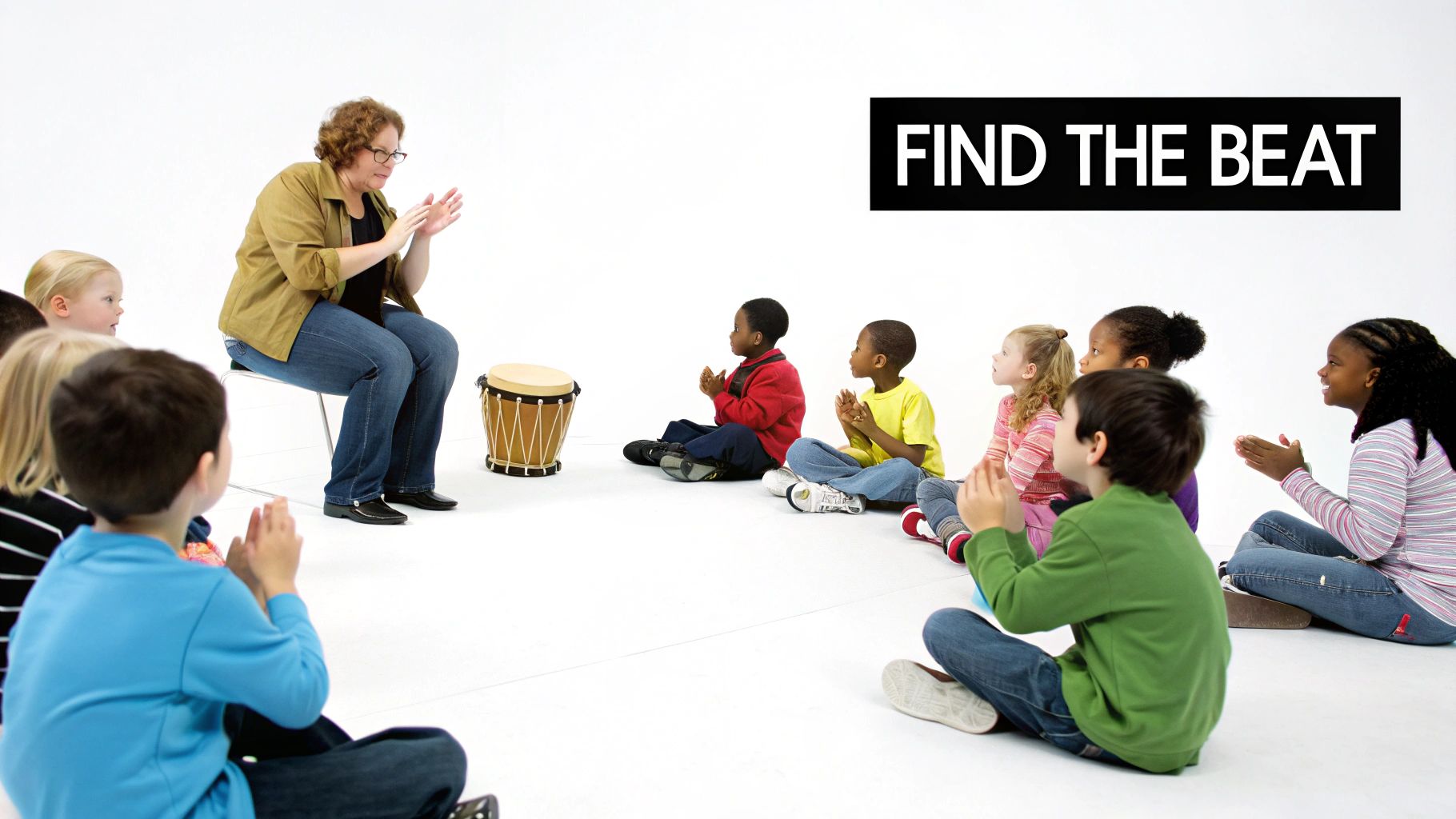
This method is one of the most fundamental movement activities for preschoolers because it directly enhances a child's sense of timing, coordination, and listening skills. As they learn to step on the beat or clap a pattern, they are developing cognitive skills like pattern recognition and sequencing. It lays the groundwork for more complex physical and artistic pursuits, turning simple listening into an active, whole-body experience.
How to Implement Rhythmic Movement
- Start with Percussion: Use simple instruments like drums, shakers, or tambourines to make the beat tangible. Let children create the rhythm themselves before moving to it.
- Isolate Movements: Begin with simple actions like hand clapping or foot tapping before progressing to full-body movements like marching or skipping.
- Vary the Tempo: Play music with different speeds to challenge their adaptability. For families in Draper or Sandy, switching between a slow, deliberate march and a fast, upbeat clap is a great way to keep kids engaged.
- Celebrate the Effort: Focus on participation and enjoyment rather than perfect synchronization. The goal is to build a positive relationship with music and movement.
At Encore Academy, our preschool programs introduce these foundational rhythmic concepts, helping young learners from Bluffdale and surrounding cities build the coordination and musicality essential for dance.
3. Ballet Fundamentals for Preschoolers
Ballet Fundamentals for Preschoolers introduces young children to the basic positions, posture, and grace of classical ballet through age-appropriate exercises and creative play. This foundational training builds elegant movement habits, core strength, and discipline in a gentle, engaging way that captures a young child's imagination. It's about more than just technique; it's about translating feelings and stories into graceful motion.
This activity is one of the most structured movement activities for preschoolers, fostering focus, listening skills, and body awareness alongside physical development. As children learn to point their toes, hold their arms in first position, and practice pliés, they develop muscle control, balance, and coordination. The blend of structured discipline and creative expression makes it a uniquely beneficial experience.
How to Introduce Ballet Fundamentals
- Use Imagery and Storytelling: Connect ballet positions to familiar concepts. Ask children to make "swan arms" or stand tall like a prince or princess. This makes technical instruction relatable and fun.
- Keep it Playful: Incorporate games like "ballet freeze dance" or use props like ribbons and scarves to encourage flowing movements. The goal is joyful exploration, not perfect form.
- Establish a Routine: For families in Lehi or Sandy, creating a short, consistent "ballet time" at home can be highly effective. Even 5-10 minutes of practicing gentle stretches and basic positions helps build a positive habit.
- Use Mirrors for Feedback: A mirror helps children see their own posture and alignment, providing instant visual feedback that empowers them to make their own corrections.
Encore Academy’s preschool programs introduce these core principles, helping dancers from Bluffdale, Riverton, and beyond develop a love for classical movement. If you're wondering about the ideal time to begin, you can learn more about the best age to start ballet .
4. Locomotor Skills Development (Walking, Running, Jumping, Hopping)
Locomotor Skills Development focuses on the foundational movements that allow children to travel from one place to another. This includes essential actions like walking, running, jumping, and hopping, which form the building blocks for nearly all physical activities. By engaging in structured games that target these skills, preschoolers learn to control their bodies, building strength, coordination, and confidence in their physical abilities.
This focus on fundamental patterns makes it one of the most critical movement activities for preschoolers, as mastering these skills is crucial for safe and effective participation in sports, dance, and everyday play. As children practice galloping like a horse or jumping over a pretend puddle, they are developing gross motor control, balance, and spatial awareness. It’s an essential step in their physical literacy journey.
How to Implement Locomotor Skill Practice
- Create Simple Challenges: Set up an obstacle-free space for a game of "Red Light, Green Light" to practice starting and stopping while running. Use masking tape on the floor for lines to walk on or hop over.
- Incorporate Music and Rhythm: Play upbeat music to make movement more engaging. Ask children to march to the beat, run when the music is fast, and walk slowly when it's calm.
- Use Animal Walks: Make practice fun by incorporating animal movements. Challenge children to hop like a bunny, gallop like a horse, or waddle like a penguin.
- Keep it Playful: For families in Bluffdale or Herriman, a simple game of follow-the-leader incorporating different locomotor skills is a perfect way to keep practice light and enjoyable.
At Encore Academy, our preschool movement classes are designed to build these core skills, providing a safe and encouraging environment for children from Sandy and other local cities to master the basics of confident movement.
5. Jazz Movement and Freestyle Expression
Jazz Movement and Freestyle Expression introduces preschoolers to an energetic and improvisational dance style, emphasizing individual creativity. Instead of rigid choreography, this approach focuses on basic jazz movements like body isolations and bouncy rhythms, empowering children to express their unique artistic voices through spontaneous, free-form movement.
This method is one of the most confidence-boosting movement activities for preschoolers because it celebrates originality. As children learn to isolate their shoulders or hips and create their own moves to upbeat music, they develop body awareness, coordination, and a strong sense of self. It transforms dance from a set of instructions into a joyful form of personal expression.
How to Implement Jazz and Freestyle
- Use Upbeat Music: Play fun, age-appropriate music with a clear beat, like current pop hits or classic, bouncy tunes. The right music is essential for inspiring energetic movement.
- Introduce Gentle Isolations: Teach simple body isolations, such as shrugging shoulders or wiggling hips to the music. Frame it as a game to see which body part can dance by itself.
- Dedicate Time for Freestyle: Carve out specific "free dance" time within any structured lesson. This gives children a safe space to experiment without judgment.
- Foster Creative Confidence: Encourage children from communities like Lehi and Sandy to invent their own signature dance move. Praising their unique creations helps build self-esteem.
At Encore Academy, we introduce the fundamentals of jazz in a playful way. You can discover some foundational steps in our guide to beginner jazz dance moves .
6. Tumbling and Basic Acrobatics
Tumbling and Basic Acrobatics introduces preschoolers to fundamental movements like rolls, somersaults, and basic balances in a safe, structured environment. This activity helps children build impressive core strength, flexibility, and body awareness. It is a thrilling way to challenge them physically, fostering courage and resilience as they learn new skills.
This approach is one of the most dynamic movement activities for preschoolers because it directly improves spatial understanding and builds confidence through tangible achievements. As a child masters a forward roll or holds a simple balance, they are developing gross motor skills, coordination, and the mental fortitude to try again after a fall. It transforms playtime into a foundational athletic experience.
How to Implement Tumbling and Acrobatics
- Prioritize Safety First: Always use thick, well-maintained mats and padding. An adult should provide hands-on spotting for new or challenging movements to prevent injury.
- Start with the Basics: Begin with simple forward rolls and log rolls before attempting anything more complex. Focus on proper form and celebrate every small success.
- Emphasize the Process: Teach children that trying, and even falling, is a crucial part of learning. This mindset builds resilience and a positive attitude toward physical challenges.
- Keep Sessions Fun: For families in Draper or Herriman, a short 5-10 minute tumbling session is enough to engage a preschooler and build skills without overwhelming them.
At Encore Academy, our tumbling and acro programs are designed with preschooler safety and development in mind. You can learn more about the benefits of tumbling for young learners here .
7. Freeze Dance and Musical Statues Games
Freeze Dance and Musical Statues Games are classic activities that beautifully merge music, movement, and self-control. During these games, children dance freely and expressively while music plays, then must instantly freeze into a pose the moment the music stops. This simple premise is a powerhouse for developing crucial preschool skills.
This game is one of the most beloved movement activities for preschoolers because it directly targets listening skills, impulse control, and body awareness. As children wait for the music to stop, they are actively practicing self-regulation, a foundational skill for classroom readiness. The creative poses they strike also allow for individual expression and imaginative play, making it a joyful and effective learning tool.
How to Implement Freeze Dance and Musical Statues
- Vary the Music: Use a diverse playlist with different tempos and genres, from classical to pop to world music. This exposes children to various rhythms and encourages different styles of movement.
- Keep it Non-Competitive: Focus on participation rather than elimination. Praise everyone for their creative poses and quick freezes to ensure all children feel successful and encouraged.
- Add Creative Prompts: Instead of just saying "freeze," give fun instructions like, "Freeze like a superhero!" or "Freeze like your favorite animal!" This adds a layer of imagination to the game.
- Perfect for Any Group: Whether at a birthday party in Lehi or as a quick brain break for families in Riverton, Freeze Dance is a simple, no-prep activity that guarantees engagement.
For more fun ideas that combine rhythm and play, explore our guide to music and movement games for preschoolers .
8. Parent and Child Movement Bonding Activities
Parent and Child Movement Bonding Activities transform physical play into a powerful tool for connection. This approach centers on interactive exercises where caregivers and their children move together, building emotional bonds while developing foundational skills. Through mirroring, partner stretches, and shared dances, the focus shifts from individual performance to the joy of shared experience.
These sessions are among the most meaningful movement activities for preschoolers because they build trust and secure attachment alongside physical coordination. As a child and parent lift, sway, and balance together, the child develops body awareness and motor skills in a safe, supportive environment. This turns a simple activity into a cherished memory and strengthens the parent-child relationship.
How to Implement Movement Bonding
- Focus on Connection: Emphasize fun and interaction over perfect technique. The goal is to connect, not perform. Simple activities like mirroring each other's silly faces or dancing with scarves are perfect.
- Create a Safe Space: Ensure the environment is non-judgmental for all comfort levels. Celebrate every parent’s effort and engagement, whether they are a natural dancer or a bit hesitant.
- Use Appealing Music: Choose songs and rhythms that appeal to both adults and children to keep the energy positive and engaging for everyone involved.
- Take it Home: Teach parents simple movements they can practice at home. Families in Riverton and Lehi can turn these into fun, daily routines that continue the bonding outside of a class setting.
At Encore Academy, our Parent and Me classes are designed around this very principle, providing a perfect entry point for families from Draper and Herriman to begin their journey in the performing arts together.
9. Creative Props and Sensory Movement Exploration
Creative Props and Sensory Movement Exploration transforms simple physical activity by incorporating tactile objects like scarves, ribbons, balloons, and foam noodles. These props provide immediate visual and sensory feedback, sparking a child's imagination and inspiring them to move in new and expressive ways. Instead of just jumping, a preschooler can pretend their ribbon is a soaring dragon or their scarf is a gentle wave.
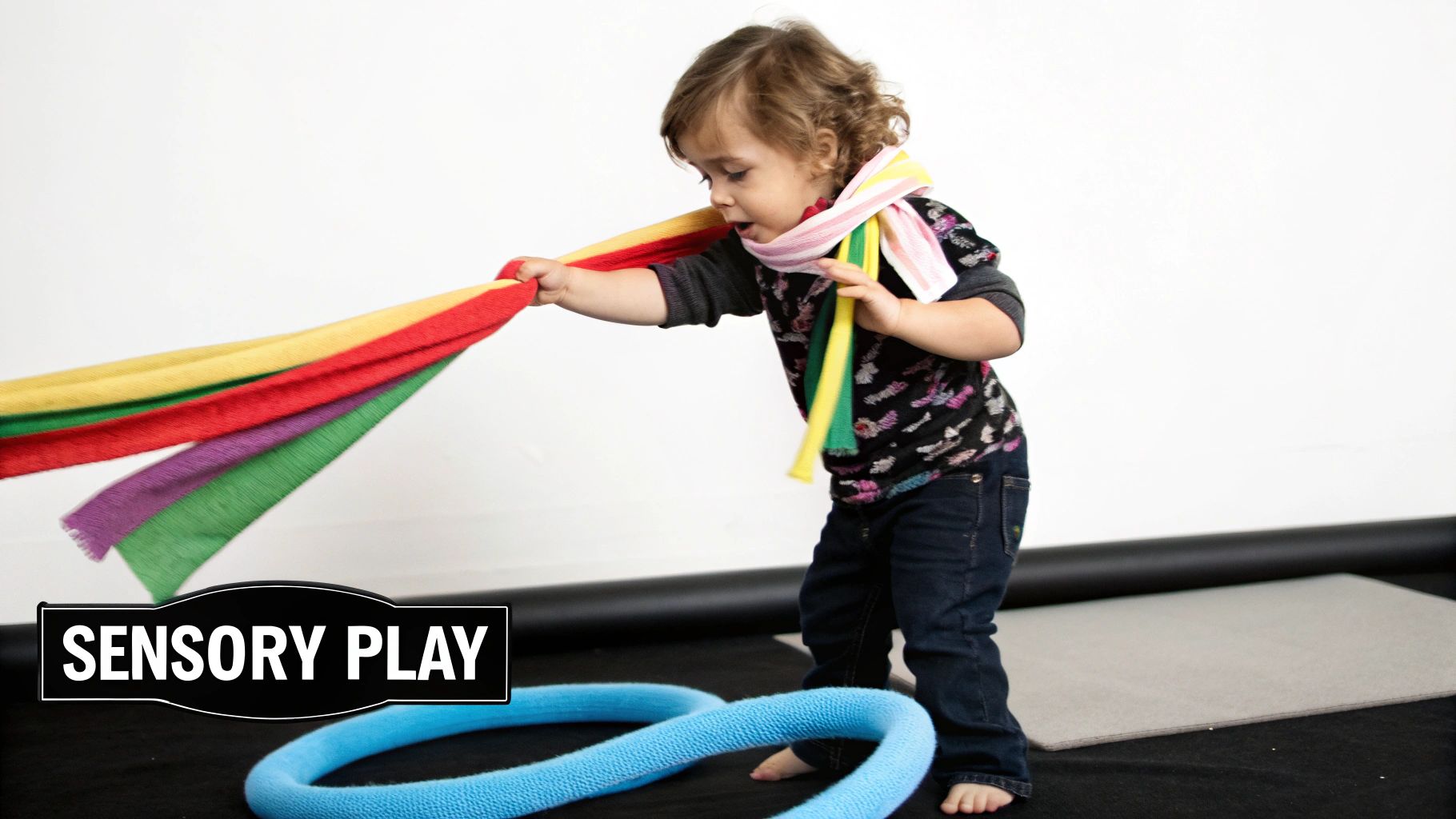
This method is one of the most effective movement activities for preschoolers because it engages multiple senses at once, deepening the mind-body connection. Using a prop helps children understand concepts like cause and effect (waving a scarf makes it float) while refining their fine and gross motor skills. It’s an approach that makes abstract movement ideas concrete and playful.
How to Implement Sensory Movement
- Choose Safe Props: Select age-appropriate props that are free of small parts or choking hazards. Lightweight scarves, pool noodles, and large, soft balls are excellent starting points.
- Encourage Free Exploration: Before structured activity, give children time to simply explore the props. Let them discover how the objects feel and move without instructions.
- Model Respectful Use: Gently show children how to care for the props, such as holding ribbons by the handle or not tearing scarves. This teaches responsibility alongside creative expression.
- Integrate into Storytelling: For families in Lehi or Sandy, use props to enhance a story. A blue scarf can become a river, and a yellow ribbon can be the sun's rays, making the narrative more immersive.
At Encore Academy, our creative movement classes for preschoolers from Herriman and Bluffdale often use sensory props to build confidence and make learning foundational dance concepts a joyful, hands-on experience.
10. Performance-Based Movement and Confidence Building
Performance-Based Movement and Confidence Building combines structured physical activities with the exciting opportunity for preschoolers to perform for a small, supportive audience. This approach transforms simple movement into a showcase of skills, building self-esteem and creating positive associations with being on stage. Children learn to share their achievements, whether it's a simple dance routine or a small parade march.
This method is one of the most empowering movement activities for preschoolers because it directly links physical effort with a sense of accomplishment and pride. By taking a "bow" after a short performance for family or friends, children develop poise, courage, and social-emotional resilience. It celebrates their hard work and encourages them to feel comfortable expressing themselves in front of others.
How to Implement Performance-Based Movement
- Start Small and Safe: Begin with a low-pressure performance in your living room for family members. The goal is to make the experience feel safe and fun, not intimidating.
- Focus on Effort, Not Perfection: Celebrate the courage it takes to perform. Emphasize how proud you are of their effort and bravery, regardless of how perfectly the moves were executed.
- Use Props and Costumes: Simple costumes or props, like a sparkly wand or a superhero cape, can help a shy child from Lehi or Sandy feel more confident and step into a role.
- Practice and Prepare: Rehearse the short routine multiple times so the child feels comfortable and knows what to expect. This preparation builds confidence for the "big show."
At Encore Academy, we build a foundation for performance from the very beginning, culminating in events like our annual showcases. Discover more about our approach in our guide to preparing for a dance showcase in Utah .
Preschool Movement Activities — 10-Item Comparison
| Dance and Movement Storytelling | Moderate 🔄 — instructor-led narrative & short choreography | Music, props/costumes, open studio; skilled teacher | Improved gross motor skills, narrative comprehension, stage readiness | Parent & Me classes, early theatrical storytelling | ⭐ Enhances creativity, confidence, memorable engagement | 💡 Use familiar stories; scarves; keep sequences 2–3 min; involve parents |
|---|---|---|---|---|---|---|
| Rhythmic Movement and Beat Synchronization | Low–Moderate 🔄 — structured beat exercises with progression | Quality speakers, percussion instruments, diverse music library | Better rhythmic awareness, coordination, listening skills | Music-readiness, tap/ballroom prep, group rhythm classes | ⭐ Builds musical foundation and timing | 💡 Use drums, visual cues, vary tempos; celebrate attempts |
| Ballet Fundamentals for Preschoolers | High 🔄 — technical progression and consistent terminology | Ballet barres/adaptations, studio space, attire, mirrors | Improved posture, alignment, discipline; classical technique foundation | Pre-ballet courses, long-term classical training path | ⭐ Strong foundational technique and body awareness | 💡 Use consistent terminology; animal analogies; invest in proper attire |
| Locomotor Skills Development | Low 🔄 — game-based progressive activities | Safe, spacious area; cones, mats, simple props | Gross motor control, balance, coordination, physical confidence | Preschool PE, foundational movement, home practice | ⭐ Essential physical foundation; adaptable to settings | 💡 Use obstacle courses, music, celebrate effort; document progress |
| Jazz Movement and Freestyle Expression | Moderate 🔄 — needs energetic instruction and structure for improv | Upbeat music, open space, enthusiastic instructors | Creative expression, body awareness, cardiovascular fitness | High-energy classes, confidence-building, creative workshops | ⭐ Highly engaging; fosters individuality and spontaneity | 💡 Teach gentle isolations; allow free-dance time; positive feedback |
| Tumbling and Basic Acrobatics | High 🔄 — progressive skills with strict safety protocols | Thick mats, padding, certified instructors, large space | Core strength, body control, spatial awareness, resilience | Gymnastics prep, acro-dance integration, skill progression | ⭐ Builds strength and impressive physical skills | 💡 Start with rolls, use hand-spotting, ensure certified supervision |
| Freeze Dance and Musical Statues Games | Low 🔄 — simple stop-start gameplay | Music player only; minimal setup | Listening, impulse control, creative posing, engagement | Warm-ups, classroom energizers, parties, quick games | ⭐ Low-cost, highly engaging, flexible group sizes | 💡 Play non-competitively; vary music; call out fun poses |
| Parent and Child Movement Bonding Activities | Low–Moderate 🔄 — guided partner & mirroring exercises | Space, music; parent participation and scheduling | Emotional bonding, movement fundamentals, parental engagement | Parent & Me programs, family-centered classes | ⭐ Strengthens bonds and child confidence through caregiver support | 💡 Emphasize fun over performance; give parents clear, simple moves |
| Creative Props and Sensory Movement Exploration | Low–Moderate 🔄 — manage props and sensory considerations | Scarves, ribbons, balloons, foam noodles; storage & hygiene | Sensory awareness, fine motor skills, imagination, sustained engagement | Sensory-friendly classes, exploratory creative sessions | ⭐ Highly engaging; makes abstract movement concrete | 💡 Use safe, age-appropriate props; start with 1–2 types; model use |
| Performance-Based Movement and Confidence Building | High 🔄 — requires planning, rehearsal, and logistics | Venue, costumes/props, staff time, event coordination | Increased stage confidence, self-esteem, community engagement | Recitals, showcases, transition into theater programs | ⭐ Significant confidence gains; family engagement; performance readiness | 💡 Start with low-pressure shows; ensure all participate; document performances |
Your Child's Next Step: From Playful Movement to Performing Arts
The journey through movement is one of childhood's most beautiful and essential adventures. From a simple game of musical statues in your living room to exploring locomotor skills at a park in Sandy, each step, leap, and twirl builds a critical foundation for a healthy, confident, and expressive individual. As we've explored, these movement activities for preschoolers are far more than just ways to burn off energy; they are the fundamental building blocks of physical literacy, emotional intelligence, and even future artistic expression.
From Playful Wiggles to Purposeful Art
The activities shared in this article, like Rhythmic Movement, Ballet Fundamentals, and Creative Props Exploration, all serve a dual purpose. They develop crucial skills such as balance, coordination, and gross motor control while simultaneously nurturing a child's innate creativity and love for motion. This foundational stage is where the magic happens. A child learning to synchronize their claps to a beat is taking their first step toward understanding musicality, a skill vital for both dance and music. A preschooler acting out a story through movement is practicing the core of theatrical performance.
The most important takeaway is that this exploration should always be joyful. Whether you are a family in Lehi, Draper, or Herriman, the goal is to create positive, engaging experiences that connect physical action with emotional expression. These moments lay the groundwork for a lifetime of appreciating how our bodies can tell stories, convey feelings, and create art. Mastering these foundational concepts isn't about perfection; it's about participation and discovery.
Building a Foundation for Lifelong Passion
As your child grows, their unstructured, playful wiggles can evolve into more structured, skillful movements. The confidence gained from successfully navigating an obstacle course or performing a short dance for the family is immense. It teaches resilience, focus, and the joy of seeing practice lead to progress. These early experiences directly impact their willingness to try new things, their ability to work with others, and their overall self-esteem.
You are not just teaching your child to jump or spin; you are giving them a new language to communicate with. You are providing them with tools to build a strong, capable body and a brave, creative mind. Fostering this development at home is a powerful gift, and for those ready to take the next step, a structured class environment can channel that raw potential into a true passion for the arts. This transition from at-home fun to a guided learning experience can be a seamless and exciting new chapter for your family.
Ready to transform your child's love of movement into a lifelong passion? Families from Riverton, Draper, and beyond are invited to explore the world of performing arts at Encore Academy for the Performing Arts in Bluffdale. Our specialized preschool programs and Parent & Me classes are designed to build upon the foundational skills you practice at home in a fun, supportive, and professional studio environment. Visit Encore Academy for the Performing Arts to book a trial class and watch your little star shine