
Unlocking The Art of Dancing A Guide for Every Skill Level
The art of dancing is a powerful conversation between technical skill and artistic expression. It’s where movement becomes a language, capable of telling stories, painting pictures, and stirring deep emotions. Think of a dancer like a storyteller, but instead of words, they use a carefully crafted physical vocabulary to share their tale. This beautiful fusion of discipline and creativity is what elevates simple motion into a true art form.
Unlocking The Language Of Movement
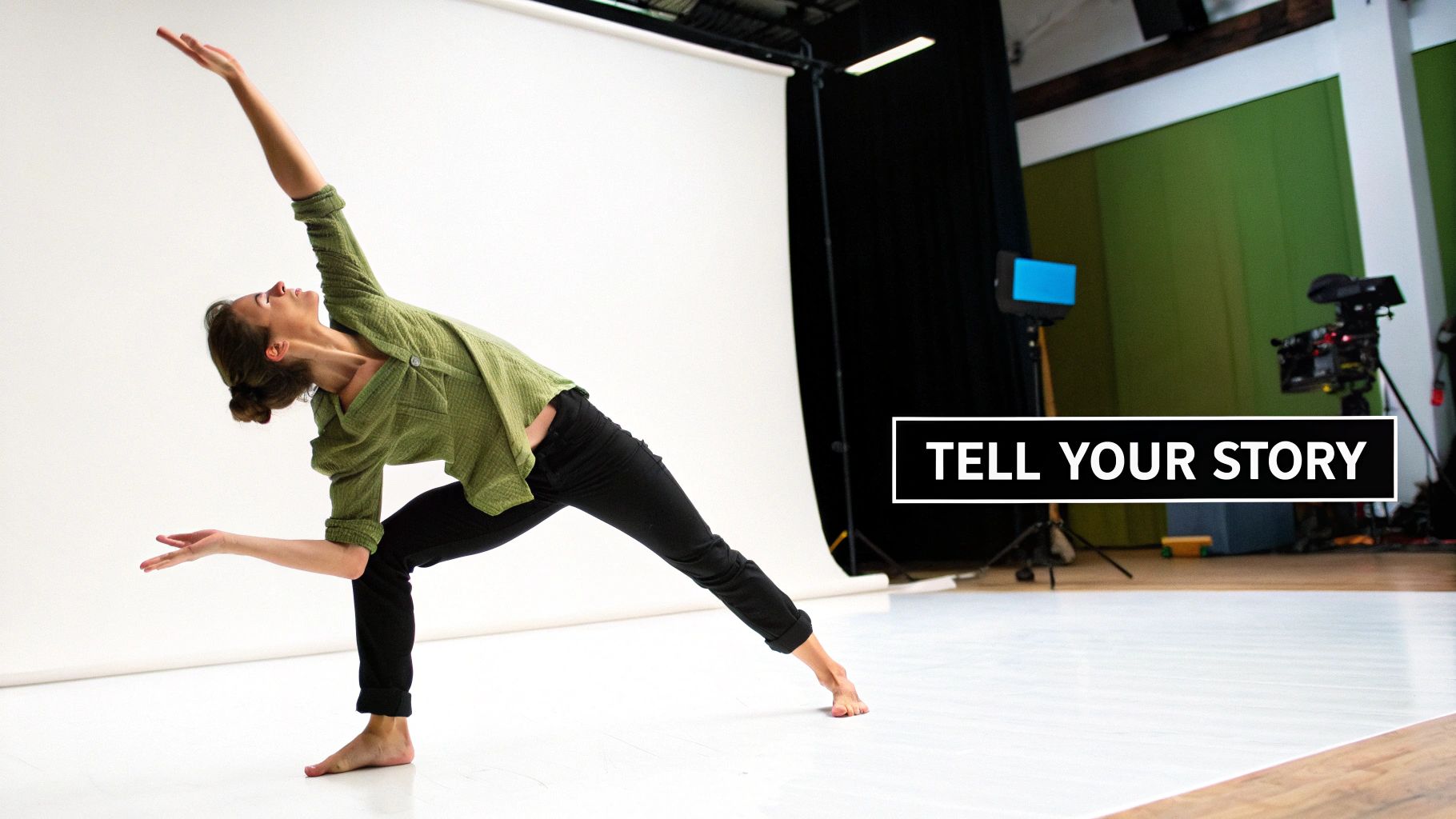
At its heart, the art of dancing strikes a delicate balance between the "how" and the "why." The "how" is all about technique—the pliés, pirouettes, and positions that build a dancer's strength, control, and precision. You can think of this as the grammar of dance.
The "why," on the other hand, is pure artistic expression. It's the emotion, intention, and storytelling that breathe life and meaning into those movements. A dancer with a weak technical foundation will struggle to bring their creative vision to life. But at the same time, perfect technique without any feeling can come across as mechanical and hollow.
Artistry vs. Technique: The Two Pillars Of Dance
To really get to the core of what dancing is, you have to appreciate both sides of this coin. The table below breaks down how these two pillars—technique and artistry—work hand-in-hand.
| Movement Quality | Executing steps with precision, control, and proper alignment. | Infusing movements with emotion, dynamics, and texture. |
|---|---|---|
| Musicality | Dancing in time with the music, hitting every beat and count accurately. | Interpreting the music's mood, rhythm, and nuances through movement. |
| Performance | Remembering choreography and executing it cleanly on stage. | Connecting with the audience and conveying a story or feeling. |
| Body Language | Maintaining correct posture, lines, and form. | Using facial expressions and gestures to communicate character and intent. |
True mastery happens when a dancer can seamlessly blend these elements, making the incredible effort of the technique look completely effortless and natural. This balanced approach ensures every performer, from a toddler in Riverton learning to skip to a teen in Lehi nailing complex choreography, builds both skill and confidence.
Building The Dancer, Not Just The Dance
This journey always starts by learning the foundational vocabulary. Just as a writer first learns their ABCs, a young dancer must learn the basic steps and postures that form their toolkit.
- Technique is the tool: Every element, from a simple pointed toe to a soaring leap, is a tool a dancer can use to create.
- Artistry is the story: The artistry is how those tools are put together to express joy, sorrow, or a specific character's journey.
The real art of dancing isn't just about executing flawless moves; it's about making the audience feel something. It’s the difference between simply reciting a poem and performing it with genuine, heartfelt emotion.
This method of teaching ensures a complete education. Students learn incredible discipline and physical control, but they’re also encouraged to be vulnerable and expressive. From our Bluffdale studio, we’ve watched dancers from Draper and Sandy grow not just into skilled technicians, but into compelling storytellers.
For parents exploring our various dance programs , understanding this philosophy is everything. We don't just teach steps; we nurture artists. Every class is designed to build a rock-solid technical foundation that serves as the launching pad for boundless creativity, allowing each dancer to find their own unique voice and share it with the world.
A Journey Through the History of Dance
Every dance style we know and love today has a story. Whether it's the elegant precision of ballet or the raw energy of hip hop, each one is a living piece of history, shaped by culture, celebration, and the people who created it. When we understand where these movements came from, we’re not just learning steps—we’re joining a conversation that started thousands of years ago.
Long before the first polished stage was ever built, dance was a core part of being human. Ancient civilizations wove movement into the fabric of their lives, using it for everything from religious rituals to celebrating a good harvest. It was their way of telling stories, connecting with each other, and marking the moments that mattered. That fundamental idea—using our bodies to communicate—is still what dance is all about.
From Royal Courts to Rebellious Stages
As societies grew more complex, so did their dances. Take ballet, for example. It got its start in the grand courts of Renaissance Italy and France, not as a theatrical performance, but as a form of social entertainment for the aristocracy. Over time, it developed a strict vocabulary and a focus on grace and technical perfection. That emphasis on precision is what shaped the classical ballet that still inspires young dancers today, from Draper to Herriman.
But rules are often made to be broken. By the early 20th century, some artists felt that ballet’s rigid structure was too limiting. This feeling sparked a revolution, giving birth to modern dance. Pioneers like Isadora Duncan and Martha Graham threw out the rulebook—and the ballet slippers—in favor of barefoot, grounded movements that felt more honest and raw.
Modern dance wasn’t about creating a fantasy world of princes and swans. It was about digging into the messy, beautiful, and complicated reality of human experience and expressing it through authentic motion.
This shift opened the floodgates for new ways of moving. If you’re curious, you can dive deeper into what defines the modern dance style in our detailed guide.
The Beat Goes on in the Streets
Of course, the history of dance doesn’t just belong to formal studios and grand theaters. Some of the most influential styles were born right on the streets, bubbling up from the heart of communities.
- Jazz Dance: Coming to life alongside the vibrant sounds of jazz music in the early 1900s, this style mixed African and European traditions. It’s all about syncopated rhythms, improvisation, and pure, infectious energy.
- Tap Dance: With roots stretching back to African tribal dances and Irish step dancing, tap turned the dancer into a percussive musician. The sound of the shoes became an instrument in its own right.
- Hip Hop: In the 1970s, a powerful new culture exploded out of African American and Latino communities in the Bronx. Hip hop dance—with its breaking, locking, and popping—was a way for young people to express their identity, tell their stories, and create something entirely new.
Each of these styles carries a legacy of innovation and community. So, whether it’s a student from Sandy nailing a complex tap rhythm or a teen from Lehi channeling a story through hip hop, they’re connecting to that living history. Understanding this journey gives every plié, pop, and shuffle a much deeper meaning.
Finding Your Rhythm with Popular Dance Styles
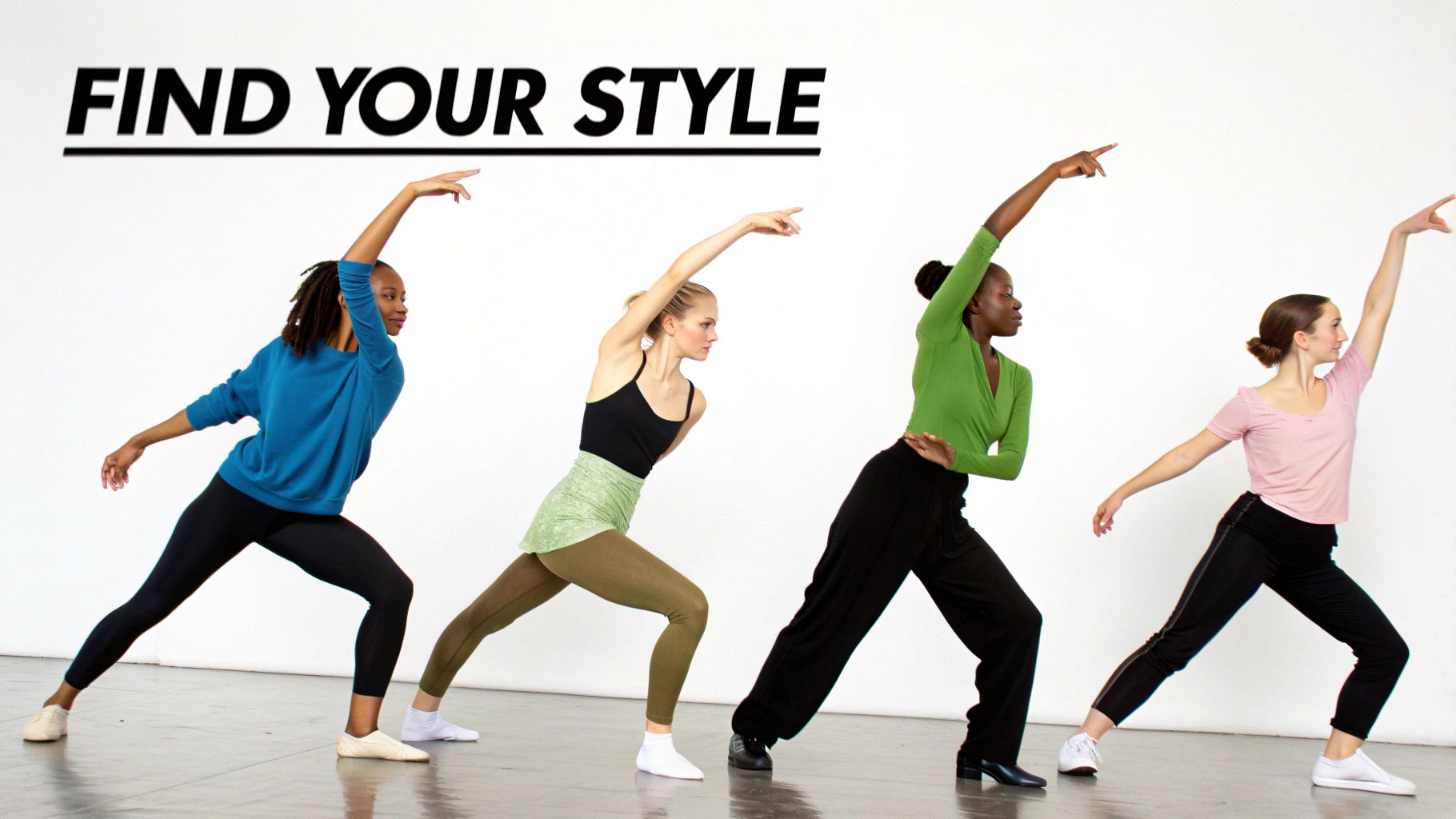
Exploring the art of dancing is a bit like walking into a massive library filled with countless stories. Each dance style is its own unique language, perfect for telling a different kind of tale. From the disciplined elegance of ballet to the raw energy of hip hop, there's a perfect fit for every personality and passion out there.
Choosing a style isn’t just about learning a few steps. It’s about finding a rhythm that truly speaks to you. For some, the strict precision of classical forms brings a profound sense of accomplishment. For others, the creative abandon of contemporary or street styles is the ultimate outlet. The real secret is to explore with an open mind and discover what movement feels like you.
The Grace of Classical Foundations
People often call ballet the backbone of dance, and for good reason. It builds an incredibly powerful technical foundation centered on posture, alignment, strength, and impeccable control. Dancers learn a specific vocabulary of movements—from a simple plié to a breathtaking fouetté turn—that proves useful in almost any other style they try.
But don't mistake its discipline for being stuffy. Ballet is a deeply expressive art form that teaches dancers how to tell epic stories of love, heartbreak, and magic using nothing but their bodies. It demands dedication, absolutely, but it pays you back with a kind of poise and physical awareness that's hard to find anywhere else.
The discipline learned in ballet provides a framework for freedom in other styles. Once you understand the fundamental principles of balance, control, and line, you can apply them anywhere, from the fluidity of contemporary dance to the sharp accents of jazz.
Expressive and Modern Movements
Once you venture beyond the classical world, you find styles like contemporary and jazz, which open up incredible avenues for emotional storytelling. These genres are brilliant hybrids, blending techniques from ballet, modern dance, and other forms to create something fluid, dynamic, and new.
- Contemporary Dance: This style is all about the mind-body connection. It often uses floor work, improvisation, and unexpected movements to explore abstract ideas and raw emotion. It's a space that encourages dancers to be vulnerable and authentic.
- Jazz Dance: With deep roots in African American social dances, jazz is pure energy. It’s defined by its syncopated rhythms, isolations, and undeniable flair. Whether it's classic Broadway or modern commercial jazz, it’s all about putting on a show and connecting with your audience.
These styles are a fantastic fit for dancers who want to pair solid technique with their own creative voice. A student from Herriman might find that contemporary helps them work through their feelings, while a born performer from Sandy thrives on the showmanship of jazz.
Rhythmic Beats and Street Styles
For anyone drawn to intricate footwork and music that makes you want to move, tap and hip hop deliver a whole different kind of electricity. These styles are grounded in rhythm, musicality, and a rich cultural history. They turn the dancer into both a percussive instrument and a storyteller.
Tap dance, with its signature metal-plated shoes, is all about making music with your feet. Dancers learn to create a huge range of sounds and rhythms, mastering complex patterns that require you to listen as much as you move.
Then there's hip hop, a vibrant cultural movement that includes everything from breaking and locking to popping. It's a social, expressive art form that celebrates individuality and community. It’s no wonder that a high-energy hip hop class is one of the most popular choices for students of all ages.
Finding the Perfect Fit for Your Family
The true beauty of dance lies in its incredible versatility. A Parent and Me class in Bluffdale might focus on creative movement to help toddlers build coordination, while an adult ballroom class offers a fun social night out for people from Riverton and Lehi.
This passion for dance has fueled a significant industry. In fact, the global dance equipment market was valued at USD 3,541.9 million in 2025 and is projected to reach USD 5,936.4 million by 2035. This growth shows just how committed studios are to creating top-notch environments where students can thrive. You can see more in this in-depth market report .
Ultimately, the best style is the one that brings you joy. Whether you're drawn to the elegance of ballet or the power of hip hop, each path offers a unique way to explore the art of dancing and write your own story.
How Dance Builds Confidence and Character
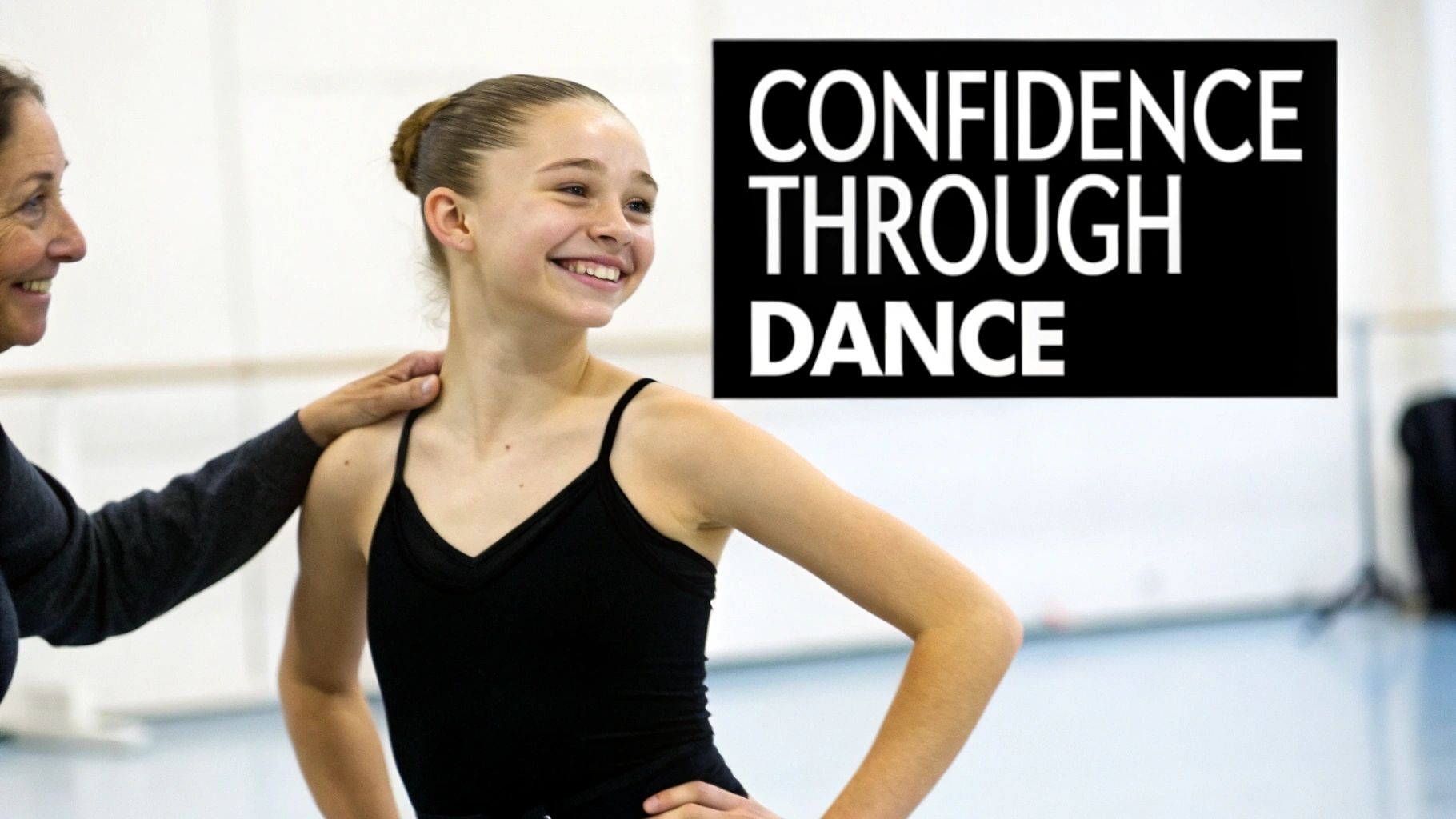
We often talk about the physical perks of dance—better strength, coordination, and heart health. But ask any lifelong dancer, and they’ll tell you the real magic happens on the inside. The art of dancing is a powerful shaper of character, building life skills that stick with you long after the music stops.
From the moment a student walks into the studio, they’re embarking on a journey of self-discovery. Every new piece of choreography is a puzzle to be solved, calling on their focus, memory, and creative thinking. It’s a workout for the mind that’s as challenging as it is fun.
From Small Wins to Unshakable Self-Esteem
Confidence isn’t handed out at the door; it's earned, one small victory at a time. It’s the flicker of pride when a shy child from Lehi finally sticks a turn they’ve been working on for weeks. It’s the shared joy when a group of dancers moves as one, connected by trust and timing.
These moments are the building blocks of genuine self-belief. Dancers learn a simple but profound lesson: with enough practice and grit, they can master things that once seemed impossible.
This newfound courage doesn't stay in the studio. The confidence it takes to perform for an audience is the same confidence needed to nail a school presentation, speak up in a meeting, or simply try something new without being afraid to stumble.
A great dance class becomes a second home, a safe space to grow. Whether it’s a young performer from Bluffdale or a busy professional from Sandy finding their rhythm in an adult jazz class, that shared purpose forges a real sense of community. This is where friendships are made and emotional well-being thrives.
Developing Discipline and Resilience
The art of dancing is discipline in motion. Simply showing up, listening to feedback, and putting in the practice—day in and day out—builds a work ethic that is second to none. Dancers learn that progress isn't always a straight line. There will be frustrating days and plateaus.
Learning to take constructive criticism and use it to get better is a game-changer. By pushing through those tough moments, dancers build a deep well of resilience. This process cultivates character traits that are invaluable in every part of life:
- Perseverance: Mastering a routine takes repetition. Students learn to stick with a challenge, no matter how hard it gets.
- Time Management: Juggling school, friends, and dance practice teaches students how to be organized and truly committed.
- Teamwork: In group numbers, every dancer matters. They learn to collaborate, be accountable, and lift each other up.
This is especially true for those who take their passion to a competitive level. If you're curious about how this discipline is refined for performance, you can learn more about what it takes by joining competitive dance teams in our guide .
A Growing Recognition of Dance Education
It’s not just us—people everywhere are catching on to the profound benefits of dance education. This growing appreciation is fueling real market expansion, valued at USD 2.55 billion and projected to hit USD 5.10 billion by 2033. This isn't just a number; it represents countless individuals of all ages discovering dance as a powerful tool for personal growth. You can find more insights about this expanding market and its trends .
At the end of the day, learning to dance is about so much more than the steps. It’s about shaping confident, disciplined, and expressive people who are ready to shine, both on and off the stage.
Choosing the Right Dance Studio for Your Family
Finding the right dance studio isn't just about location or convenience—it’s about finding a second home for your child. This is where their confidence will blossom, where they’ll build friendships, and where a lifelong passion for the art of dancing can truly take root. For families here in Bluffdale and our neighbors in Riverton and Draper, this decision truly sets the stage for your child's entire experience.
The right atmosphere can make all the difference, sparking a love for movement that lasts a lifetime. The wrong one, however, can put that fire out before it even starts. Your mission is to find a studio that feels like a genuine partner—one that shares your family’s values and supports your dancer’s unique goals.
What to Look for in a Studio
It's easy to feel a little lost when you start looking at different studios. The best way to cut through the noise is to focus on the things that really matter for a quality dance education. Think of it as a simple checklist for finding a place that genuinely cares about its students' growth and well-being.
Here are the non-negotiables to look for:
- Qualified Instructors: You want teachers who not only have professional dance experience but also a real heart for teaching. Great instructors know how to connect with kids of all ages and make learning feel exciting.
- Appropriate Class Sizes: In a smaller class, your child won’t get lost in the crowd. Whether they're coming from Lehi or Sandy, they'll get the individual feedback and corrections they need to build a strong, safe foundation.
- Studio Culture and Philosophy: What’s the vibe? Is it a warm, supportive community or an intensely competitive environment? The best studios know how to balance high standards with positive, encouraging energy.
Questions to Ask Before You Enroll
Before you sign any paperwork, it's time to do a little homework. Pop in for a visit, see if you can watch a class, or even better, sign up for a trial lesson. This is your chance to get a real feel for the place.
Don't be shy about asking the studio director some direct questions. Here are a few to get you started:
Can you tell me about your studio's teaching philosophy?
What kind of training and background do your teachers have?
How do you approach giving feedback and corrections to students?
Are there opportunities for every student to perform?
How do you balance your recreational classes with your competitive teams?
A studio’s transparency is a huge green flag. If they're happy to answer your questions and make you feel welcome, you know you're in the right place. You’re looking for a partner in your child's dance journey, from their very first plié to their final curtain call.
Aligning Programs with Aspirations
A great studio should have something for everyone. A young dancer from Herriman might just want a fun, creative class to explore movement, while a serious student from Draper might have their sights set on a professional career. Look for a studio with a clear path for growth, offering everything from playful introductory classes to a rigorous pre-professional track.
Our guide on the importance of a performance dance center explains more about how a well-structured program prepares dancers for the stage.
The dance world is more professional than ever. A recent study that tracked 440 dance companies—275 of them right here in the U.S.—shows just how much the industry is growing. For dancers with professional dreams, top-tier training isn't just a plus; it's essential. You can dig into more of this data on the professional dance landscape . By choosing a studio that can provide that level of training, you’re giving your child the tools they need to succeed, no matter which path they choose.
Your Dance Journey Starts Here
Every dancer's story starts with that first step. I've seen it countless times—the moment someone walks into a studio, really hears the music, and discovers how incredible it feels to move. That's the beginning of it all. The art of dancing isn't some final destination; it's a journey of constant growth where tentative first steps slowly transform into confident, expressive performances.
This journey is a thoughtfully guided progression. It begins by nurturing a child’s natural love for wiggling and evolves into honing their technical skill and unique artistic voice. We see this path unfold every single day with our students from Bluffdale, Herriman, and the surrounding areas.
From First Steps to Foundational Skills
The adventure usually kicks off in our youngest classes, like Parent and Me or Creative Movement. At this stage, it’s all about pure joy and exploration. We use playful activities, songs, and games to introduce toddlers to core concepts like rhythm, balance, and what it means to move through a space. It’s far less about perfect form and much more about building a happy, positive connection to dance.
As they grow, these playful explorations start to blend into more structured classes like pre-ballet or introductory tap. This is where we gently plant the first seeds of discipline. Students begin learning basic terminology, how to behave in a studio, and the fundamental positions that form the vocabulary of dance. This early work sets the stage for everything that will come next.
The goal in these early years is to build confidence as much as coordination. A child who feels safe, supported, and celebrated in the studio is one who will feel brave enough to try new things and fall in love with the process of learning.
Developing Technique and Artistry
Once that solid foundation is in place, dancers are ready to go deeper. This is the phase where they start to seriously study specific styles like ballet, jazz, or hip hop. Classes naturally become more technical, focusing on building the strength, flexibility, and precision required for more complex movements.
This is also where true artistry starts to bloom. Our instructors provide individual feedback, helping students understand not just how to do a movement, but why it feels a certain way. They learn to connect with the music on an emotional level, tell a story through their body, and pour their own personality into their dancing. This is the point where a dancer from Draper or Lehi truly starts to find their unique voice.
Finding the right place for this journey to begin is crucial. This simple visualization shows the core steps for getting started with any studio.
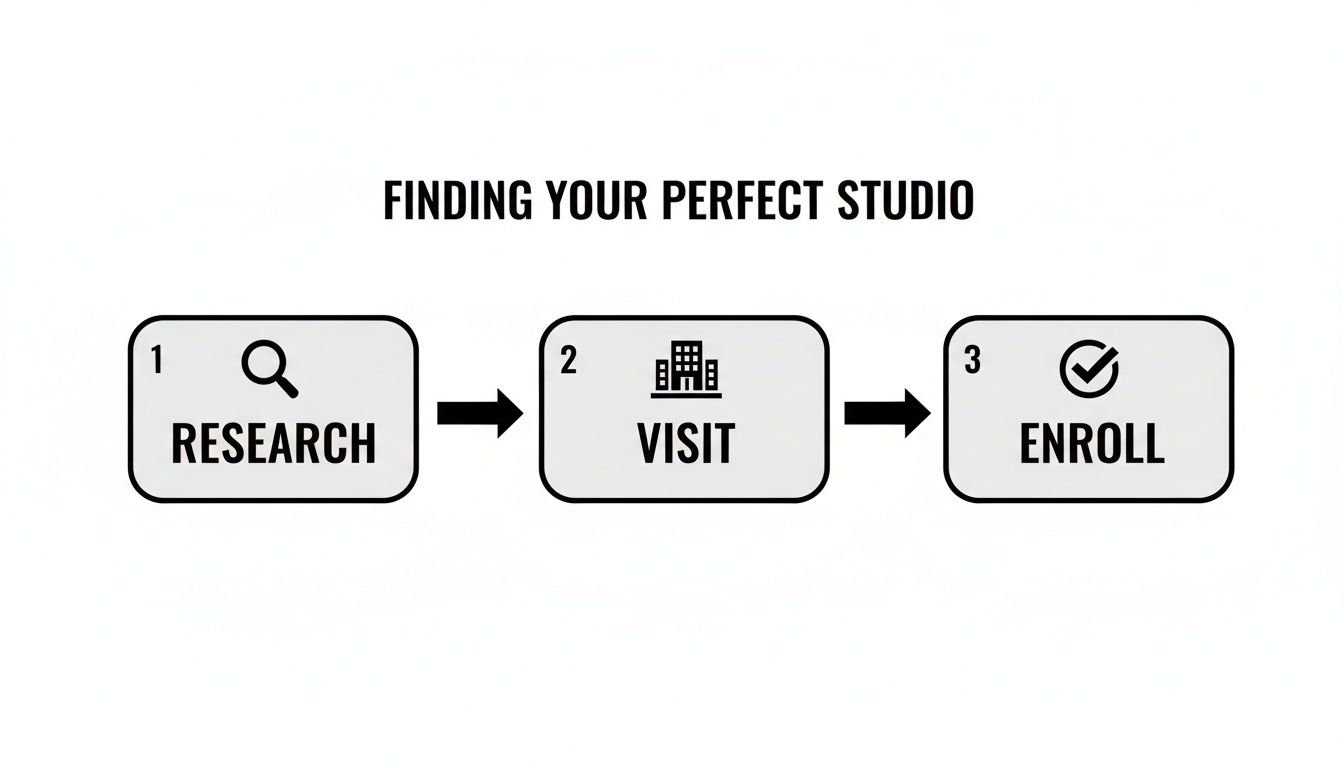
This process really just boils down to one thing: choosing a studio is an active, hands-on decision that lays the groundwork for a wonderful dance experience.
Reaching New Heights with Performance
The final piece of the puzzle is performance. Stepping onto a stage, whether it's for a small in-studio showcase or a big production, is where all the hours of hard work, sweat, and laughter come together. Performing teaches skills that go far beyond the studio walls:
- Confidence: There's nothing quite like performing for an audience to build incredible self-assurance.
- Teamwork: Dancers learn to trust and rely on each other to create something powerful and cohesive as a group.
- Resilience: They figure out how to manage nerves, push through challenges, and recover gracefully if a mistake happens.
For those who want to take their passion even further, we offer opportunities like competition teams, which give dancers a chance to challenge themselves at a higher level. This entire progression—from a child’s first twirl in class to a teen’s breathtaking solo—shows the amazing power of a well-guided dance education. It’s an invitation to start a journey that builds not just a talented dancer, but a confident, expressive individual ready to shine.
Questions We Hear All the Time
Jumping into something new, especially for your child, naturally comes with a lot of questions. We get it! We've put together a few of the most common things parents and new dancers ask us, so you can feel totally prepared and excited to get started. Here are some quick, clear answers for our families in Bluffdale, Riverton, and all our neighboring communities.
What Should My Child Wear to Their First Class?
Great question! For the very first trial class, just have them come in something comfortable they can move in, like leggings and a fitted t-shirt. It's all about being able to move freely.
Once you’re officially enrolled, we'll give you the specific dress code for your class. This is really important for safety and so our instructors can see the dancer's posture and alignment clearly. It usually includes things like leotards, tights, and the right shoes for the style—like ballet slippers or tap shoes.
Is My Child Too Young or Too Old to Start?
Honestly, it's never the wrong time to fall in love with dance. We have Parent and Me classes for little ones as young as 18 months, which are all about building a joyful foundation with movement.
For kids, teens, and even adults from Draper and Sandy, we have a spot for you. We offer classes for every level, from total beginners who have never taken a step to seasoned dancers. The only real requirement is showing up ready to learn and have a good time.
The best time to start dancing is whenever you feel that spark. Age is just a number in the studio—passion and a positive attitude are what truly make a dancer shine.
How Much Practice Is Needed Outside of Class?
For our younger and recreational dancers, the main goal is simply to enjoy their time in the studio. We absolutely encourage practicing at home if they're inspired, but it's not a strict requirement.
As students get older or join one of our competitive teams, they’ll get specific exercises to work on at home to help them nail their technique and build strength. For most of our families in Lehi and Herriman, just being consistent with attending and participating in class is the perfect recipe for success.
What If My Child Is Shy?
We see this all the time, and dance is one of the best things for it. A dance class is a fantastic way for a shy child to blossom and gain confidence.
Our instructors work hard to create a warm, supportive atmosphere where every single student feels safe to be themselves. Through group activities and learning choreography together, even the most reserved kids start to open up, build friendships, and discover their own unique way of moving.
Ready to take that first step? We're here to help every student find their rhythm and shine. At Encore Academy for the Performing Arts, your dance journey is just beginning. Book a trial class today and see what it's all about