
The Best Age to Start Piano Lessons A Complete Guide for Parents
So, what's the magic number? When is the absolute best age to start piano lessons?
Parents ask me this all the time. While most people point to the 6 to 8-year-old window as the sweet spot, the real answer is a bit more nuanced. It’s less about their birthday and more about their individual readiness. I've seen some kids from Sandy take to the piano like a duck to water at age 5, while others are better off waiting a year or two.
Honestly, a joyful introduction to music can start as early as age 3 through playful, exploratory activities. Think of it as building a strong, happy foundation before you start putting up the walls of formal lessons.
Finding the Right Starting Point for Piano
For parents here in Bluffdale and nearby areas like Riverton, figuring out the right time to start piano lessons is a big decision. There isn't a one-size-fits-all answer, but we can look at a child's development to get a pretty good idea.
The key is to watch for specific signs of readiness. Can they move their fingers independently? Can they focus on a single activity for about 10-15 minutes? And, most importantly, are they actually curious about the piano? These clues tell you a lot more than their age ever could.
Let's break down what piano readiness and learning look like at different stages.
A Quick Look at Piano Learning Stages by Age
Here’s a snapshot of what you can generally expect as kids grow. It helps to see how the learning goals and teaching methods shift over time.
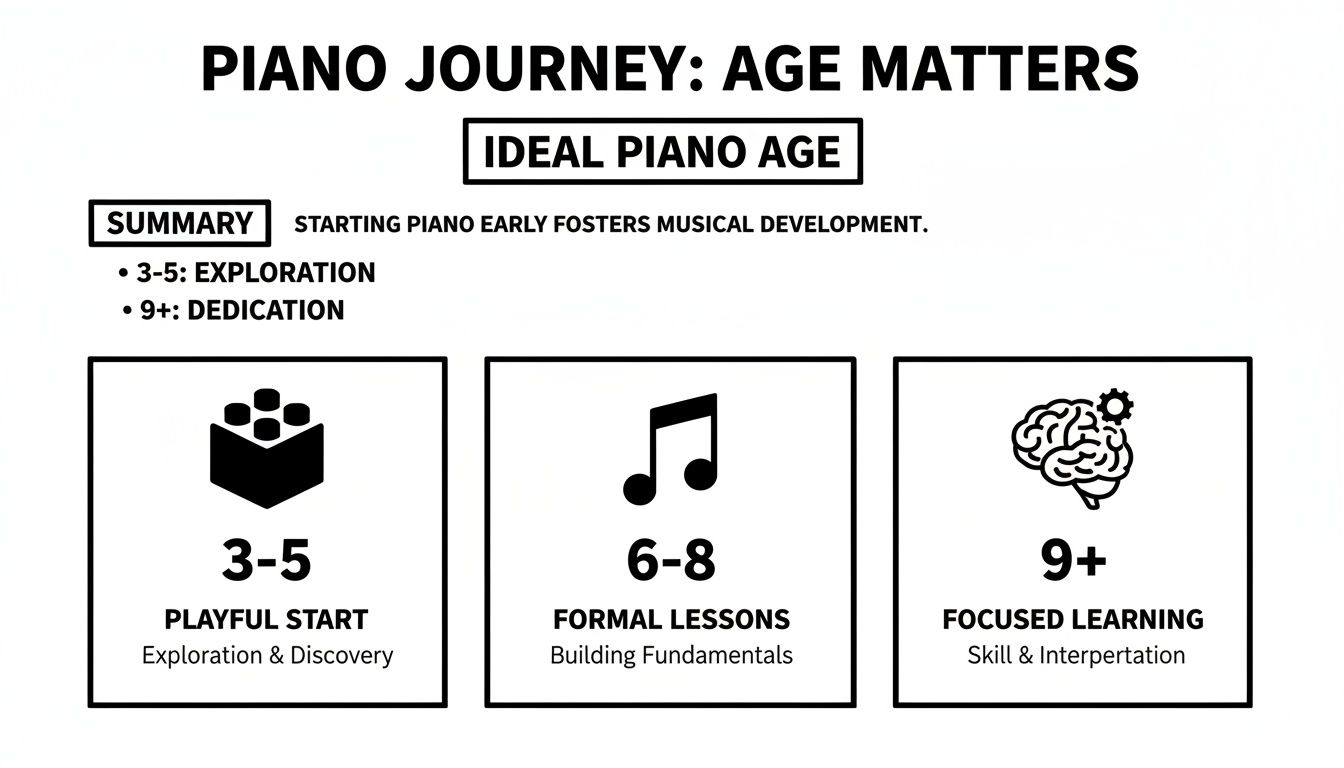
As you can see, the journey begins with playful exploration for the little ones and gradually evolves into structured, goal-oriented learning for older students. This progression is crucial because it keeps music fun and prevents kids from getting overwhelmed.
If you're also thinking about other instruments, you might find our general guide on the best age to start any music lesson helpful, as it covers everything from violin to voice.
Our philosophy is simple: the goal isn't just to teach notes on a page; it's to nurture a genuine, lifelong love for music. Matching the teaching style to a child's developmental stage is how we create a positive environment where they can truly flourish.
Ultimately, understanding these stages helps you decide whether your child is ready for one-on-one lessons or if they’d have more fun in an introductory music and movement class first. It's all about setting them up for a successful and rewarding experience.
Joyful Beginnings: The Preschool Pianist (Ages 3-5)
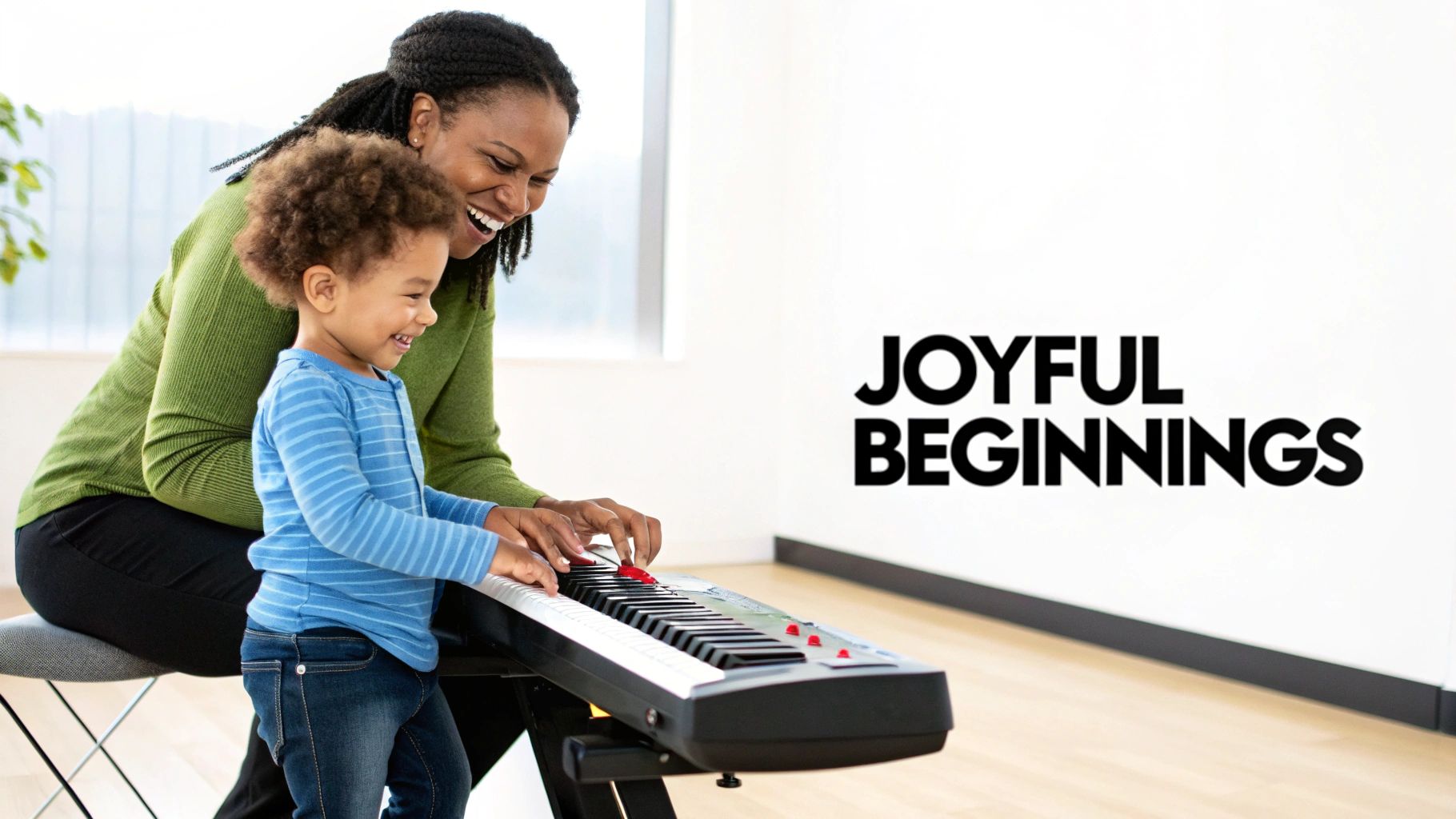
Many parents wonder if a three or four-year-old is too young for piano. It's a fair question, but this vibrant age is actually a fantastic time for a child's first joyful encounter with music. The goal isn't discipline or technical mastery; it's pure, unadulterated discovery.
Think of it like a toddler learning to talk. They babble, listen, and play with sounds, absorbing the rhythm and melody of language long before they ever see a grammar book. Early music education works the same way.
At this stage, lessons are less about sitting still and more about moving, singing, and exploring. This playful approach builds powerful neural pathways for rhythm, pitch, and listening skills. While their tiny hands might not be ready for complex chords, their brains are absolute sponges for the foundational elements of music.
What Preschool Piano Lessons Really Look Like
Forget rigid scales and drills. A lesson for a four-year-old from Herriman should feel more like a guided play session centered around the piano. To match their short attention spans, these sessions are kept brief—typically just 10-15 minutes. The whole point is to create happy memories with music.
A preschooler's first experience with piano shouldn't feel like work. It's about establishing a positive, lifelong relationship with music by associating the instrument with fun, creativity, and self-expression.
This ensures that when they are ready for more structured learning, they see the piano as a source of joy, not a chore. We use all sorts of activities to keep them engaged. You can get a better feel for this approach in our guide to music and movement games for preschoolers .
Activities in a preschool piano program often include:
- Musical Storytelling: Using high and low notes to bring characters or actions in a story to life.
- Rhythm Games: Clapping, stomping, and using shakers or drums to really feel the beat in their bodies.
- Keyboard Geography: Learning the names of the white keys through fun songs and games about patterns (like finding all the "dog houses" with two black keys!).
- Improvisation: Encouraging them to create their own "songs" and explore different sounds on the piano without any judgment.
The Lasting Impact of an Early Start
Starting piano this early can lay an incredibly strong foundation for future musical skills. The Peterson Family Foundation points out that the piano is unique because it can "grow with your child as their skills and interests develop."
Beyond the music, this early exposure delivers significant cognitive benefits. Research shows that individuals who began piano before age seven had advanced brain development that persisted for years, even if they later stopped playing. You can read the full research about these cognitive findings for yourself. This is why the best age to start piano lessons is often less about a specific number and more about finding the right, play-based approach.
The Golden Window for Formal Lessons (Ages 6-8)
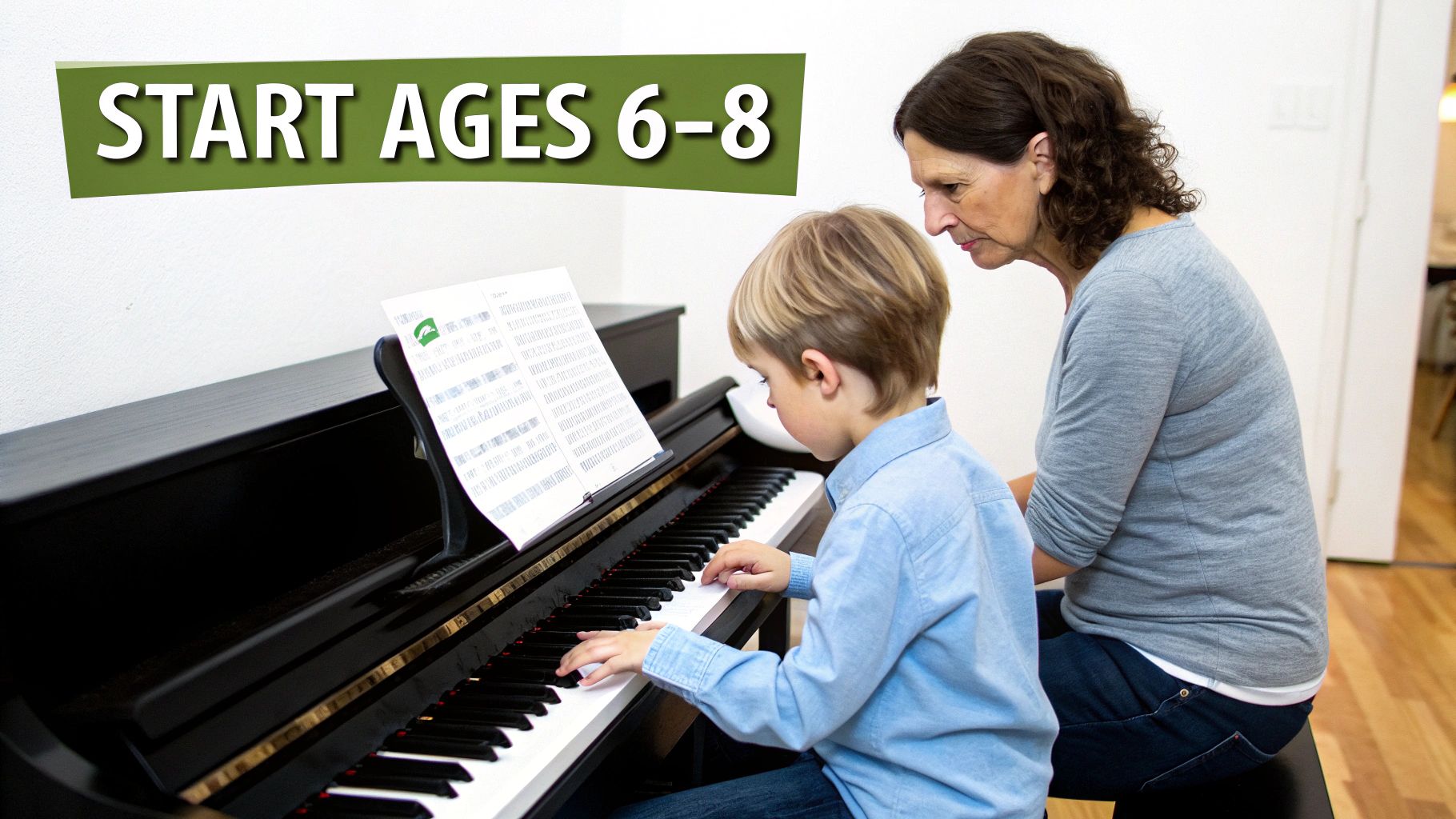
While those early years are all about playful discovery, the period between ages six and eight is what I like to call the "golden window" for starting more formal piano lessons. This is the sweet spot where a child's natural development lines up perfectly with the focus needed to really learn an instrument. All that foundational joy from their toddler years can now be channeled into building real, tangible skills.
Think of it like learning to ride a bike without training wheels. A six-year-old has the coordination, the focus, and that budding desire for independence to finally start pedaling on their own. It’s the same with piano; kids this age just have the right tools in their toolbox to begin the journey in earnest.
Key Developmental Milestones for This Age
This isn't just some random age range we pulled out of a hat. It's backed by some pretty significant developmental leaps that make learning the piano much more effective and, frankly, more fun. We see it all the time with kids from nearby communities like Sandy or Draper who start lessons during this window—they're just primed for success.
Here's what's happening under the hood:
- Reading Skills: They’re recognizing letters and starting to sound out words. This is a huge advantage, as that skill translates directly to reading musical notes on a page.
- Longer Attention Span: Their ability to focus has stretched to about 15-20 minutes. That's the perfect amount of time for a productive and engaging chunk of a lesson.
- Improved Fine Motor Skills: Their fingers have gained the strength and dexterity needed to press individual keys with control and purpose.
- Emotional Resilience: They're getting better at handling the small frustrations that pop up when learning something new. They can finally grasp that practice really does lead to improvement.
Embracing a Balanced Curriculum
At this stage, students are ready to start wrapping their heads around the core concepts of music. This is when they can begin exploring the building blocks and see how it all fits together. There's nothing quite like seeing a child from Herriman or Lehi light up when they realize they can actually read the notes and play a tune they recognize.
A great curriculum for this age group has to blend technical skill-building with creative fun. The goal is to nurture their budding passion, making sure lessons are challenging but never feel like a chore.
This means balancing scale practice with learning songs they know and love, or mixing note-reading exercises with chances to just improvise and create. Research backs this up, too. Evidence suggests that ages 6 to 8 offer an ideal balance where cognitive skills and emotional maturity help kids persevere through challenges. One Canadian study even showed that students who started around age 6 were more likely to stick with their lessons long-term. You can discover more insights about these findings and see why this age is so effective.
Ultimately, this golden window is when a child can start to truly understand and appreciate the language of music. By learning these foundational concepts, they’re taking the first steps toward becoming independent musicians—a critical part of the journey we explore in our guide on music theory lessons for beginners .
Key Signs Your Child Is Ready for Piano Lessons
When is the best age to start piano lessons? It’s a question every parent asks, but the answer often has less to do with the number of candles on a birthday cake and more to do with your child’s unique development. Age is a decent guideline, but true readiness is the real starting line.
Instead of getting hung up on whether your child is five or six, it’s far more helpful to look for the tangible signs that show they’re truly prepared to jump in and have fun.
This simple shift in perspective helps parents in our Lehi and Draper communities feel confident in their decision. When a child is truly ready, they bring a mix of physical, mental, and emotional skills that turn learning into an exciting adventure, not just another chore.
Physical and Mental Readiness Checklist
Before a child can really get the hang of the piano, they need a few foundational skills in place. Think of them as the building blocks for their entire musical journey. If your child is ticking most of these boxes, they’re probably in a great spot to start formal lessons.
You don’t need a special test for this—just observe them during playtime and daily routines.
- Finger Independence: Can they wiggle each finger on its own, or at least give it a good try? This basic hand dexterity is what allows them to press one key at a time. A fun way to check is by playing "finger puppets" or seeing if they can lift each finger as you point to it.
- Basic Number and Letter Recognition: While they don’t need to be reading novels, knowing letters from A to G and numbers 1 through 5 is a huge head start. This knowledge maps directly onto the keyboard and the basics of reading music.
- Ability to Sit and Focus: Can your child stick with a single activity—like a puzzle, drawing, or building with blocks—for at least 10-15 minutes? That's about the amount of focused attention needed to get through a beginner piano lesson without getting too squirmy.
Emotional and Social Readiness
Beyond the nuts and bolts of motor skills and counting, a child’s emotional maturity is a massive piece of the puzzle. It’s often the most overlooked part of readiness, but it’s arguably the most important. For parents in nearby Herriman, keeping an eye out for these social cues can make all the difference.
A child’s willingness to learn is just as important as their ability to learn. A positive attitude and genuine curiosity create the perfect environment for musical growth, ensuring that lessons are something they look forward to each week.
Look for these key emotional green lights:
- Genuine Interest in Music: Do they hum along to songs on the radio? Do they stop what they’re doing to listen when they hear an instrument? This natural curiosity is the engine that will power them through the early learning curves.
- Ability to Follow Directions: Piano lessons are all about following a teacher’s simple, step-by-step guidance. If your child can listen to and act on instructions, they’re well-equipped to pick up new techniques and concepts.
- Willingness to Try New Things: Learning an instrument means stepping into the unknown and being okay with not being perfect right away. A child who embraces new experiences and isn’t easily frustrated will find the whole process rewarding and fun.
It’s Never Too Late to Learn Piano
There's a persistent myth out there that the window for learning piano slams shut sometime in childhood. That’s just not true. While kids definitely have neuroplasticity on their side, teenagers and adults bring a whole different set of superpowers to the keyboard. The truth is, any age can be the best age to start piano lessons.
For older learners, the motivation is usually deeply personal. You're not here because a parent signed you up; you're choosing this journey for yourself. That kind of internal drive is a powerful fuel, the kind that gets you through a tricky passage or keeps you coming back to the bench day after day.
The Adult Advantage in Music
Think about learning piano as an adult a bit like learning a new language. A child might pick up a flawless accent just by being around it, but an adult can dissect the grammar and sentence structure—the music theory—much more quickly. That ability to grasp abstract concepts right away gives adult learners a serious head start.
Your life experience and developed problem-solving skills mean you can spot the patterns and logic inside the music. This leads to a much faster understanding of complex ideas, and the artistic journey itself often means so much more.
For aspiring musicians in communities like Draper or Bluffdale, this means you can progress with a real understanding of what you’re playing and why it sounds the way it does.
Navigating the Challenges of an Adult Learner
Of course, learning as a teen or adult comes with its own set of hurdles. The biggest one? Time. Juggling a job, family, and a dozen other commitments can make consistent practice feel like an impossible task. But it’s not—with the right mindset and a good strategy, it’s completely doable.
- Set Realistic Goals: It's all about consistency, not cramming. A focused 15-20 minutes of practice every day will do a lot more for you than one long, stressful session once a week.
- Embrace the Process: Understand that progress isn't a straight line. There will be ups and downs. Make sure to celebrate the small wins, like finally nailing a difficult measure or feeling your rhythm lock in.
- Find a Supportive Teacher: You need an instructor who gets it. A teacher who understands the adult learning process can shape lessons around your goals and your schedule, which is key to staying motivated.
With a smart approach, anyone can discover the joy of playing the piano. In fact, many older beginners find that working on their skills, like learning how to improve sight-reading on the piano , becomes a uniquely rewarding and almost meditative part of their routine. It's truly never too late to start.
How to Find the Right Piano Teacher and Instrument
Alright, so you’ve decided your child is ready to start their musical adventure. That’s fantastic! The next part is all about setting them up for success, and that really boils down to two things: finding the right piano and, even more importantly, the right teacher. Getting these two pieces right can make all the difference, turning that initial spark of interest into a real, lifelong passion.
Let's talk about the instrument first. While we all dream of having a beautiful grand piano in the living room, it's definitely not a requirement for a beginner. The single most important thing to look for is an instrument with 88 fully-weighted keys. This is non-negotiable, because it feels just like an acoustic piano and helps your child build the right finger strength and technique from the very first lesson.
Choosing Your First Piano
For most families just starting out, a good-quality digital piano is the perfect choice. It gives you those essential weighted keys and a great sound without the high cost and regular tuning that come with an acoustic piano.
You might be tempted by a simple, portable keyboard with unweighted keys—they're often cheaper—but I strongly advise against it. Playing on unweighted keys is a bit like trying to learn to drive in a go-kart; it just doesn't build the necessary muscle and control for the real thing, which can hold a student back down the road.
The right instrument is a partner in your child's learning. An instrument with 88 weighted keys provides the correct tactile feedback, making the transition to any piano seamless and ensuring their practice time builds real, transferable skills.
What Makes a Great Piano Teacher
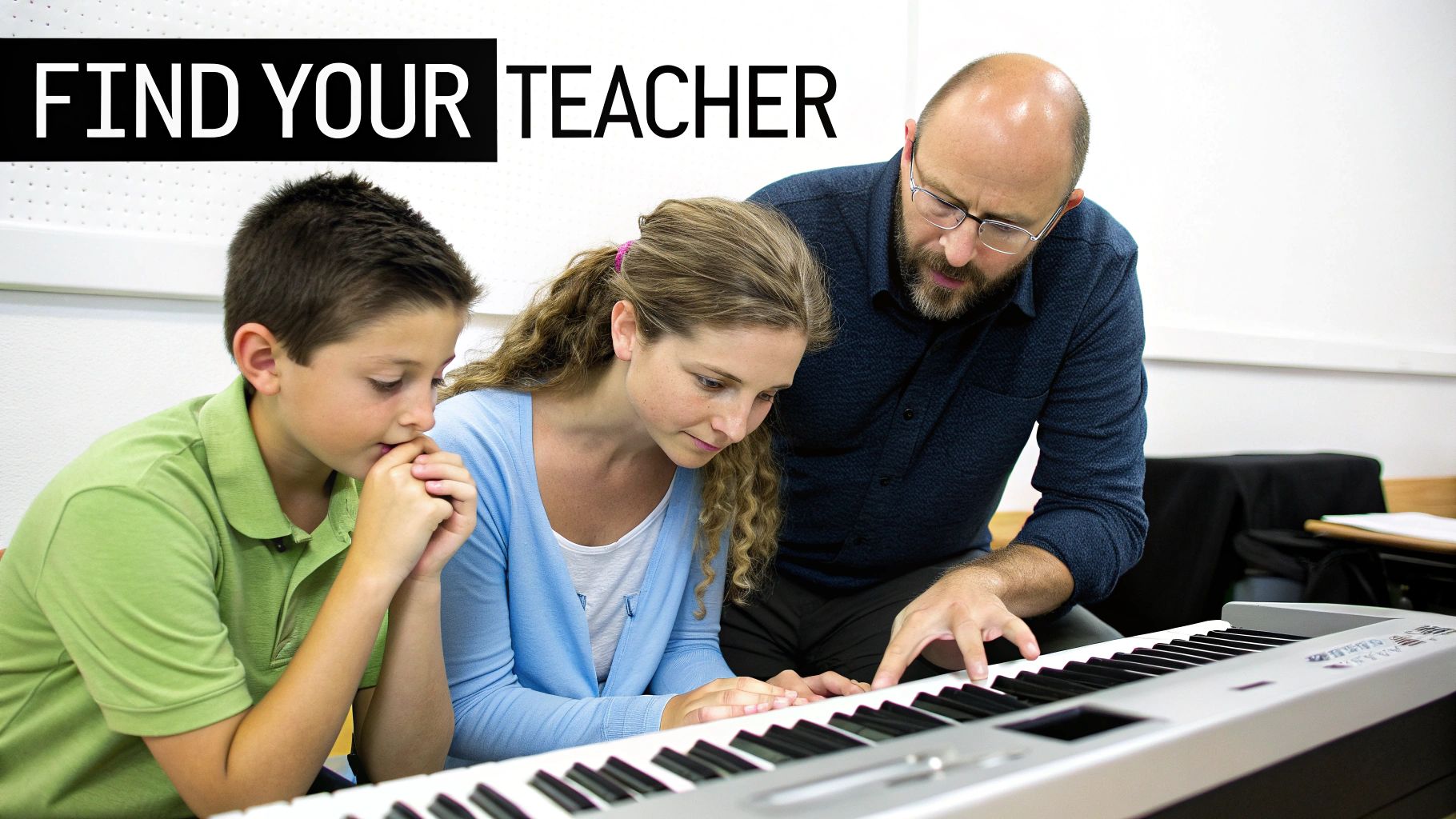
Now, for the most critical part: the teacher. The instrument is important, but a great teacher is the game-changer. A truly wonderful instructor does so much more than just teach notes on a page. They're a mentor who tunes into each student's unique personality, learning speed, and what kind of music gets them excited.
The best teachers know how to create an environment that’s both supportive and motivating. For a young child from Lehi or Draper, that might mean lessons packed with games and encouragement. For a busy teen or an adult, it means finding a teacher who respects their goals and knows how to fit meaningful progress into a packed schedule.
This philosophy is at the heart of everything we do here at our Bluffdale studio. We truly believe the best age to start piano lessons is simply the age when a student connects with a teacher who "gets" them. We work hard to create that positive, inspiring atmosphere for all our students, whether they come to us from Riverton, Herriman, or anywhere in between.
We’d love for you to see what we mean. Feel free to learn more about our dedicated instructors and our approach to piano lessons at Encore Academy .
Answering Your Questions About Piano Lessons
As you think about starting piano lessons, it's natural to have questions. We hear a lot of great ones from parents just like you, so we’ve put together some straightforward answers to the most common ones we get.
How Long Should My Child Practice Piano Each Day?
This is a big one, and the answer is simple: practice time should always fit your child's age and focus. Remember, consistency is king—it's far more important than cramming.
Here’s a good rule of thumb for daily practice:
- Ages 4-5: Think in terms of fun, musical engagement for about 10-15 minutes. Keep it light!
- Ages 6-8: 15-20 minutes a day, maybe five days a week, is a great target.
- Teens and Adults: To see real progress, 30 minutes or more each day is ideal.
Short, focused sessions build solid habits and prevent burnout. A little bit every day is so much more effective than one long, stressful practice session on a Saturday afternoon.
Should We Start with a Keyboard or a Piano?
For a student's long-term success, we can't recommend this enough: start with an instrument that has 88 fully-weighted keys. This could be a quality digital piano or a traditional acoustic one.
The reason this matters so much is that weighted keys feel like a real piano. This is absolutely critical for building the right finger strength and technique from the very beginning. It ensures the skills they develop at home transfer seamlessly to their lessons and beyond.
A small, unweighted keyboard might be okay for a toddler just exploring sounds, but any student in structured lessons really needs a properly weighted instrument to make meaningful progress. If you're in the Riverton area, we're always happy to offer specific recommendations.
What Should I Do If My Child Wants to Quit?
It happens. That initial burst of excitement can sometimes fade, and it's a completely normal part of the learning process. Before you make any big decisions, the first step is to talk—first with your child, then with their teacher. Let's figure out what's really going on.
Often, a small change is all it takes to get things back on track. Maybe it’s finding a new song they love, setting a fun weekly goal, or preparing for a low-pressure recital. We always encourage families to stick with it for a full semester to get over that initial hump where everything feels new and challenging.
Ready to see if piano is the right fit for your child? At Encore Academy for the Performing Arts, we create a supportive, fun, and inspiring space for students of all ages. Book a trial class today and let us help you find the perfect teacher for your family.