
What age to start music lessons: Essential signs, timing, and tips
As a music educator, one of the most common questions I get from parents is, "What's the perfect age to start music lessons?"
The truth is, there's no magic number. While most kids are ready for structured, private lessons between the ages of 6 and 8, the real answer is all about your child's individual readiness. It's less about their birthday and more about their developmental stage.
Let's dive into what that really means and how you, as a parent in Bluffdale, Herriman, Lehi, or our surrounding communities, can feel confident about finding that "just right" moment for your family.
Is There a Perfect Age to Start Music Lessons?
Worrying about starting "too early" or "too late" is completely normal. We all want to give our kids the best possible start. But I encourage parents to shift their thinking away from a strict timeline and toward watching for signs of genuine readiness.
This guide is designed to help you do just that. We'll explore the developmental cues that show your child is prepared to learn an instrument. This approach takes the pressure off and helps set your child up for a joyful, lifelong relationship with music.
Quick Guide: Recommended Starting Ages by Instrument
To give you a starting point, here’s a quick-reference table with general age recommendations for some popular instruments. Think of these as common entry points, not strict rules.
| Piano/Keyboard | 5-7 years | Can sit still for 15-20 minutes, knows the alphabet, can move individual fingers. |
|---|---|---|
| Violin/Strings | 5-7 years | Good posture, ability to hold a small, delicate object carefully, strong listening skills. |
| Guitar/Ukulele | 7-9 years | Finger strength to press down strings, hand size to reach around the neck of the instrument. |
| Drums/Percussion | 7-9 years | Natural sense of rhythm, good limb coordination (can tap hands and feet at once). |
| Voice/Singing | 8+ years (formal) | Able to read lyrics, can focus on breath control, understands pitch matching. |
| Woodwinds/Brass | 9-11 years | Has adult front teeth, sufficient lung capacity, large enough hands to hold the instrument. |
Remember, this chart is just a guide. The most important factor is always your child's unique development and enthusiasm.
Your Child's Musical Timeline
A child's readiness for a specific instrument is closely tied to their physical and cognitive growth. Some instruments, like a trumpet, demand more lung power and finger dexterity than a piano, making them a better fit for a slightly older beginner.
This timeline gives you a great visual for how this journey often unfolds.
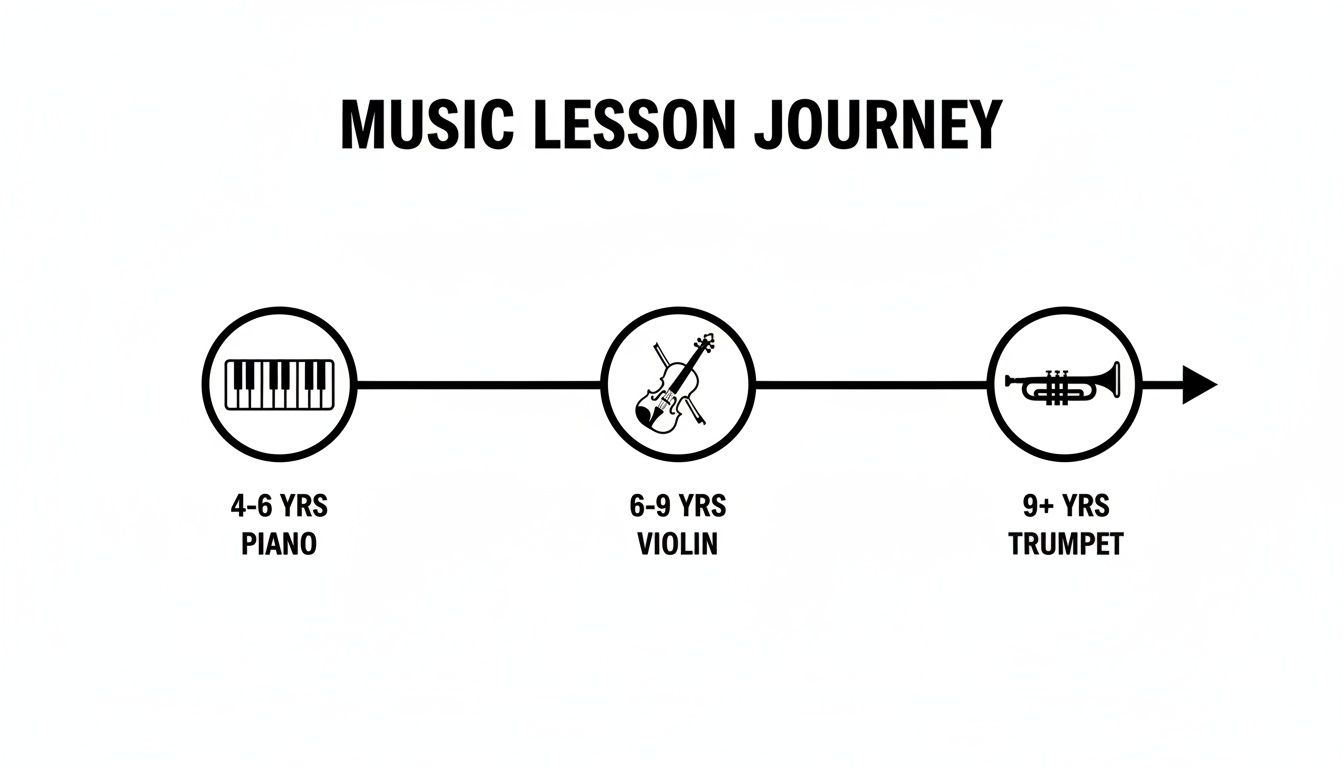
As you can see, instruments like the piano are fantastic for younger kids because the layout is so visual and the sound is produced with a simple key press. Others are introduced later, once a child's hands, lungs, and focus have matured.
The most important takeaway is that readiness is a spectrum, not a single point in time. A child might be ready for group singing at age four but need another year or two before they have the finger strength for guitar.
For the youngest learners, the goal should always be joyful exploration, not formal instruction. Building a foundation of rhythm and melody through play is the perfect first step. If you have a little one at home, check out our guide to preschool music and movement ideas for fun activities you can do right now.
The Science Behind Starting Music Lessons Early
Ever wonder why young kids seem to pick up new things so effortlessly? It’s not just your imagination. Their brains are incredibly malleable, especially before the age of seven. Scientists call this brain plasticity—the brain's amazing capacity to forge new connections and rewire itself based on new experiences.
When a child plays with music, their brain lights up. Simple things like clapping along to a song or singing a nursery rhyme aren't just fun; they're building powerful neural pathways. This early activity lays the foundation for stronger language skills, better memory, and even emotional control down the road.
That “Window of Opportunity” You’ve Heard About
Neuroscience often talks about a "window of opportunity" for learning, and music is no exception. Research increasingly points to a critical period for musical development from birth to about age seven. During these years, the brain is growing at an astonishing rate, making connections faster than at any other time in life.
This makes it the perfect time to introduce music. The brain is literally primed to absorb it. You can dive deeper into the timing of music lessons and brain development if you're curious.
But don't worry, this window doesn't slam shut once a child turns eight. While the brain's wiring process changes, the ability to learn and benefit from music lasts a lifetime. So, whether you're a parent in Draper or Sandy, think of it less like a deadline and more like an open invitation.
So, Did Older Students Miss the Boat?
Not at all! While starting young has its perks, older beginners bring a completely different set of advantages to the table. In fact, one major study showed that adults who started piano lessons saw significant boosts in their memory, processing speed, and overall cognitive function in just six months.
Older learners—from tweens to adults—often catch up quickly because they have a few secret weapons:
- Better Cognitive Skills: They can wrap their heads around abstract ideas like rhythm, harmony, and pitch much faster.
- Longer Attention Spans: An older student can sit down for a focused, productive practice session in a way a five-year-old simply can't.
- Real Motivation: Teenagers and adults usually choose to learn an instrument out of pure passion, and that internal drive is the most powerful tool for success.
The big takeaway here is that the way we learn changes with age, but our ability to learn music is always there. The brain is ready to build new connections, whether you're five or fifty-five.
Think of it this way: a young child might learn piano through imitation and feel, absorbing the music almost intuitively. An older student from Lehi might approach it more analytically, quickly understanding the "why" behind the notes. Both paths lead to the same destination: making music. The core concepts are universal, which you can learn more about in our guide to music theory lessons for beginners .
How to Know If Your Child Is Ready
While age can give us a general roadmap for starting music lessons, your child’s individual readiness is what truly matters. It’s less about a specific birthday and more about hitting a few developmental milestones. Spotting these key signs will tell you when they’re genuinely prepared to have a fun and successful time with an instrument.
These signs usually fall into three buckets: physical, cognitive, and emotional readiness. You don’t need to see a perfect score in every area, but a good mix across the board is a fantastic sign that it’s time to get started.
Physical Readiness
Before a child can even begin to play, their body has to be up for the challenge. This really comes down to having the motor skills and coordination to physically handle an instrument.
- Fine Motor Skills: Watch how they handle everyday objects. Can they hold a pencil the right way, use scissors, or button up a shirt? These small actions show they have the finger strength and dexterity needed for instruments like the piano or violin.
- Hand Size and Strength: For instruments like guitar or cello, a child has to be able to comfortably wrap their hand around the instrument’s neck and press down on the strings. This is a big reason why some instruments are a better fit for kids who are a little bit older.
Cognitive Readiness
Music is as much a workout for the brain as it is for the hands. A child’s ability to think, listen, and process information is a huge part of whether they’ll be able to follow along and make progress. Based on our experience with students from Herriman to Sandy, these are the cognitive signs that really stand out.
- Attention Span: Can your child focus on a single task for at least 15-20 minutes? Real music lessons require that kind of sustained concentration, making this a non-negotiable skill.
- Following Instructions: Do they listen and follow a short set of directions, like "first find this key, then play that one"?
- Basic Letter Recognition: Knowing the alphabet from A to G is a massive head start, since those are the very first notes they’ll learn.
One of the clearest indicators of emotional readiness is how a child handles a new challenge. Learning an instrument is full of trial and error, and being able to try again without getting completely discouraged is what keeps the fun in it for the long haul.
Emotional Readiness
This might just be the most important piece of the puzzle. A child's own motivation and emotional maturity are the fuel that will power their entire musical journey. If they aren't genuinely interested, lessons can start to feel like a chore instead of a discovery.
Keep an eye out for these signals:
They Express Interest: Do they talk about a specific instrument? Do they turn a broom into a guitar or use a hairbrush as a microphone? That natural curiosity is the spark you’re looking for.
They Show Patience: How do they react when they make a mistake? Learning music is all about celebrating small wins and not giving up.
They Enjoy Music: Do they love listening to songs, dancing around the living room, or singing along in the car? A general love for music is the best foundation you could ever ask for.
If you're noticing these signs and thinking about a string instrument, our guide on cello lessons for beginners has even more specific tips to help you out.
Choosing the Right Instrument for Your Child
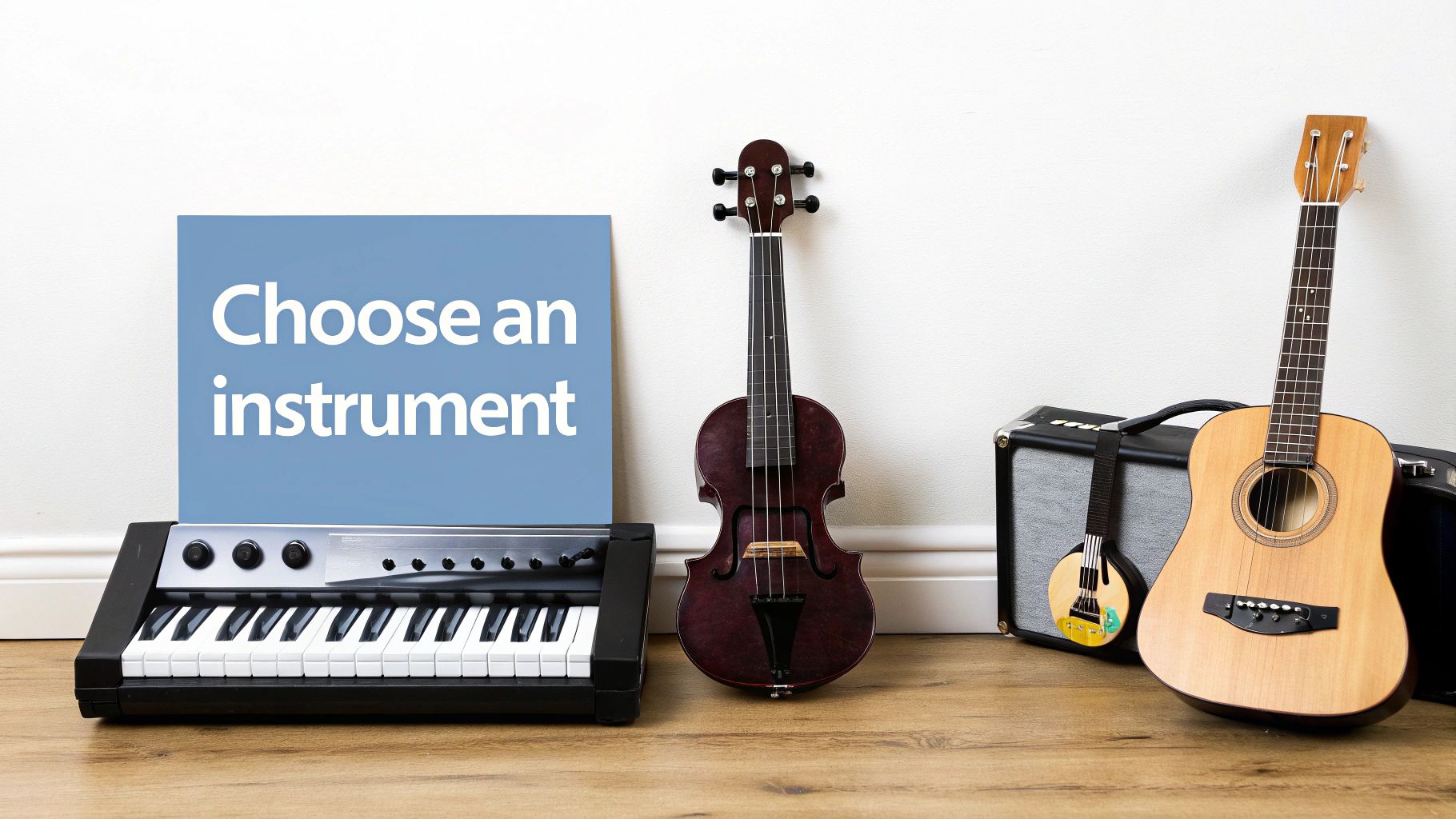
Okay, so you've seen the signs and think your child is ready for music. That's fantastic! The next big question is, which instrument? This is a crucial decision, one that can make all the difference between a lifelong passion and early frustration. It’s about more than just what sounds nice—it's about finding a great fit for their age, size, and developmental stage.
Think of it this way: you wouldn't give a five-year-old a professional, full-sized basketball. You'd start them with a smaller one they can actually handle. The same principle applies here. Picking an age-appropriate instrument helps them build real skills and feel successful right from the start.
Why Piano Is a Powerful First Step
There's a good reason why so many music teachers—from Bluffdale to Draper—suggest starting with the piano. It’s incredibly intuitive for young minds. The piano lays out the world of music in a simple, visual way that kids just get. The keys move from low to high in a straight line, giving them an instant road map to musical concepts that are abstract on other instruments.
Plus, you press a key, you get a perfect note. Every single time. That immediate feedback is super rewarding and builds a solid foundation for understanding pitch without the frustration of, say, making a violin squeak. You can see how we introduce this foundational instrument in our piano lessons at Encore Academy .
String Instruments for Young Beginners
String instruments like the violin and cello are also wonderful starting points, mainly because they come in smaller, child-friendly sizes. A tiny 1/16 size violin can sit comfortably under the chin of a five-year-old, letting them learn correct posture and technique from day one.
Now, it’s true that getting the pitch just right is a bigger challenge on a string instrument than on a piano. But the payoff is huge. It teaches kids to listen with incredible focus and develops seriously impressive fine motor skills.
A key consideration for strings is the child's ability to handle a delicate instrument with care. The responsibility of holding the bow and instrument correctly is a developmental step in itself.
When to Introduce Wind and Brass Instruments
What about instruments like the clarinet, trumpet, or flute? These typically require a bit more physical development, so we usually recommend them for kids who are at least nine years old. Success with these instruments really boils down to a few key physical milestones:
- Lung Capacity: You need a surprising amount of breath support to get a strong, steady sound. Most younger kids just don't have the lung power yet.
- Physical Strength and Size: A student's hands need to be big enough to cover all the holes on a clarinet, and they need the arm strength to hold a trumpet up for more than a few seconds.
- Permanent Teeth: This one's a biggie. Having adult front teeth is essential for forming a proper embouchure—the specific way a player shapes their mouth around the mouthpiece. It's the key to producing a good tone.
For families in Riverton and the surrounding communities, figuring this all out can feel overwhelming. That's why exploring different options without a big commitment is so helpful. At Encore Academy, our trial lessons give your child a chance to actually hold and play a few instruments. This hands-on experience is often the best way for them to discover their perfect match and kick off their musical adventure with genuine excitement.
Your Role as Your Child's Musical Champion
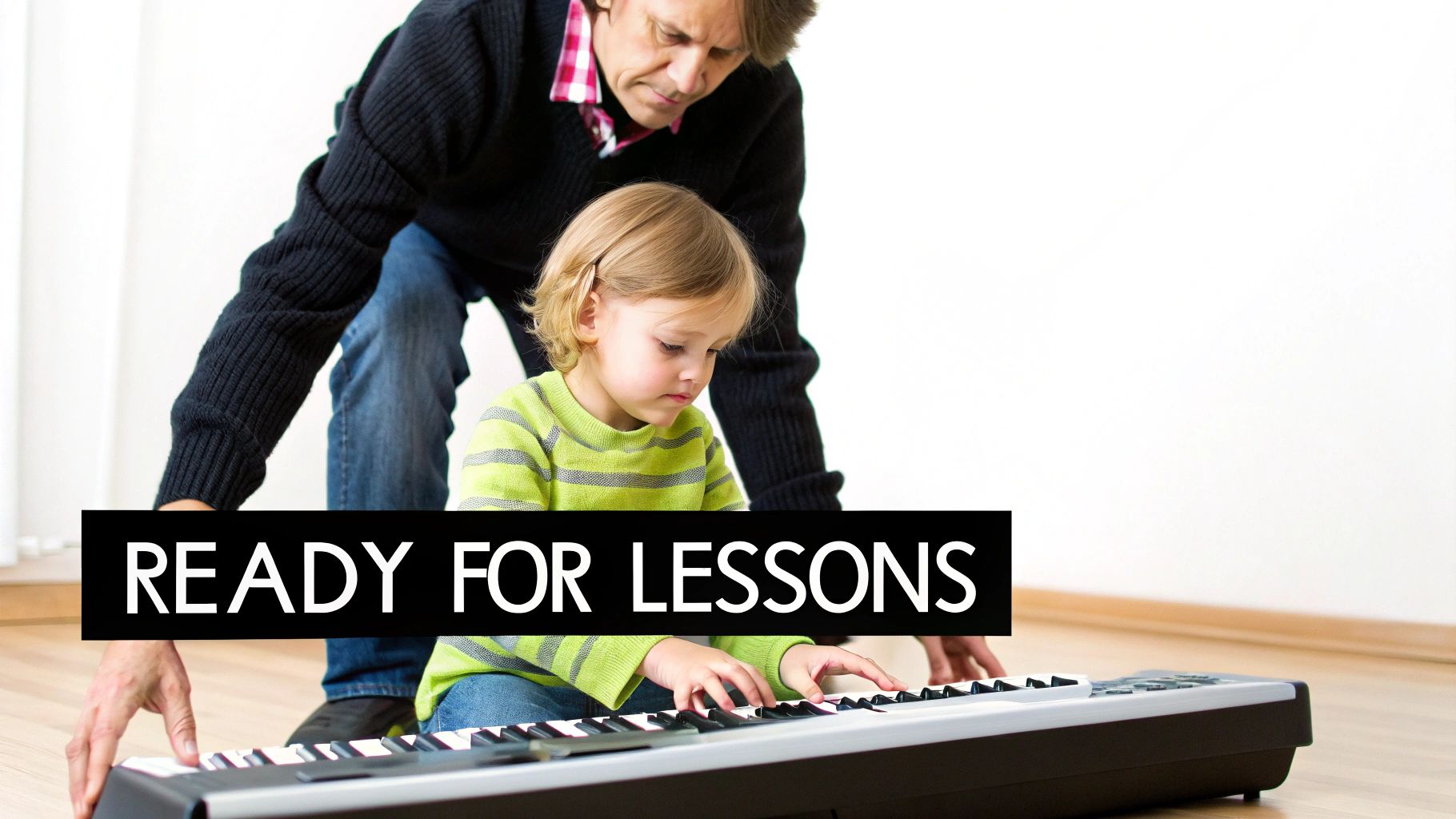
Picking the right instrument and the perfect starting age are huge first steps. But honestly, the single biggest influence on your child's musical journey is you. The encouragement and support they get at home can mean the difference between music being just another weekly chore and it becoming a genuine, lifelong passion.
Your job isn't to be a stern taskmaster, but their number one fan. When you create that positive, nurturing space, you're giving them the tools to stick with it, celebrate their own progress, and find joy in the process.
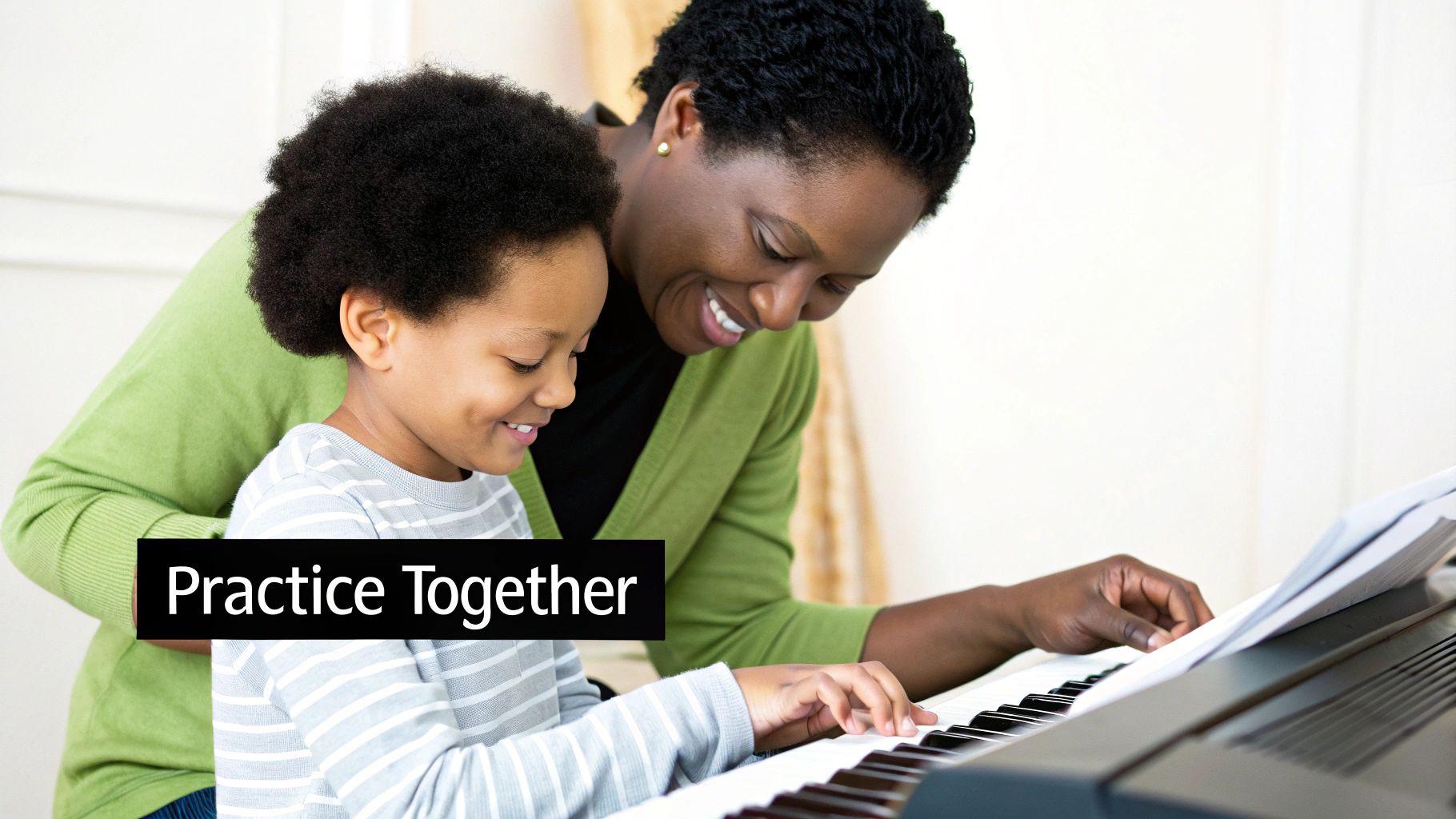
Crafting a Practice Routine That Actually Works
Let's face it, the word "practice" can feel heavy. The trick is to reframe it as a simple, everyday routine, not a high-pressure demand.
- Short and Sweet is Best: For little ones just starting out, a focused 10-15 minutes each day is worlds more effective than a marathon session once a week. This consistency builds muscle memory without leading to frustration or burnout.
- Find a Consistent Time: Try to make practice a predictable part of the day, maybe right after school or just before dinner. When it becomes a habit, you eliminate the daily "do I have to?" negotiation.
- Focus on Fun, Not Flawlessness: The real goal here is exploration and celebrating small victories. Praise the effort and the fact that they sat down to play, not just whether they hit every single note perfectly.
We have a whole guide full of practical ideas on how to practice piano effectively , and you'll find the tips work beautifully for any instrument.
A positive environment is your greatest tool. When a child feels supported and celebrated for their effort, they are far more likely to stick with it through the inevitable challenges of learning something new.
Keeping That Musical Spark Alive
It's one thing to be excited at the start, but keeping that enthusiasm going—especially as kids hit the teen years—is another challenge altogether. Research shows a child's initial excitement for an instrument often peaks between ages five and seven. Unfortunately, studies also find that nearly 50% of students give up music by the time they're 17. A supportive home is one of the most powerful ways to keep your child from becoming part of that statistic. You can read more about the research into what keeps kids motivated and engaged for the long haul.
Ways to Keep Them Motivated
To keep music feeling fresh and relevant, try connecting it to their world.
Play Their Jams: Help them find a simplified version of a song from their favorite movie or a pop hit they love. The moment they can play something they already know and enjoy, their motivation skyrockets.
See Music in Action: Take them to a local concert. It could be a full-blown orchestra or just a band playing in a park in Herriman or Lehi. Seeing musicians in their element is incredibly inspiring.
Make it Social: Do they have friends who also play? Even a super informal jam session can turn solitary practice into a fun social outlet.
Connect to Their Other Passions: If your teen loves video games, dive into the world of epic game soundtracks. If they're a film buff, talk about how composers use music to build suspense and emotion in their favorite scenes.
Ultimately, your role is to help them see music as more than just notes on a page. It's a living, breathing part of their world.
Begin Your Musical Journey at Encore Academy
Knowing when to start music lessons is the first step, but figuring out where to nurture that interest is just as important. Here at Encore Academy in Bluffdale, we’ve built our programs to meet every student exactly where they are, no matter their age or experience. We're proud to be a musical home for families from across the area, including Herriman, Riverton, and Draper, creating a community where that initial spark can grow into a lifelong passion.
Whether you have a five-year-old who's fascinated by the piano or a teenager eager to shred on the guitar, we tailor our approach to fit their developmental stage. We believe music is about so much more than learning notes—it's about growing as a person.
More Than Just Lessons
At Encore, we see the bigger picture. Learning an instrument is a journey that builds confidence, discipline, and character right alongside musical skill. It’s a complete experience.
- Trial Classes: Not sure where to start? We invite new students to try a class. It’s the perfect way to meet our instructors, get a feel for the studio, and make sure it’s a great fit before making a commitment.
- Diverse Instruments: From piano and voice to violin and flute, we offer a wide range of options so your child can find the instrument that truly speaks to them.
- Performance Opportunities: We create regular, low-pressure chances for students to perform. It's an amazing way for them to build confidence, share what they've learned, and feel a real sense of pride in their progress.
We are committed to fostering the conscientiousness and discipline that music education is known to develop. Our goal is to create not just great musicians, but also diligent, confident, and resilient individuals.
A Community Committed to Access
We're also keenly aware that not everyone has the same access to quality arts education. Studies often point out that things like family income can influence a child’s opportunity to pursue music. At the same time, the research shows that the students who stick with music are often the most diligent and hard-working—qualities that help them succeed in all areas of life. You can learn more about the findings on music training and student characteristics .
That's a big part of why we’re so dedicated to making our programs accessible to families in Bluffdale and beyond. We truly believe every child with a passion for music deserves the chance to learn, grow, and find their voice on our stage.
Got Questions? We've Got Answers.
As parents, we know you have questions. It’s a big decision! Here are some of the most common things we hear from families trying to figure out the right next step for their kids.
What if My Child Wants to Switch Instruments?
First off, don't panic! This is completely normal and, honestly, a great sign. It means they're curious and actively exploring what kind of music gets them excited.
Think of an instrument like the piano as a fantastic launchpad. It gives kids a solid foundation in music theory and reading notes, which makes picking up almost any other instrument way easier later on. We always encourage students to follow their curiosity and can help guide them to an instrument that truly clicks with their personality.
How Long Should Music Lessons Be?
For the little ones, usually ages 4 to 7, a 30-minute lesson is the sweet spot. It's just enough time to learn something new and have fun without their attention starting to drift.
Once they get a bit older or more skilled, we can bump it up to 45 or even 60-minute sessions. That extra time allows us to dig into more complex techniques, theory, and of course, learn more of the songs they love.
Did We Miss the Boat if Our Teenager Wants to Start Now?
Absolutely not. In fact, teenagers can be some of the fastest learners. They come in with mature focus, self-discipline, and a really clear idea of what they want to accomplish.
Some of our most passionate and dedicated students started in their teens. They often find music is an incredible way to express themselves and a welcome break from school pressures. It's never, ever too late to start. The best time is simply when the inspiration hits.
Ready to see what sticks? At Encore Academy for the Performing Arts, we offer trial classes so your budding musician can find their groove without the pressure.