
A Parent's Guide to Expression Dance Competition Success
An expression dance competition is where the story you tell is just as important as the steps you execute. It’s a space where raw, genuine emotion takes the spotlight, and dancers are challenged to connect deeply with their music and bring the audience along for the ride. This is where athleticism and artistry truly become one.
Unlocking the Power of Performance
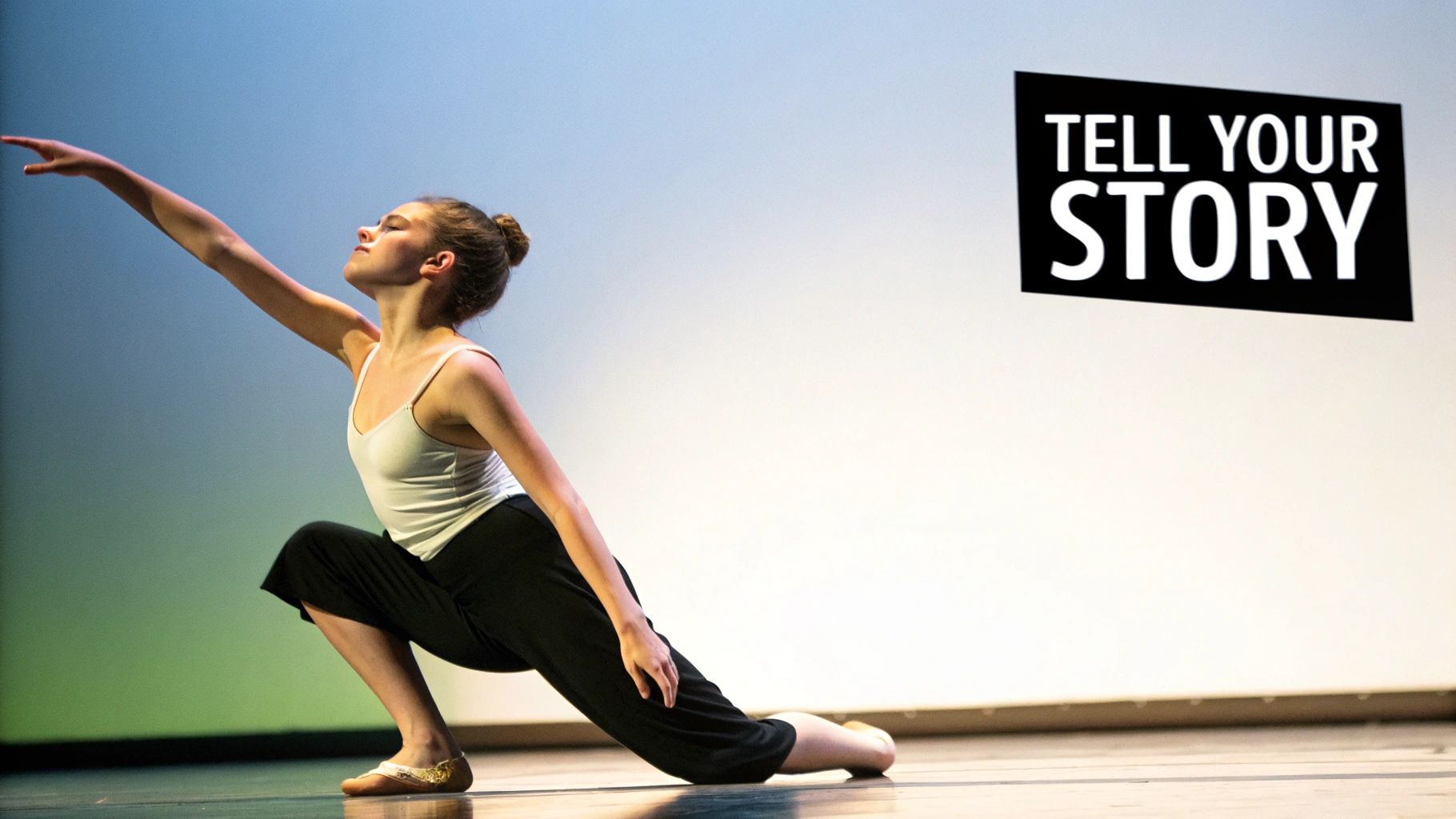
Welcome to the captivating world of competitive dance, where feeling is everything. If a performance has ever given you goosebumps or moved you to tears, you've witnessed the power of expressive dancing. It’s the special sauce that turns a technically sound routine into a memorable, compelling story.
Here’s a way to think about it: a purely technical showcase is like watching a brilliant gymnastics floor routine—it's impressive, precise, and physically incredible. An expression dance competition, on the other hand, is like watching a short film told entirely through movement. The dancer isn't just a performer; they're an actor delivering a wordless monologue.
More Than Just Moves
In this kind of competition, judges are looking for something that goes far beyond perfect technique. They want to see a dancer’s soul on that stage, a genuine connection to the music. They're watching for how the performer uses every tool at their disposal to tell a story or convey an emotion.
The core elements that really set these competitions apart include:
- Musicality: This is so much more than just staying on the beat. It's about living inside the music—embodying its dynamics, its quiet moments, and its crescendos. The dancer's movement becomes a physical extension of the sound.
- Emotional Delivery: A dancer's ability to show authentic feeling is paramount. Facial expressions, body language, even the way they breathe—it all becomes the script that communicates joy, sorrow, anger, or hope.
- Character Development: In many routines, dancers must become a character. Their success hinges on fully committing to that persona from the first note to the final pose, creating a believable and engaging narrative.
This focus on storytelling is what makes this competitive style so enriching for young dancers. It builds not just strong bodies, but strong communicators and confident individuals. Learning to connect with an audience is a skill that serves them well beyond the stage.
Artistry Meets a Global Stage
What once felt like a niche corner of the dance world has blossomed into a major force on the global competitive circuit. Expression-focused events are now a huge part of a data-trackable market that blends pure artistry with high-level athletic training. One industry report estimates the global dance competition market at around USD 2.47 billion, with North America alone generating roughly USD 850 million in annual revenue. This means that competitions emphasizing storytelling are part of a massive, thriving ecosystem.
At its heart, an expression dance competition asks one simple question of every performer: "What story are you telling?" The answer is found not just in a perfect pirouette, but in the flicker of an eye, the reach of a hand, and the vulnerability shared with everyone watching.
Whether the style is lyrical, jazz, or hip-hop, the goal is always the same: dancers learn to tap into their inner artist and turn the stage into a canvas for their emotions. The expressive qualities central to these routines are especially prominent in certain genres; you can dive deeper into the foundations by exploring what contemporary dance style is all about . This kind of training prepares them for a dynamic and deeply fulfilling journey in dance.
How Judges Evaluate an Expressive Performance
Stepping onto the stage for an expressive dance competition can feel like putting your heart on display for everyone to see. So, what are the judges really looking for when they're sitting behind that table? It’s a lot more specific than just "passion"—there's a real method to their scoring, and it's all about rewarding dancers who can turn movement into meaning.
While strong technique is the non-negotiable foundation—think of it as the grammar of your dance language—it’s the expressive quality that truly tells the story. Anyone can write a grammatically correct sentence, but it takes an artist to write poetry. Judges are searching for the poets on stage.
The Four Pillars of Expressive Scoring
At most competitions, judges are evaluating performances based on a few core pillars. Knowing what they are helps dancers from places like Herriman and Sandy laser-focus their training on what will actually boost their scores. Each of these elements needs to work together to create a performance that feels whole and hits hard.
The main criteria usually break down like this:
- Musical Interpretation: This is way more than just hitting the counts. It's about becoming the music—its texture, its shifts in volume, its emotional core. A great dancer doesn’t just perform to the music; they make the music visible.
- Emotional Execution: Judges are looking for real, nuanced feeling. It’s not about pasting on a sad or happy face for three minutes straight. It’s about showing an emotional journey that mirrors the story in the music, revealing vulnerability, strength, or joy in a way that feels completely genuine.
- Storytelling Arc: Does the performance go somewhere? There needs to be a clear beginning, middle, and end. The judges need to be able to follow the story you're telling, whether it's literal or abstract. Every single movement should push that story forward toward a powerful finish.
- Stage Presence: This is that magnetic "it" factor. It’s the confidence and charisma that grabs an audience's attention the second a dancer walks on stage. It's the ability to forge a connection not just with the judges, but with every single person in the theater.
An expressive performance isn’t a checklist of moves; it’s a conversation without words. The judges are listening for clarity, authenticity, and a point of view.
This focus on artistic communication is a global standard. For instance, events like the Expression International Dance Competition in Florence, Italy, have hosted over 5,000 dancers by prioritizing the idea of “using expressiveness as true artists, to represent through dance what music expresses.” This makes it clear that emotional communication is a formal scoring element, not just a nice bonus. You can learn more about how this international competition prioritizes artistry .
From Good to Great: A Judge's Perspective
The gap between a good performance and a winning one often lies in the details. The table below breaks down what judges are thinking as they score each criterion, giving dancers from Draper and Lehi a clearer roadmap to elevate their performance. To get a better feel for the competitive scene, take a look at our guide on finding the perfect Utah dance competition for your dancer.
Key Judging Criteria in Expression Dance Competitions
Here’s a look at the core components judges evaluate in an expressive performance, including what they look for and how dancers can sharpen their skills in each area.
| Musical Interpretation | Your movements must reflect the music’s layers—the soft melodies, the sharp accents, and the silent pauses. You are the physical embodiment of the score. | Practice active listening without moving. Identify the emotional shifts in the music and then choreograph your expressions and dynamics to match those moments. |
|---|---|---|
| Emotional Execution | The feelings you portray must be genuine and evolve with the music. A static smile or frown won't connect with the judges or the audience. | Create a backstory for your character or emotion. Journal about what your character is feeling at each point in the routine to make your performance authentic. |
| Storytelling Arc | Your routine should feel like a complete journey. There should be a clear introduction, a build-up of intensity or conflict, and a satisfying resolution. | Map out the "beats" of your story. Use a clean entrance to set the tone, a powerful moment for the climax, and a deliberate final pose to conclude the narrative. |
| Stage Presence | You must own the stage with unwavering confidence. This includes making eye contact, using the entire performance space, and staying in character. | Practice performing for different audiences—even just family and friends. The more you perform, the more your confidence will grow, allowing you to connect freely. |
Ultimately, mastering these criteria is about making deliberate artistic choices. When you understand exactly what the judges are looking for, you can move beyond just executing steps and start creating unforgettable art on stage.
Your Dancer's Comprehensive Preparation Plan
Success on the competition stage doesn't just happen by magic. It's the result of months of hard work, smart planning, and a whole lot of heart. A solid preparation plan is what turns a big, overwhelming goal into small, achievable steps, giving your dancer the confidence they need to truly shine. This isn't just about memorizing the steps; it's about building a performance from the inside out.
Think of it like an architect designing a building—you need a detailed blueprint before you ever lay the first brick. This plan is your dancer's blueprint. It covers everything from physical training and artistic choices to getting in the right headspace. For families in busy communities like Sandy and Herriman, having this kind of roadmap makes the competition season feel focused and manageable, not frantic.
Building a Holistic Training Regimen
The foundation of any great expressive performance is a well-rounded and consistent training schedule. Sure, strong technique in styles like ballet and jazz is absolutely essential, but an expression-focused competition demands more. We're not just training a technician; we're developing a performing artist.
That means pulling from different disciplines to train both the body and the creative mind.
- Core Technical Classes: This is the bedrock. Consistent classes in ballet, jazz, or contemporary are non-negotiable. They build the strength, control, and movement vocabulary needed to bring complex choreography to life.
- Acting and Improv Workshops: To genuinely portray a character or an emotion, a dancer has to understand the basics of acting. Improv classes are fantastic for this, teaching dancers how to react authentically and trust their expressive instincts on the fly.
- Musicality Sessions: It's one thing to count music, but it's another to feel it. Dancers need to learn how to break down a piece of music—finding the emotional highs and lows, the subtle shifts in dynamics, and then translating all of that into physical movement.
This visual shows just how much the judging focus has shifted in recent years, which is a great guide for where to put your energy.
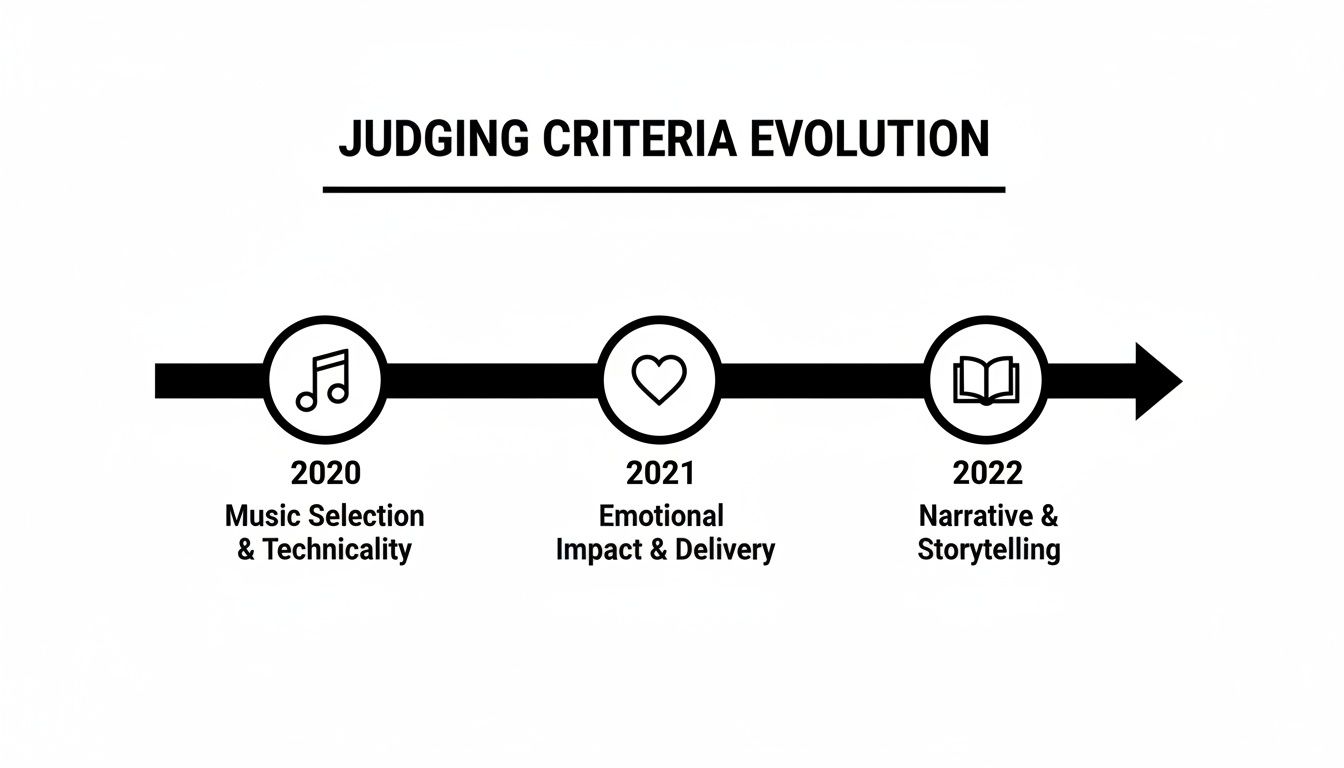
As you can see, judges are putting a much bigger emphasis on emotional impact and storytelling, making a broad training plan more important than ever.
Crafting the Performance Elements
Once that strong technical base is set, it's time for the fun part: putting together all the artistic pieces of the routine. This is where a dancer's unique personality and voice really start to emerge. The choices made here will ultimately define the story they tell on stage.
The most memorable performances are born from a perfect marriage of music, movement, and meaning. Every element must work in harmony to serve the story.
Choreography and Music Selection
The right song is the spark that ignites the whole performance. You want to find music that has a clear emotional arc—a piece with peaks and valleys, moments of tension and release. The choreography should then be designed to highlight that journey, not just to show off a bunch of tricks. Every single step has to have a purpose and push the story forward.
Costume and Character Design
A costume is so much more than just an outfit; it’s a critical part of the storytelling. It needs to enhance the character and the mood of the piece without ever distracting from the dancer's movement. For example, a soft, flowing dress might amplify a feeling of freedom, while a costume with sharp, structured lines could convey power or confinement. The goal is for the costume to feel like an extension of the character. This kind of detailed planning is exactly what dancers need when they learn how to prepare for a dance audition , as every little choice helps build the final impression.
Mastering the Mental Game
The final—and arguably most important—piece of the puzzle is the mental preparation. A dancer can have perfect technique and stunning choreography, but if they don't have the confidence to sell it, the performance will feel empty. Learning to command the stage is a skill that has to be practiced just as much as any turn or leap.
Here are a few techniques we use to build that mental muscle:
Create a Character Journal: Before even starting rehearsals, encourage your dancer to write about their character. What’s their backstory? What do they want more than anything? What are they afraid of? This helps them form a deep, personal connection to the routine.
Map the Emotional Beats: Break the routine down, section by section, and assign a specific feeling or thought to each part. This gives the dancer a clear emotional roadmap to follow when they're performing.
Practice Visualization: Have your dancer regularly close their eyes and visualize themselves on stage, nailing the routine and connecting with the judges and the audience. This kind of mental rehearsal is incredibly powerful for building confidence and calming performance jitters.
By following a plan that nurtures technical skill, artistic choices, and mental readiness, your dancer can step onto that stage ready not just to compete, but to create a piece of art that truly moves people.
Using Technology to Gain a Competitive Edge
In the world of dance today, the studio isn't the only place where the magic happens. A smart approach to digital tools can give a performer a serious leg up in an expression dance competition, helping them fine-tune their artistry with a level of precision we could only have dreamed of years ago. Technology essentially bridges the gap between rehearsals, giving dancers the power to take charge of their own progress.
Think of it like this: your coach gives you the roadmap, but technology acts as your real-time GPS. It lets you see exactly where you are on your journey and make immediate adjustments. For families juggling busy schedules in places like Riverton or Bluffdale, these tools are absolute game-changers, making every single minute of practice count.
The Power of Video Analysis
One of the most effective tools in any dancer's arsenal is something you probably have in your pocket right now: a smartphone camera. Recording rehearsals lets dancers become their own critics in a way that’s impossible while you're actually in the middle of a routine.
By watching themselves back, they get to see their performance through a judge's eyes. This kind of self-correction is priceless for polishing all the tiny, nuanced details that make an expressive performance truly captivating.
With video, a dancer can zero in on:
- Facial Expressions: Do my expressions truly connect with the emotional highs and lows of the music, or do they look a bit generic?
- Body Language: Is my posture telling the right story? Are my gestures intentional and clear?
- Timing and Musicality: Am I just hitting the counts, or am I genuinely embodying the dynamics and soul of the music?
This creates a powerful feedback loop. A dancer can record a small section, watch it, spot something to improve, and then immediately re-record to see the difference. It's a fantastic way to build self-awareness and take real ownership of your artistic choices.
Expanding Skills with Digital Resources
Beyond just analyzing your own work, the internet opens up a whole world of specialized training to complement what you're learning in the studio. Dancers are no longer limited by who is in their city; they can now learn from world-class experts across the globe. This hybrid model—blending hands-on coaching with online learning—is completely changing the game.
Digital trends are fueling some incredible growth in the dance industry. The global dance market is on track to jump from USD 3.22 billion to USD 12.23 billion by 2033. A huge piece of that is the online dance training market, which is projected to grow from USD 1.45 billion to over USD 5.25 billion by 2030, showing nearly 20% growth each year. You can dive deeper into how digital ecosystems are influencing the dance market to see the full picture.
This shift means dancers from Lehi to Draper now have access to amazing resources like:
- Online Workshops: Dancers can sign up for masterclasses focusing specifically on skills like acting for dancers or advanced musical interpretation.
- Specialty Apps: There are apps out there for just about everything, from helping with choreography to editing music, empowering dancers to be more involved in the creative side of things.
Technology doesn't replace the coach; it amplifies their guidance. It allows dancers to continue their learning and refinement long after they’ve left the studio for the day.
Here at Encore Academy in Bluffdale, we actively encourage our dancers to create a 'digital feedback loop' with their instructors. When they share practice videos, they can get specific, targeted notes between lessons. This powerful combination of dedicated studio training and smart technology ensures our dancers walk onto that stage with a clear, polished, and truly powerful artistic vision.
A Parent's Role in Supporting Their Dancer
Behind every dancer who steps confidently onto that stage is a solid support system, and parents are almost always the unsung heroes. Your role is the secret ingredient in your child's success, providing the encouragement and stability they need to navigate the emotional highs and lows of an expression dance competition. This goes way beyond just managing schedules and driving to rehearsals; it's about creating a safe, positive space where they can grow as artists and people, without feeling crushed by pressure.
Think of this journey as a partnership. When you focus on your child's effort, their emotional bravery, and the pure joy of the process, you're helping them build a resilience that will serve them long after the curtains close. Your calm presence during a whirlwind competition weekend is their anchor, allowing them to hit the stage feeling prepared, loved, and ready to share their story.
Fostering a Growth Mindset
Honestly, the most powerful gift you can give your dancer is a growth mindset—the deeply ingrained belief that talent isn't fixed, but can be developed through dedication and hard work. In a world filled with scores and placements, it's all too easy for kids to get hung up on the outcome. Your job is to gently shift their focus back to what truly matters: the effort they poured into their work and the courage it took to be vulnerable on stage.
Instead of the default, "Did you win?" try asking questions that celebrate the journey itself:
- "What was your favorite moment of performing that routine?"
- "Did you feel a real connection to the music today?"
- "What was one cool thing you learned just from watching the other dancers?"
This simple change in how you talk about performance teaches them to value their own progress over a trophy. It reinforces that their worth isn't tied to a score, but to their passion and commitment. This perspective is vital for our dancers traveling from nearby communities like Draper or Herriman to our studio in Bluffdale, as it makes the entire experience fulfilling, no matter what the results sheet says.
Providing Constructive and Positive Feedback
The moment your dancer steps offstage, their eyes will find you. The words you choose in those first few minutes are incredibly powerful. The key is to offer feedback that is, first and foremost, loving and supportive, focusing on the things they actually had control over.
"Your role isn't to be another judge; it's to be their biggest fan. Celebrate their courage for putting their heart on the stage, because that is the truest victory in any expressive art form."
Center your comments on their emotional delivery and effort. You might say something like, "I could really feel the story you were telling in that second section," or "Your energy was absolutely electric from the moment you walked out." This validates their artistic choices and the emotional bravery that lies at the very heart of an expression dance competition.
For parents looking to keep their young performers growing, especially during school breaks, exploring different styles is a fantastic way to build artistic range. Our guide to summer camps for dancing has some great ideas for keeping their skills sharp and their passion burning bright.
The Competition Weekend Checklist
Let's be real: a smooth competition weekend begins with great organization. When your dancer knows all the little details are handled, they can focus entirely on their performance. A simple checklist can be a lifesaver, cutting down on stress for the whole family.
The Ultimate Dance Parent Checklist
| Costumes & Accessories | All costumes, headpieces, every pair of shoes, tights (pack extras!), and accessories. | Use separate, labeled garment bags for each costume with all its pieces. This is a game-changer for avoiding that last-minute panic. |
|---|---|---|
| Hair & Makeup Kit | Hairspray, bobby pins, hair nets, elastics, all makeup, and makeup remover wipes. | Make a small "touch-up" bag with lipstick, powder, and extra pins that you can keep with you in the audience for quick fixes. |
| Backstage Essentials | Water bottle, healthy snacks, warm-ups, a small sewing kit, safety pins, and a first-aid kit. | Label everything with your dancer's name! Healthy, non-messy snacks like granola bars or apple slices are best. |
| Comfort & Downtime | Headphones, a book, a portable charger, and comfy clothes to wear between numbers. | Competition days involve a lot of waiting. Having something to help them relax and decompress is crucial for their mental game. |
By managing these logistics with a calm, organized approach, you create the supportive atmosphere your dancer needs to truly shine. Your preparation and unwavering encouragement are the foundation they build their beautiful, expressive performances on.
How Encore Academy Develops Expressive Artists
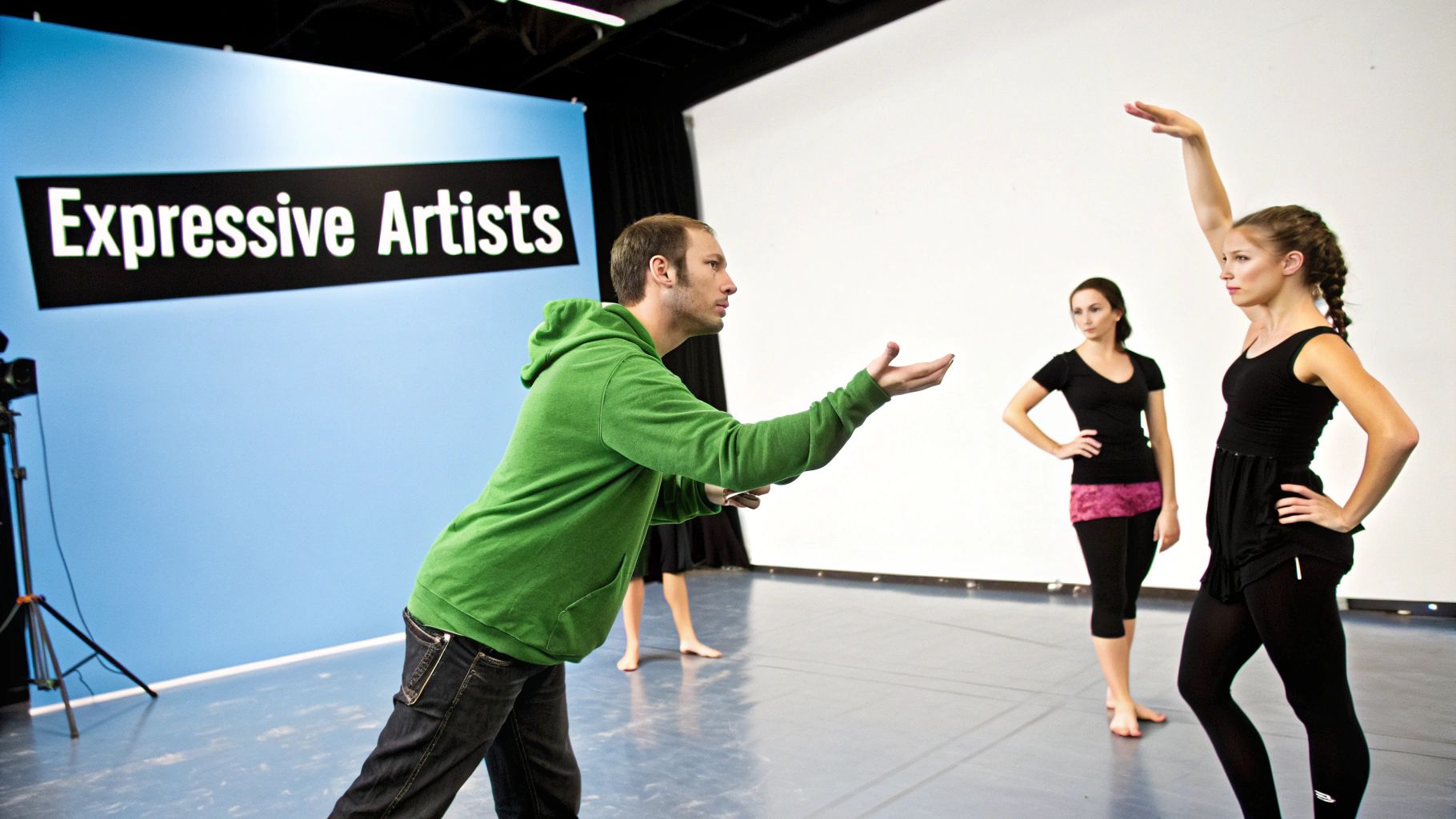
Turning a dancer into a captivating performer doesn't happen by chance. It’s built, piece by piece, through training that sharpens their skills while building their confidence as an artist. At Encore Academy, our entire curriculum is designed around this very idea. We shape artists who can step onto any expression dance competition stage ready to connect with an audience and leave a real impact.
Our approach is a bit different. We combine tough, disciplined technical training with a serious education in performance art. We firmly believe that to tell a story with movement, a dancer first needs to understand the art of storytelling itself. This idea is woven into everything we do, creating performers who are ready for anything.
An Integrated Training Model
We build expressive artists by bringing multiple disciplines together under one roof. Our dancers don’t just learn the steps; they learn how to fill those steps with meaning and emotion. For families coming to us from cities like Riverton and Draper, this means getting a complete artistic education right here in one Bluffdale location.
Our integrated model looks like this:
- Strong Technical Foundations: It all starts with core classes in ballet and jazz. These build the essential strength, control, and vocabulary every great dancer must have.
- Specialized Expressive Training: We go deeper with programs in theater, acting, and musical theater. This is where dancers directly learn about character development, emotional delivery, and owning the stage.
- The MDT Cohort: Our Musical Theater Dance Cohort is the perfect example of our philosophy in action. Dancers in this group get intensive, connected training in voice, acting, and dance, molding them into true "triple threat" performers who know how to tell a story from every angle.
Personalized Guidance from Expert Instructors
You can't grow as an artist without a supportive environment. Our instructors are mentors, not just teachers. They are dedicated to helping each dancer find and develop their own unique artistic voice, giving specific, personal feedback to help them unlock that potential.
Our mission at Encore Academy is to empower every dancer to tell their story on stage. We give them the tools, the training, and the confidence to find their voice and share it with the world.
We teach our dancers to think of themselves as artists first and foremost. They learn how to break down music, create a character, and make deliberate choices that turn a routine into a genuine piece of art. It’s an approach that not only gets them ready for competition but also builds a lifelong passion for performing. This dual focus on technique and artistry is what makes us a leading performance dance center in the area.
We invite families from all over the Salt Lake Valley—from Lehi to Herriman—to come and see how our Competition Teams can help your child blossom into a powerful, expressive artist. We know every dancer has a story to tell, and we’re here to give them the training and support to tell it beautifully.
Got Questions? We've Got Answers
Stepping into the world of competitive dance can feel a little overwhelming, especially when it comes to something as unique as an expression dance competition. Let's clear up some of the most common questions we hear from dancers and parents, so you can feel confident and prepared.
What's the Right Age to Start Competing?
Most competitions have divisions starting for dancers as young as six years old. But honestly, the number isn't what's important. At this age, the goal is all about falling in love with dance and building confidence on stage.
It’s less about how old a dancer is and more about their readiness to tell a story with their body. At Encore Academy, we gently weave expressive concepts into our youngest classes. The perfect time to compete is when a dancer gets that spark in their eye—that genuine excitement to explore a character or an emotion. With the right support, that can happen at any age.
Does Technique Take a Backseat in These Competitions?
Absolutely not. This is probably the biggest myth out there! Think of it this way: technique is the grammar, and expression is the story you write. You can't write a powerful story without knowing how to form a sentence.
Strong, clean technique is the non-negotiable foundation of any great routine. It's what gives a dancer the control and ability to execute their artistic vision.
Here’s the key difference: a technically perfect routine with no story or heart will almost always score lower than a performance that marries strong technique with a real, raw emotional connection. Technique is the tool; expression is the art you create with it.
What Dance Styles Are Best for Expressive Routines?
While lyrical and contemporary are the go-to styles for their storytelling nature, don't let that limit you. Any style can be a vehicle for a powerful, expressive performance. The possibilities are truly wide open.
- A hard-hitting hip-hop piece can tell an incredible story of overcoming adversity.
- A sassy, character-driven jazz routine can light up the stage with personality and humor.
- Even a classic ballet variation can convey a deep narrative of heartbreak or joy.
The "best" style is always the one that lets the dancer—whether they're from Sandy, Herriman, or right here in Bluffdale—truly connect to the music and pour their heart into the choreography.
At Encore Academy for the Performing Arts, our passion is helping every student find their unique artistic voice. We build more than just skilled performers; we nurture confident, expressive storytellers through our programs in dance, theater, and music. Discover our classes today and let's begin your child's journey.